The London Times reports that Britain’s crusade to replace natural gas with “green” energy threatens the country’s ability to keep the lights on:
Britain’s race to net zero will leave the country at greater risk of blackouts and higher electricity bills, a confidential report commissioned by the national grid system has warned.
The report, disclosed to The Times by a whistleblower, revealed the National Energy System Operator (Neso) cannot accurately model the modern power system as the government pursues a drive towards renewable energy sources.
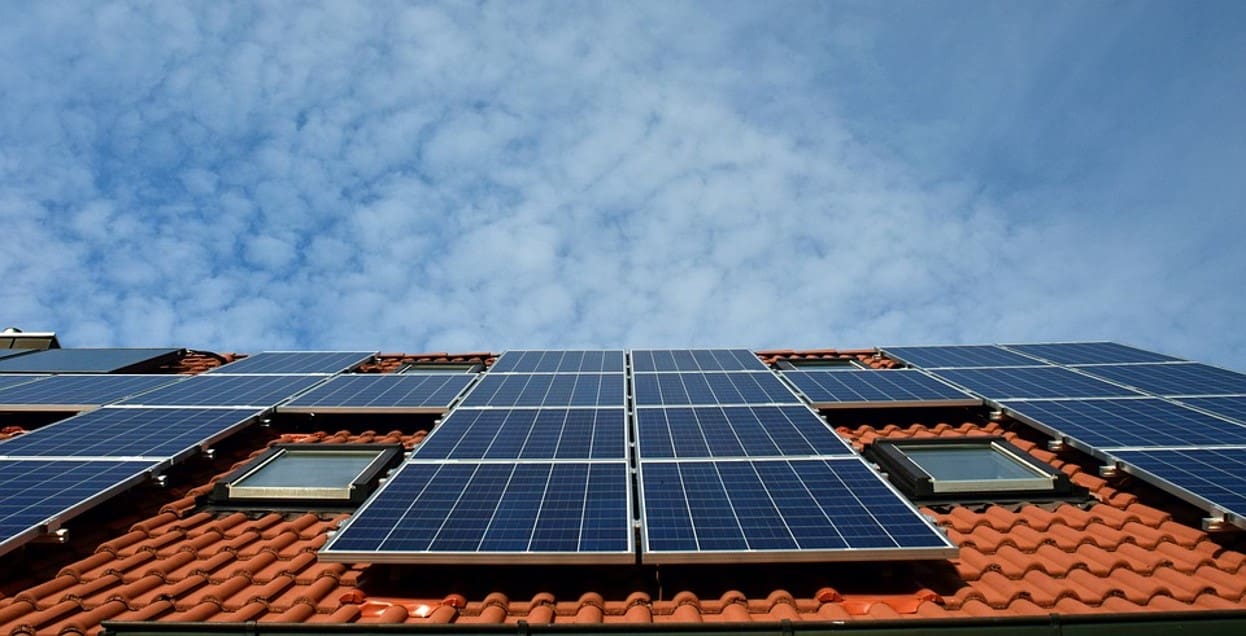
Britain is subsidizing the installation of solar panels, even though Britain is a cloudy, overcast country where the sun often doesn’t shine, making it harder to rely on solar energy than in sunnier countries. Britain is not like America’s sunny southwest, nor is it like Africa’s vast, sunny Sahel region, where even poor people are currently installing solar panels to meet their electricity needs, and installing solar panels even in the absence of government subsidies. Yet, “the United Kingdom has solar power subsidies and financial incentives, primarily featuring the Warm Homes Plan, the ECO4 Scheme,” and exemption from sales tax. That includes the “Warm Homes Plan: Provides targeted funding and non-repayable vouchers for low-to-middle-income households to install solar panels” and “ECO4 Scheme: Offers eligible low-income households or those receiving qualifying benefits free or subsidized solar panel installations.”
London receives only about 1600 hours of sunshine per year, while Glasgow, the largest city in Scotland, gets only about 1200 hours of sunshine per year. Some days are very cloudy in those cities. By contrast, Yuma, Arizona, gets about 4,000 hours of sunshine per year, Phoenix gets 3,900 hours, and El Paso gets about 3,800 hours of sunshine per year. Many African cities like Cairo and Capetown get well over 3,000 hours of sunshine per year. In those sunny places, solar panels generate a lot more electricity.
Lawyer John Hinderaker says it was obvious that Britain wouldn’t be able to model the power system, given Britain’s reliance on forms of green energy that are intermittent and unreliable in Britain, like solar energy: “Of course [Britain] can’t accurately model the power system! Wind and solar are intermittent, weather-dependent electricity sources. There is no way to predict, or to control, when they will produce electricity and when they will not. This has been obvious to everyone for a long time, but apparently it took a ‘confidential report’ and a ‘whistleblower’ to bring the facts to the attention of the British public.
The London Times adds:
The report found inaccurate forecasts were pushing up costs for consumers and raising the risk that Neso would be unable to keep the network stable to keep the lights on safely.
***
Internal Neso reports show that on June 23 the electricity grid breached five operational safety constraints and system security was compromised.
Britain also is investing in wind energy, which has both benefits and costs. Wind turbines don’t last forever, and they leave behind fiberglass blades that landfills often won’t accept. Moreover, the “blades have low energy content, and burning fiberglass emits dangerous pollutants,” notes the Kleinman Center for Energy Policy. In short, notes CNN, “wind energy has a massive waste problem.”
36% of wind turbines generating electricity in Spain will need to be decommissioned by 2028 as they become obsolete. That’s 7,500 wind turbines and 20,000 blades that will have to be dismantled and disposed of somehow. Those wind turbines were installed before 2005, but their lifespan is only 20 to 25 years.
Their steel, copper wires, and generators can be reused. But not their fiberglass blades, which only a few landfills in Spain will accept.
Wind energy poses other challenges for nature as well. In 2022, the biggest U.S. utility that generates wind power pleaded guilty to federal crimes for killing 150 eagles.





How to Fix Low Frame Rates in Your Favorite Simulation Games https://lsfg.pythonanywhere.com
The Bustling World: A journey you’ll never forget https://thebustlingworld.pages.dev
Takipteyim kaliteli ve güzel bir içerik olmuş dostum.
Live the life you’ve always imagined in Ancient China https://thebustlingworld.surge.sh
Play as Lucia and Jason in the Official GTA 6 Beta Version Download https://gta6beta.pages.dev
Hocam detaylı bir anlatım olmuş eline sağlık
Bilgiler için teşekkür ederim işime son derece yaradı
Takipteyim kaliteli ve güzel bir içerik olmuş dostum.
Ne zamandır web sitelerim için aradığım içeriği sonunda buldum. Bu kadar detaylı ve net açıklama için teşekkürler.
Pretty! This has been a really wonderful post. Many thanks for providing these details.
Discover the secrets of a vibrant ancient civilization https://thebustlingworld.pages.dev
Phim Sex Không Che – Tuyển Chọn Clip Địt Gái Xinh Không Che
Exclusive GTA 6 Beta Early Access Download Link for All Platforms https://gta6beta.pages.dev
https://shorturl.fm/YhUQV
Download GTA 6 Beta and Discover the Hidden Easter Eggs Early https://gta2026.pythonanywhere.com
Discover a world that breathes and evolves with you https://thebustlingworld.pages.dev
How to Download and Play GTA 6 Beta on Steam and Epic Games https://gta2026.pythonanywhere.com
How to Activate GTA 6 Beta Version on Your Rockstar Games Social Club https://gta6beta.pages.dev
The Bustling World: Live the legend of Ancient China https://thebustlingworld.surge.sh
How to Get GTA 6 Beta Early Access Code for PS5 and Xbox Series X https://gta6s.pages.dev
Discover the power of your choices in The Bustling World https://thebustlingworld.surge.sh
Join thousands of players in this living masterpiece https://thebustlingworld.pages.dev
Phim Sex Không Che – Tuyển Chọn Clip Địt Gái Xinh Không Che
Accurate Phone Number Data for Campaigns https://datadigi.surge.sh
Nanya dong, refresh rate tinggi itu lebih boros baterai kan? Tapi katanya ada teknologi LTPO yang bisa turunin ke 1Hz pas layar diam. Itu tuh udah ada di HP mid-range belum sih? Aku belum nemu penjelasan detailnya di TecnoTipsNest, semoga ada artikel khusus soal ini.
Best Phone Number Data for Marketing https://datadigi.store
The Bustling World: Where every choice matters https://thebustlingworld.surge.sh
Download now and build your ancient future https://thebustlingworld.surge.sh
GTA 6 Beta Early Access Link for PC Download Without Registration https://gta2026.pythonanywhere.com
Nice post. I learn something totally new and challenging on websites
Hi there to all, for the reason that I am genuinely keen of reading this website’s post to be updated on a regular basis. It carries pleasant stuff.
This is really interesting, You’re a very skilled blogger. I’ve joined your feed and look forward to seeking more of your magnificent post. Also, I’ve shared your site in my social networks!