Education Department repeals its harmful disparate-impact regulations, which were used to undermine school safety

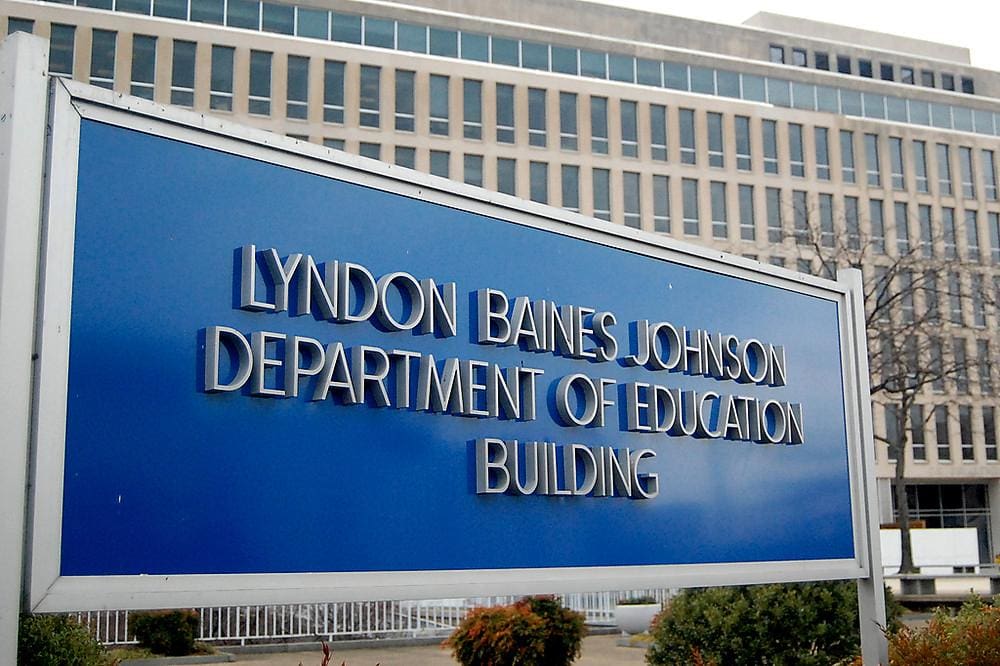
On Thursday, the Department of Education repealed its disparate impact regulations. Those disparate-impact regulations led some school districts to make discipline decisions based on race. Under Obama and Biden, the Education Department used disparate-impact regulations to undermine school safety and pressure school systems to allow more misbehavior by minority students. Race-conscious curbs on suspensions led to violence in some school districts.
Disparate impact regulations declare policies presumptively discriminatory if they have a greater impact on one race than another race, even if the policy is applied in an “evenhanded” manner to individuals of all races. For example, if more blacks fail a standardized test than whites, that can be considered disparate impact. And if black students violate school rules at a higher rate than white students, then the higher black discipline rate that results could be considered disparate impact, under the Education Department’s interpretation of its disparate-impact regulations.
The disparate-impact regulations the Education Department just repealed were of dubious legality according to the Supreme Court’s decision in Alexander v. Sandoval (2001). The Supreme Court called the arguments for such regulations “strange” and noted that they are not required by Title VI of the Civil Rights Act, which only bans “intentional discrimination.” In footnote 6 of its ruling, the Supreme Court noted that the Title VI statute that the Education Department enforces “permits the very behavior that the regulations forbid” as “disparate impact.”
Lawyer Paul Mirengoff explains that under the Education Department’s disparate-impact regulations, school districts were subjected to federal investigations based on “statistical evidence that a school or school system is imposing discipline on black students to a disproportionate extent compared to students of other races — i.e, that its disciplinary policies have a disparate impact on blacks,” even though “disparities in rates of discipline do not prove, or even suggest, the existence of unlawful discrimination” in violation of the Title VI statute.
To try to reduce disparate impact, the Biden Education Department promoted weak alternatives to firm school discipline, such as “restorative justice” and “Positive Behavioral Interventions and Supports” (PBIS). These resulted in classrooms that were disorderly, had more disruptions, and were much harder to learn in. A teacher described how a lack of school discipline for just one badly-behaved student triggered a chain reaction that caused hundreds of students to get a bad education, and resulted in at least three teachers leaving the school, including the “best lesson writer.” Earlier, Oklahoma City entered into a settlement with the Obama administration designed to lower minority suspension rates. As a result, there were more fights and disorderly classrooms in the schools. As a retired lawyer noted during the push for “racial equity,” “Many classrooms have become noisier and more chaotic as troubled students are allowed to routinely disrupt class without being suspended. This causes teachers to transfer to other schools or leave the teaching profession. And it reduces how much students learn, as a National Bureau of Economic Research paper explains. Instead of being suspended, some students are given “restorative justice”, where they get to talk about why they acted up. Teachers like Daniel Buck have pointed out that ‘restorative justice’ doesn’t work. Restorative justice gave a free pass to a student who later went on to kill 17 people in a mass shooting.”
School districts should never have been pressured to take such counterproductive approaches to discipline.
As lawyer Paul Mirengoff notes,
In Alexander v. Sandoval (2001) a Supreme Court far less conservative in civil rights cases than today’s version indicated that it would strike down regulations that apply disparate impact analysis to Title VI of the Civil Rights Act, which prohibits discrimination by schools receiving federal funds. Without disparate impact theory, only intentional discrimination is unlawful — which is as it should be.
Intentional discrimination in the school discipline context occurs when a school disciplines black students more harshly than it disciplines students of other races for the same offenses. Evidence that blacks receive a disproportionate degree of discipline compared to their representation in the student body doesn’t show intentional discrimination because it says nothing about how the school disciplines people of different races for the same or similar violations.
Thus, the Trump Department of Education is correct. The existence of disparate impact does not help establish discriminatory discipline.
This would be true even if we did not know with near certainty that, for socioeconomic reasons, blacks behave worse in school than whites and Asian Americans.
As attorney John Martin wrote in a Federalist Society paper:
The underlying premise [of disparate impact analysis in school discipline cases] is that white students, for example, will commit infractions at the same rate as black students. But disparities among racial and ethnic groups exist in many areas, as social scientists so often report. . . .
For example, there are disparities between whites and blacks in crime rates. . .There are also disparities in the rates of out-of-wedlock births and single-parent families. . . Studies have also found disparities in test scores.
Given the differences in crime rates, family structure, and test scores, one would not be surprised to find disparities in school infractions and discipline.
As Mirengoff observes, “It would be surprising if, in the absence of discrimination, there were no disparities in school infractions and discipline.” Yet so-called “equity” advocates “want to hold schools ‘accountable’ for the disruptive misconduct of black students” if they misbehave at a higher rate than whites and thus are disciplined at higher rates than whites, even though “A rational, well-functioning society would hold the students and their parents/guardians accountable.”
Investigating school districts merely because they discipline blacks at a higher rate than whites “gives schools and school districts a strong incentive to achieve racially proportionate outcomes so as to avoid legal liability or, in the case of public schools, to avoid the loss of federal funds. In many cases this will entail not disciplining black students who deserve and need to be disciplined. The effect of not disciplining them will be less classroom discipline, more classroom disruption, and less learning. And many of the victims of this outcome will be black students who don’t misbehave. Thus, the Department of Education is striking a blow for better schools” by rescinding some disparate-impact regulations, notes Mirengoff.
Under the Obama Education Department’s disparate-impact rules, if school policies had a “disparate impact” — such as a lot more black than white students being disciplined — a school district then had the heavy burden of proving its policies achieved important educational goals such as preventing violence and disorder, not just that it was applying its discipline rules in an evenhanded way. The fact that a school district applied its discipline rules in an “evenhanded” did not show a lack of disparate impact, according to the Obama Education Department, in its January 2014 letter to America’s schools about school discipline. And even if a school district proved its policies were very helpful in maintaining order and preventing violence, the Education Department could still find a violation of its disparate-impact regulations if it thought the school could have prevented violence or disorder with different policies that had less disparate impact.
In 2018, the Trump administration withdrew that letter, and warned school districts against having racial quotas in discipline, but the underlying disparate-impact regulations remained.
In the past, some Education Department bureaucrats thought that racism was typically the cause of black students being disciplined at a higher rate than whites. In 2014 and 2021, they claimed that black students do not commit more disciplinable offenses than their white peers. But that’s not the case, as was explained long ago:
The higher black discipline rate is because black students misbehave at higher rates than white or Asian students, meaning that their suspensions and expulsions are due to their behavior rather than racism. As education policy expert Michael Petrilli notes, “In 2015, high school students were asked if they had been in a fight on school property at any time in the past 12 months. African American students were 2.2 times more likely to say yes than white students — 11.4 percent to 5.2 percent.” A 2014 study in the Journal of Criminal Justice found that higher rates of “prior problem behavior” among black students — not racism — explained why black students are suspended at a higher rate. Thus, racial disparities in discipline don’t usually reflect racism. As the liberal Brookings Institution has noted, “Black students are also more likely to come from family backgrounds associated with school behavior problems; for example, children ages 12–17 that come from single-parent families are at least twice as likely to be suspended as children from two-parent families.” (2017 Brown Center Report on American Education, pp. 30-31).
Moreover, forcing schools to suspend black and white students at the same rate is itself discriminatory, because misbehavior rates are not the same. So equalizing school discipline rates is an arbitrary, illegal racial quota. Moreover, it is not not even a lawful remedy for “disparate impact.” As a lawyer noted back in 2018,
the federal appeals court in Chicago declared illegal a provision that forbade a “school district to refer a higher percentage of minority students than of white students for discipline unless the district purges all ‘subjective’ criteria from its disciplinary code.” It considered that to be an unconstitutional racial quota.
And quotas, it said, were unfair to students, violating the requirement that “discipline be administered without regard to race or ethnicity.” “Racial disciplinary quotas,” it said, “violate equity” by “either systematically overpunishing the innocent or systematically underpunishing the guilty.” (People Who Care v. Rockford Board of Education, 111 F.3d 528, 538 (7th Cir. 1997)).
But even today, bureaucrats are still prodding school districts to meet such quotas, pressuring them to having the same discipline rates for students of all races, even if students of different races don’t misbehave at the same rate. Indeed, bureaucrats in the very same city where racial-discipline quotas were outlawed are still encouraging schools to have quotas.
Officials in the Chicago branch of the Education Department’s Office for Civil Rights recently entered into a settlement with the Milwaukee schools requiring changes in their school discipline policies. Milwaukee is less than 100 miles from Chicago, and rulings by the federal appeals court in Chicago are binding in nearby Wisconsin. But the settlement with Milwaukee contains provisions all too similar to the provision struck down by the Chicago appeals court in 1997.
Pages 7-8 of the settlement require “data” on whether “administrators refer disproportionate numbers of students of a particular race for discipline.” The school district will then “explore possible causes for the disproportion and consider steps to eliminate the disproportion to the maximum extent possible.” See Resolution Agreement, Milwaukee Public Schools, Case No. 5-14-5003 (December 2017).
But it makes no sense to get rid of the “disproportion” in referrals for discipline, if that disproportion just matches the disproportion in student misbehavior rates among different races. And there is no reason to think misbehavior rates in a given school system will be the same. Such an assumption would contradict the Supreme Court’s ruling in U.S. v. Armstrong. That ruling rejected the “presumption that people of all races commit all types of crimes” at the same rate, as being “contradicted by” reality.
For example, 43.7% of all rapists in state prisons were black, according to a 1997 report by the Bureau of Justice Statistics, even though blacks are only 13% of the general population. [See Bureau of Justice Statistics, “Sex Offenses and Offenders” (Feb. 1997) (NCJ-163392)]. Similarly, a 2014 study in the Journal of Criminal Justice by criminologists such as J.P. Wright found that racial disparities in student discipline rates resulted from more frequent misbehavior by black students, not racism.
Nor does this “disproportionality” provision seem well-crafted to remedy any racially disparate impact or intentional discrimination in school discipline. “Disparate impact” is when a specific policy of an employer or school system lacks a racist motivation, but has an unjustifiable negative impact on a particular race or gender.
But the solution to that is to get rid of the specific policy that has that unjustified effect, not pressure the school to have a racial quota. Institutions cannot use racial preferences or quotas to offset disparate impact. [citations omitted, explaining how the Education Department’s Office for Civil Rights was ignoring legal limits on disparate-impact liability that the courts have prescribed to prevent racial quotas, in its pressure on school districts to equalize suspension rates and adopt veiled racial quotas].


The Must-Have Utility for Anyone Playing on a Gaming Laptop https://lsfg.pythonanywhere.com
The Ultimate Guide to Achieving Smooth Gameplay on a Low-End PC https://lsfg.pythonanywhere.com