Scientists Seem To Find Cure For Brain-Eating Amoeba That Kills 97% Of Its Victims

By Libby Bandelin
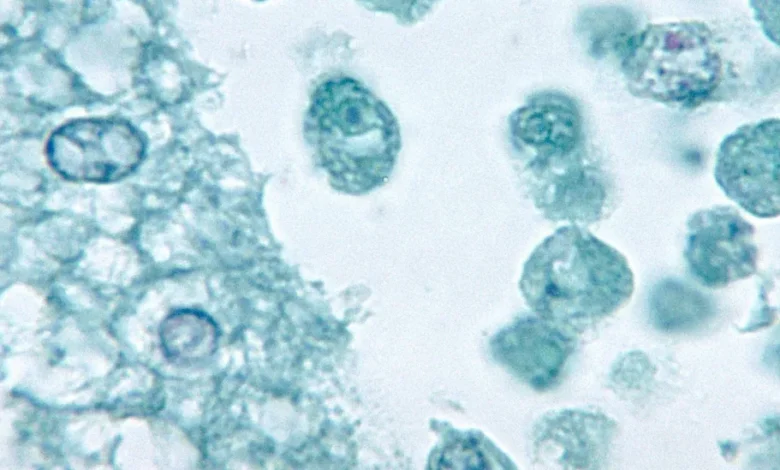
A microscopic organism with a track record of causing nearly-always fatal infections may finally have met its match in the form of an isolated bacteria compound recently discovered by researchers.
Scientists at the University of California, San Diego extracted a compound from marine bacteria that appears capable of killing strains of Naegleria fowleri, better known as “the brain-eating amoeba,” within hours, according to a new study published on Monday.
“By identifying a compound that is both faster and more selective, we are moving closer to a treatment that can stop the infection before it causes irreversible damage, which could fundamentally change the prognosis for people who contract this parasite,” study author Anjan Debnath, co-director of UC San Diego’s Center for Discovery and Innovation in Parasitic Diseases, said in a statement from the university.
The amoeba boasts a 97 percent kill rate by causing a rare infection in the human brain after entering the body through the nose, migrating to the brain, consuming brain cells and sparking massive inflammation called primary amoebic meningoencephalitis (PAM), the study notes.
While PAM caused by the parasite is exceedingly rare — the Centers for Disease Control and Prevention (CDC) documented only 173 cases in the U.S. from 1937 to 2025 — there is currently “no optimal treatment regimen,” the study says. (RELATED: AI Now May Predict Your Biological Age And If You’ll Survive Cancer — With A Face Scan)
The current treatment method approved by the CDC has only successfully treated a dozen people with a confirmed diagnosis worldwide, the study shares. The disease seems to disproportionately affect young children and males, the study said.
“Thus, there is a critical unmet need to find safer and more efficacious drugs to treat this deadly disease and to prevent future deaths of children and young adults,” researchers wrote in the study.
The compound that the researchers elicited is called Rutamycin B and works by shutting down an enzyme the parasite uses to produce energy, the statement said.
Researchers found that “concentrations elicited low toxicity to human intestinal cells,” and was 200 to 300 times more lethal to the parasite than human cells. The treatment also worked faster than the current standard treatment reaching full strength within four hours versus 16 hours, the study noted.
“Because the infection targets the central nervous system, the researchers are planning future studies to evaluate the compound’s ability to cross the blood-brain barrier and its efficacy in live disease models,” the press release from the university said. “While further research will be needed to bring this approach into the clinic, the study points toward a promising new therapeutic strategy for a disease that has historically left almost no survivors.”




Tuyển chọn phim sex cực nóng, cập nhật nhanh nhất phim sex hot nhất hiện nay với tốc độ nhanh, không giật lag tại Vlxvn
Yazdığınız yazıdaki bilgiler altın değerinde çok teşekkürler bi kenara not aldım.