Trump orders Navy to tear out jet-launch system, at cost of billions of dollars

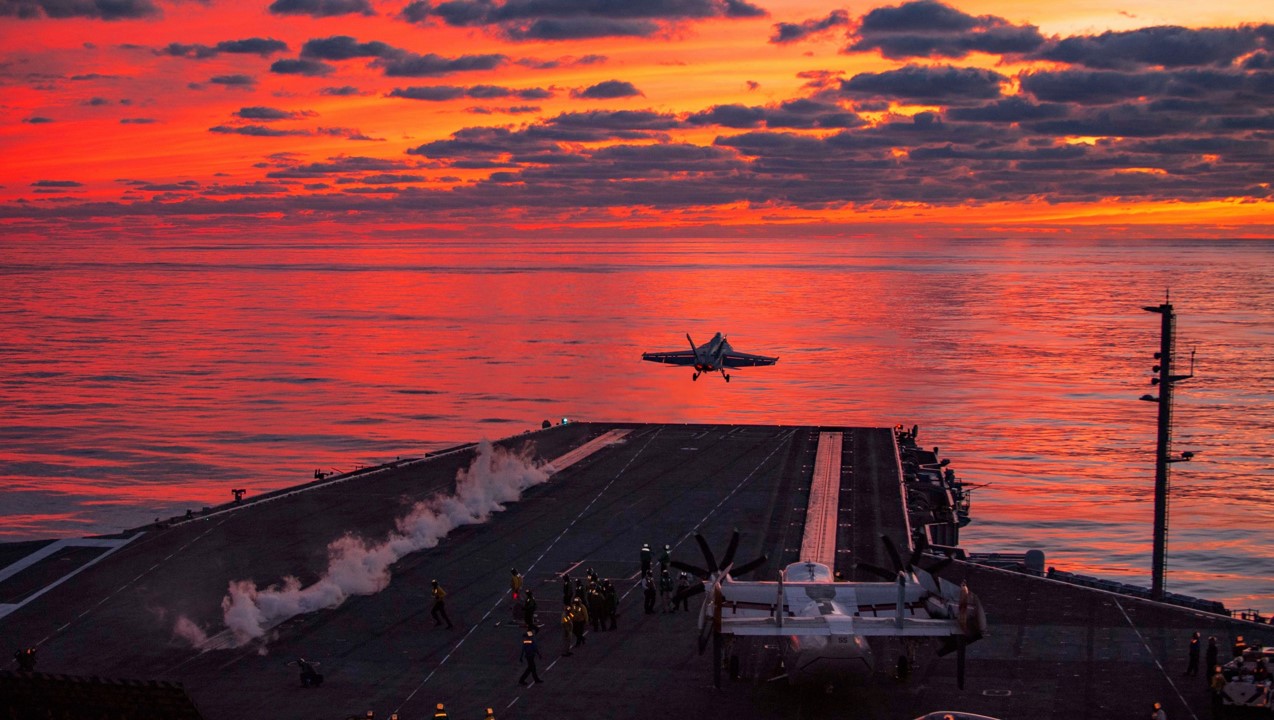
It’s costly to tear out a useful jet-launch system in the middle of the Iran War, when the Pentagon’s resources are already being stretched thin. But that is what President Trump is ordering the Navy to do:
President Trump has directed the Navy to tear out a complex system for launching jet fighters from its aircraft carriers and instead go back to using steam catapults, a move Navy officials have fought for years and will likely cost billions of dollars.
U.S. officials say Trump signed a national security memorandum Thursday directing the change, which would involve removing the electromagnetic catapult system used by the ships in the Gerald R. Ford class of carriers.
By doing so, Trump is making good on a promise he made almost 10 years ago to go back to the steam system after hearing a sailor praise it while visiting a ship during his first term.
But since Trump said in an interview with Time in 2017 that he told the Navy to go back to “goddamn steam,” top Navy and industry leaders have resisted the move because of the enormous expense to tear out such a complex system that was integral to the design of the Ford class.
The Wall Street Journal has more at this link.
Te Iran War itself was a costly blunder, as economic commentator Noah Smith explains at this link.
Before the Iran War, there was free navigation through the Persian Gulf, and oil-rich countries on the Gulf could export their oil and natural gas to countries that need it. But the war changed that. As a result of the war, the Persian Gulf’s Strait of Hormuz remains largely closed to oil tankers.
The war showed that the Iranians have the ability to effectively shut down traffic through the Strait of Hormuz, closing access to and from the Persian Gulf. That ability gives the Iranians a chokehold on shipping of 20% of the world’s oil and natural gas, and the ability to shut down a third of the world’s seaborne fertilizer trade, which has to pass through the Strait of Hormuz.
The Iran War is resulting in less fertilizer and higher diesel prices for farmers. That is resulting in less food production, more hungry people in the Third World, and more farm bankruptcies.
Before the war, the Iranians did not realize they had the ability to close the Strait of Hormuz over U.S. opposition, but they discovered that had that power during the Iran War. Because of their power to close the Strait to shipping and its crucial shipping lanes, they have a huge bargaining chip to demand billions from the U.S. in exchange for ending the war and reopening the Strait of Hormuz.


If Trump were to pursue the war as war should be pursued, Iran would already have a new regime. TACO Don is doing the same sort of nonsense with the Mullahs as he pulled with Putin.
By the bye, Iran started the war war in 1979, not Trump.
Love how stable the connection is every time I log in. No more annoying crashes in the middle of a big win. Always trust 500jililogin
[2061]2ph Login at Download APK | Safe na Online Slots at GCash,Gamitin ang 2ph login philippines para sa pinaka safe na online slots. Madali ang casino na gcash deposit at mabilis ang app. Mag-register na rito! visit: 2ph
Hi there very cool website!! Man .. Excellent .. Wonderful .. I will bookmark your website and take the feeds also?KI am glad to find numerous helpful info right here in the put up, we’d like develop more techniques in this regard, thank you for sharing. . . . . .
Dead indited subject material, appreciate it for entropy.