University reaches settlement with former employee fired for expressing hatred for Charlie Kirk fans after his death
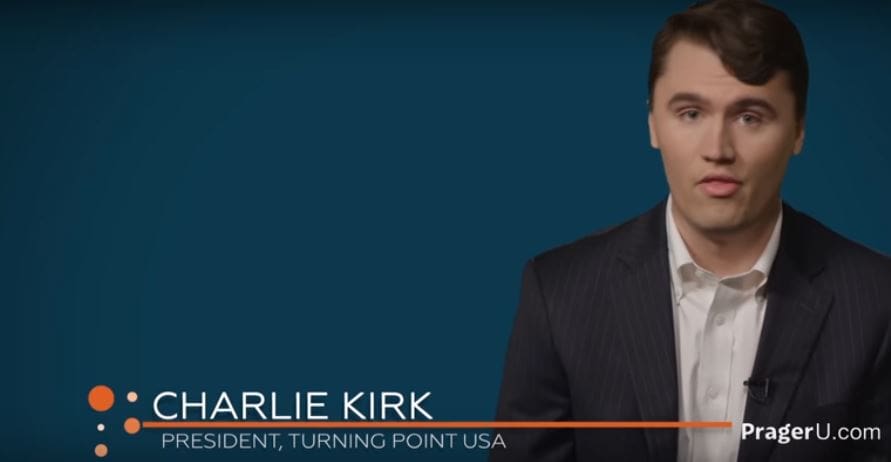
“Ball State University has reached a settlement with a former employee fired for comments made following the assassination of Charlie Kirk,” reports The College Fix.
The details of the settlement are confidential.
Last fall, the employee, Director of Health Promotion and Advocacy Suzanne Swierc, posted on Facebook,“Let me be clear: if you think Charlie Kirk was a wonderful person, we can’t be friends.” She added that Kirk’s death was “a reflection of the violence, fear, and hatred he sowed,” and claimed that Kirk “excused the deaths of children in the name of the second amendment.”
A screenshot of her comments subsequently went “viral,” spawning an investigation.
Swierc complained of being subjected to “derogatory language and even threats from anonymous callers,” while Ball State said it had to devote resources to fielding “a ‘deluge’ of complaints, comments and inquiries from the media and public.”
The University concluded that Swierc’s remarks were “inconsistent with the distinctive nature and trust of [her] leadership position […] and that the post caused significant disruption to the University.”
It argued that Swierc’s remarks were not protected against disciplinary action by the First Amendment, because of the disruptive effect they had on university operations. It cited a court ruling, Hedgepeth v. Britton, in which the U.S. Court of Appeals in Chicago upheld the firing of a teacher who, like Swierc, had made controversial remarks on a private Facebook page (in that case, regarding George Floyd after his death at the hands of Minneapolis police).
As The College Fix notes, “Swierc, with the assistance of the ACLU, eventually sued Ball State for infringement of her First Amendment rights. One of her attorneys questioned what sort of “disruption” Swierc’s post could have caused given she didn’t hold a teaching position.”
That’s an odd argument for the ACLU to make, because the courts have said that universities can fire people who don’t hold a teaching position more easily than they can fire people who do hold a teaching position, due to the academic freedom enjoyed by people who have a teaching position but not by people who don’t. For example, the U.S. Court of Appeals in New York upheld the removal of a college administrator for racist remarks, shortly after it overturned the punishment of a professor for racist remarks made at the very same college. (Compare Jeffries v. Harleston (1995) with Levin v. Harleston (1992)).
In another case, a university in Tennessee agreed to pay $500,000 for firing a professor for mild criticism of Charlie Kirk after his death.
UCLA fired an administrator who celebrated Charlie Kirk’s death, although in that case, the attacks on Charlie Kirk may just have been the straw that broke the camel’s back. That administrator, Johnathan Perkins, had also told whites not to wish him a “Happy Juneteenth” because he would “flip tf out” if they do. He reacted to the death of England’s Queen Elizabeth by saying,“Good riddance.”
In a statement announcing Ball State’s settlement with Swierc, Ball State official Greg Fallon said an April 7 settlement conference with Swierc was “successful,” and that “the parties ‘reached agreement on the material terms to resolve the matter.’” The ACLU said it had “nothing further [to] share at this time.”
Graham Piro, faculty legal defense fund fellow for the Foundation for Individual Rights and Expression, says “the bar for disruption to university operations must be very high in order to protect the right of faculty to express themselves. And the burden is on the university to demonstrate that their operations and functions have been significantly disrupted by a faculty member’s speech.”
The Supreme Court said that even inappropriate speech by a public employee can be protected, in a 1987 ruling. In that case, the Supreme Court voted 5-to-4 to find that the First Amendment was violated when a public employee was fired for hoping that a future assassination attempt on President Reagan would be successful, because that inappropriate speech did not offend the public employee’s immediate co-workers all that much, or otherwise cause a disruption. (See Rankin v. McPherson (1987)).


https://shorturl.fm/BVNNj