
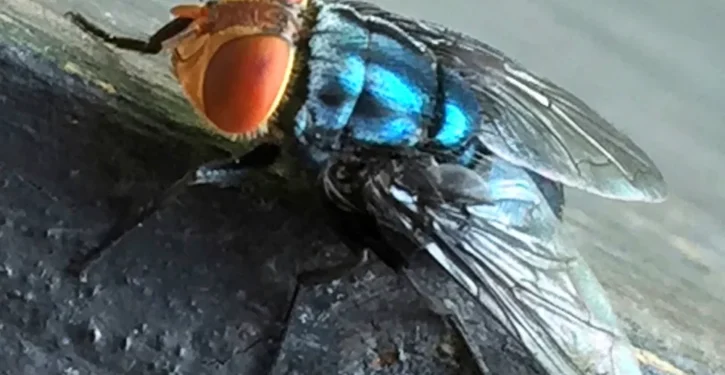
“The US and Mexico took a major step in the battle against New World screwworm, opening a facility in Metapa, near Mexico’s southern border, to produce sterile flies that authorities believe is the best method for stopping the flesh-eating parasite,” reports Farm Policy News. Screwworms are the larvae of a parasitic fly. They feed exclusively on the living tissue of warm-blooded animals. While the fly is capable of infecting humans and pets, and causing their deaths, such cases are rare.
The production facility in Metapa, near Mexico’s southern border, is expected to produce up to 100 million sterile flies a week, becoming only the second such plant in the Americas. Combined with the roughly 100 million flies produced at an existing facility in Panama, the new capacity comes closer to the 500 million a week figure that helped eradicate the pest from North America decades ago.“Our countries have beaten this before,” US Agriculture Secretary Brooke Rollins said on Saturday at the facility. “We will beat the New World screwworm again, sooner than anyone would have thought.” The opening comes as the screwworm has re-emerged as a major threat to the US cattle industry. The parasite is actually a fly whose larvae infest the wounds of warm-blooded animals. The pest has infected thousands of cattle in Mexico since 2024, prompting the US to halt livestock imports from the country.The first infections in US livestock in roughly half a century were confirmed in Texas earlier this month, creating panic across a cattle industry already struggling with a national herd that is at a 75-year low. U.S. Ambassador Ronald Johnson on Saturday pledged an additional $84 million to stop the screwworm’s spread, and in a statement warned that a major outbreak could cost the US agriculture sector more than $700 million each year.The Metapa plant, a fruit fly facility the US Department of Agriculture contributed $21.9 million to renovate, is expected to begin producing 30 million sterile pupae a week in July, before ramping up to 60 million in August and then 100 million by November.
The production facility will send the pupae in cold containers by plane to be distributed in both Mexico and the United States. Johnson said the flies will be spread “in the most strategic manner possible, to impact this as quickly as possible and push it back south, out of the United States, out of Mexico,” with the goal of eradicating screwworm completely.
“It’s very opportune that the Metapa plant is opening,” said Texas A&M University’s Phillip Kaufman. But it will “take them a few months to get up to full production.”
The facility will first sterilize screwworm pupae with radiation, and then release the sterilized flies to mate with wild flies. Since females usually mate only once in their life, mating with the sterile males prevents them from giving birth to screwworms.
Not all news about parasites is bad. A new vaccine fights hookworm, which makes millions of people around the world lethargic.
The African nation of Guinea recently eradicated sleeping sickness, a parasitic disease carried by the tsetse fly that causes irreversible brain damage, aggressiveness, psychosis, and then death, if left untreated.
Niger recently became the first nation in Africa to eliminate river blindness, a disease spread by flies that breed near rivers. Those flies carry long thin parasitic worms that burrow in a victim’s skin.
Parasites can take years for countries to eradicate. It took nearly 40 years for the world to largely eradicate Guinea worms, nasty parasites that caused tens of millions of people to scream with unbearable pain. But by 2023, Guinea worms had been eradicated in at least 17 countries, and “no guinea worm was reported” in 2024.
Guinea worms used to inflict burning pain on millions of people in Africa and South Asia every year. They would grow up to 3 feet long while living inside a person’s body, then burst out of their foot or other sensitive areas of their anatomy, such as their eyeball or their penis.
“With a guinea worm infection, you get a gross open wound from which the worm emerges over a period of weeks to months with extreme painfulness. There were millions of cases in the 80s, and now there are none. Incredible human progress.”
“It’s possible that the worm is evolutionarily adapted to cause prolonged pain and suffering. Since this will increase the chance that the host will put their foot in the water to soothe the pain, and that can help the worm get to the next stage in its life cycle,” notes a scientist.
Scientists have discovered drugs that can kill malaria parasites inside mosquitoes.