
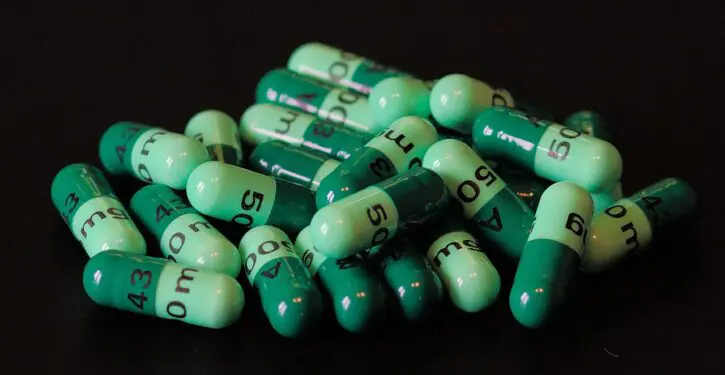
“The FDA has approved a pill that blocks PCSK9, a protein that limits the liver’s ability to remove LDL cholesterol from the blood. In trials, the drug lowered LDL cholesterol by roughly 60 percent. Injectable drugs that treat high cholesterol the same way are already approved but carry list prices of around $500 per month. The new pill will be listed at $315 per month,” notes The Doomslayer.
The New York Times reports:
The Food and Drug Administration approved a daily pill on Thursday that can lower cholesterol levels far below what can be achieved with statins, the cheap cholesterol-reducing pills.
The drug, enlicitide, whose brand name is Lipfendra, is made by the pharmaceutical company Merck. Clinical trials have shown that it can bring levels of LDL — the dangerous type of cholesterol — down to 50 or 60 or even lower. Adults not taking cholesterol-lowering drugs usually have levels above 100. It works by inhibiting a protein known as PCSK9.
New cholesterol guidelines issued by the American Heart Association and the American College of Cardiology say that people who have an above-average risk of heart attacks or strokes should get their LDL levels below 70. Those at high risk because, for example, they have had a heart attack, should get their LDL below 55.
Lipfendra’s list price will be $315 for a 30-day supply, and it will be available in a few weeks, said a Merck spokeswoman, Julie Cunningham.
There are currently injectable drugs that work in the same way, but they are more expensive, with list prices of $500 to $600 a month or more. Insurers sometimes balk at paying, and some patients do not want injections. Only 1 percent of the six million eligible patients use the injected drugs. Yet a PCSK9 inhibitor can reduce the risk of heart attacks by 20 percent in high-risk patients.
Cardiologists not associated with Merck applauded the F.D.A. approval and the drug’s price. The hope is that a pill that costs less than an injectable and is easier to take will allow many more patients to get their cholesterol levels under control.
Other discoveries may also help people with lots of bad cholesterol. In an early human trial, a single infusion of a new CRISPR gene therapy cut “bad” LDL cholesterol and triglycerides. In four patients, at the highest dose, it reduced LDL by around 50 percent and triglycerides by about 55 percent after two weeks,” notes The Doomslayer.
Reuters reported that
CTX310 works by switching off a gene called ANGPTL3 through a single, two-hour infusion. It was inspired by studies showing people born with an inactive version of the ANGPTL3 gene have a lower lifetime risk of heart disease with no apparent adverse consequences.
Regeneron’s Evkeeza, which treats a rare genetic disorder called homozygous familial hypercholesterolemia, targets the same gene but requires monthly infusions.
CRISPR’s trial of 15 patients aged 31-68, conducted in Australia, New Zealand and the UK, tested five different doses. All participants had high triglycerides, high LDL cholesterol or both and had failed to respond to other treatments.
Among four patients who received the highest dose, triglycerides on average were cut by 55% and LDL by 50% two weeks after treatment. Levels stayed low for at least two months.
A virus is being used to cure deafness in new gene therapy.
“Doctors in Italy have restored a man’s sight using an innovative gene therapy. The treatment involved injecting a viral vector into the man’s eye to deliver a working copy of a missing gene, allowing retinal cells to produce the protein needed for vision,” reports The Doomslayer.
Another form of gene therapy was used to give hearing to a previously deaf toddler. “A British toddler has had her hearing restored after becoming the first person in the world to take part in a pioneering gene therapy trial, in a development that doctors say marks a new era in treating deafness. Opal Sandy was born unable to hear anything due to auditory neuropathy, a condition that disrupts nerve impulses traveling from the inner ear to the brain and can be caused by a faulty gene. But after receiving an infusion containing a working copy of the gene during groundbreaking surgery that took just 16 minutes, the 18-month-old can hear almost perfectly and enjoys playing with toy drums.”
A recently-developed gene therapy blocks the painful hereditary condition angiodema.