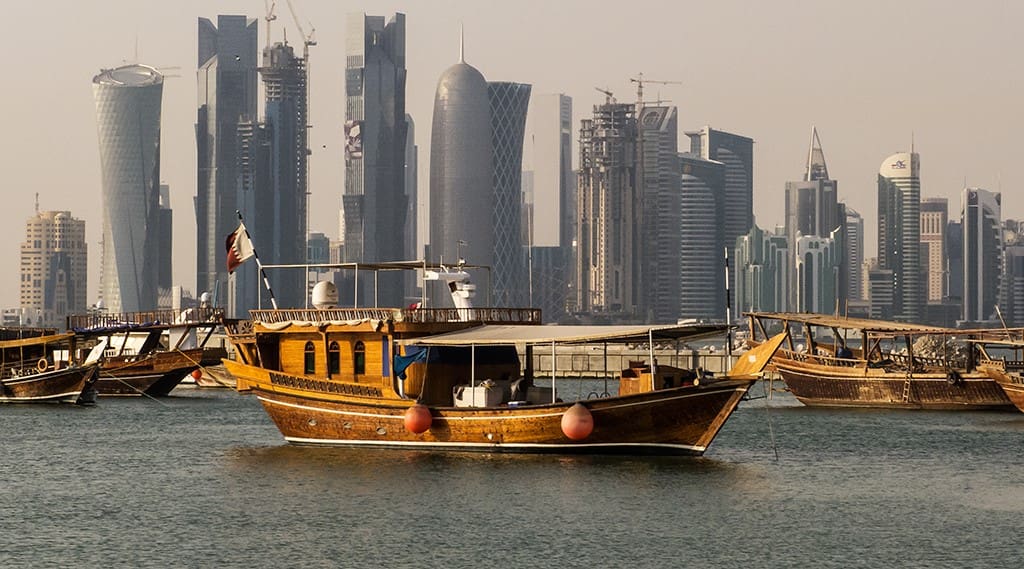
Gulf oil producers are attempting to bypass the dangerous Strait of Hormuz. Oil tankers have to pass through that narrow waterway to carry oil from the Persian Gulf to the rest of the world. Iran has cut off most shipping through the Strait of Hormuz, by planting mines in the Strait, and by firing missiles and rockets at oil tankers in and around the Strait of Hormuz.
Le Monde reports that the United Arab Emirates is expanding a pipeline to the Gulf of Oman which is expected to carry 3.6 million barrels per day by next year —nearly the UAE’s entire current oil output. “Saudi Arabia is considering expanding its pipeline to the Red Sea, and Iraq has signed an agreement with Syria to revive a pipeline to the Mediterranean. A study from Goldman Sachs estimates that 60 percent of the Gulf’s pre-Iran War oil exports could be protected from disruptions in the Strait of Hormuz by the end of 2028,” reports The Doomslayer.
The Iran War has reduced the flow of oil to the rest of the world from the Persian Gulf, driving up oil prices worldwide. But growing oil production in Brazil and Argentina is keeping oil prices from rising more, by making up for some of the lost oil.
Oil production in Brazil has risen from 3 million barrels per day in 2022 to about 4.5 million barrels per day in 2026.
The South American country of Guyana is rapidly expanding offshore oil production. It now has among the highest per capita oil production on Earth, producing more than 900,000 barrels of oil per day, despite having only 840,000 people. It was once the poorest country in South America, but now its per capita income is higher than any other country in the Americas (except perhaps the United States).
Some big cities in the Third World — like Cairo — have gone dark early due to the Iran War, which reduced the supply of oil and gas needed to provide electricity.
Few nations suffered more quickly as a result of the Iran War than Pakistan, “which was already grappling with fragile public finances and a war with neighboring Afghanistan even before” the Iran War cut off the supply of natural gas from the Persian Gulf: “Little over a week after the war began in Iran, Pakistan was already introducing austerity measures, such as closing shops and restaurants early, cutting back spending and encouraging civil servants to work from home. Prices shot up at the pump, and even the Pakistan Super League — its top cricket tournament — told fans to stay home. The situation got worse, due to shortage of liquefied natural gas, a vital power plant fuel that Pakistan usually obtains from Qatar, a Persian Gulf nation that is the world’s second-largest exporter.” Between the closed strait and a drone attack on Qatar’s giant natural has plant, Qatar did not not ship a single cargo of natural gas for weeks.





Ne zamandır web sitelerim için aradığım içeriği sonunda buldum. Bu kadar detaylı ve net açıklama için teşekkürler.
Daha önce araştırıp pek Türkçe kaynak bulamadığım sorundu Elinize sağlık eminim arayan çok kişi vardır.
Instant Activation Start Mining Within Seconds https://ethminer.surge.sh