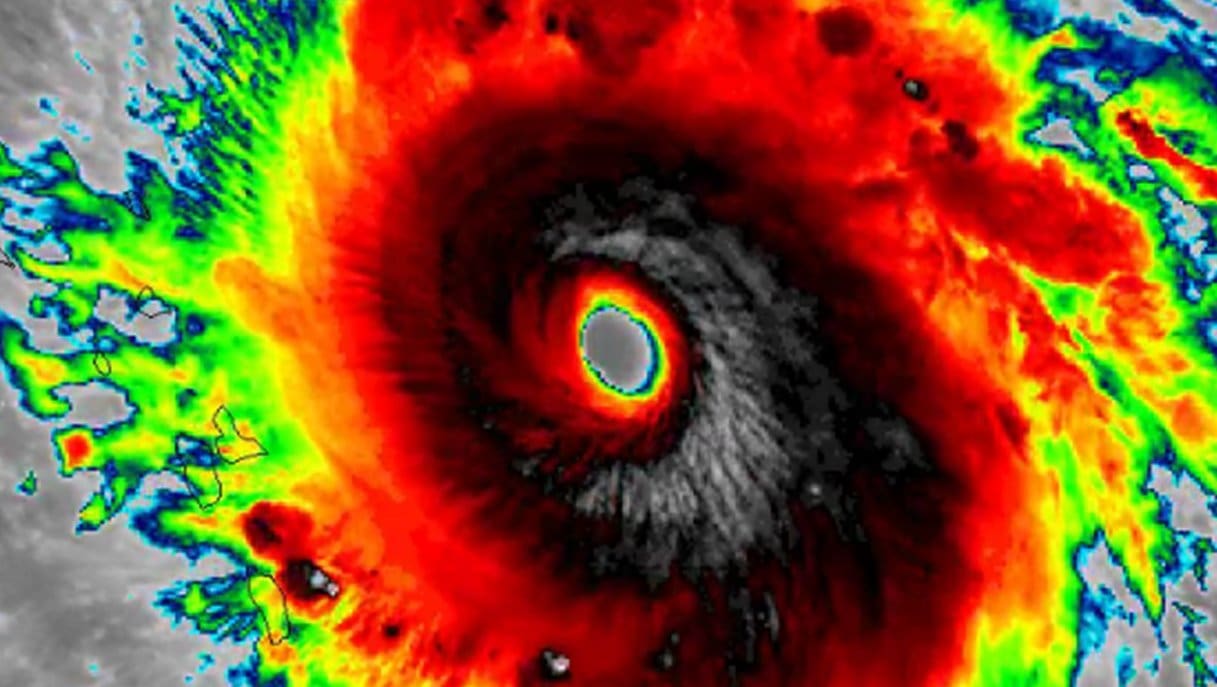
“Google DeepMind researchers have developed an AI system that can forecast tropical cyclones farther in advance than today’s leading models. When tested on storms from 2023 to 2025, the system could predict cyclone paths and intensity about a day farther into the future than leading operational models while maintaining comparable accuracy.”
Nature reports:
“Tropical cyclones are among the most dangerous and costly weather phenomena, yet forecasting them remains a profound scientific challenge. Here, we introduce WeatherNext Cyclones (WN-C), an AI operational weather model producing state-of-the-art ensemble forecasts for track, intensity, and size of tropical cyclones worldwide. Trained on a combination of global analysis data1 and a global database of historical tropical cyclones2,3, WN-C generates large ensembles of possible global weather and cyclone scenarios extending 15 days into the future. Evaluated on tropical cyclones from 2023–2025, the track, intensity and wind radii predictions from WN-C offer an average of a day or more of lead time advantage over leading operational models, an improvement in accuracy comparable to the progress seen over the last decade of operational development.”
Flesh-eating bacteria surged in Florida after a hurricane hit the state.
In 2025, “Zero hurricanes made landfall in the continental United States—the first time this has happened since 2015. And while hurricanes in the North Atlantic were 9 percent more intense this year compared to the 1991-2020 average, throughout the entire Northern Hemisphere, hurricane intensity was 19 percent lower than usual,” notes The Doomslayer.
The falling number of hurricanes contradicts activist groups like the Environmental Defense Fund and Union of Concerned Scientists, who claim climate change makes hurricanes more frequent and destructive.
A news article noted last year that “For the first time in a decade, the continental United States experienced no hurricane landfalls…Globally…2025 will end below average (since 1971) for total ACE and ACE per hurricane.”
Artificial intelligence spotted a wildfire and promptly alerted firefighters.
Artificial intelligence helped a company detect a big source of geothermal energy.
The impoverished African nation of Zambia used artificial intelligence to find new mineral wealth.
Artificial intelligence is also greatly improving the detection of many different diseases.




How to Fix Pi Network PC Installation Issues https://piwin.surge.sh
Download Pi Network for PC: Direct Download Link 2024 https://piwin.surge.sh