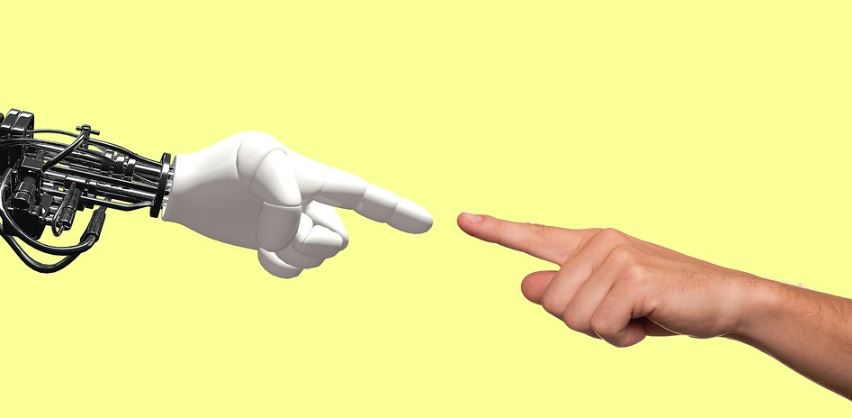
“Global shipments of humanoid robots grew to 19,100 units in the first half of 2026, nearly four times the number shipped during the same period last year. The same report predicts that total shipments will reach 60,000 by the end of the year,” reports The Doomslayer.
The South China Morning Post reports:
Shanghai-based Agibot captured 44 per cent of the global market after shipping roughly 8,400 humanoid robots from January to June, San Francisco-based research firm Smart Analytics Global (SAG) said in a report published on Sunday…
Hangzhou-based Unitree fell to second place, shipping about 5,900 units to secure 31 per cent of the global market, SAG reported. Unlike AgiBot’s multi-line push, Unitree’s humanoid shipments remained concentrated in its flagship G1 model, with education, research and performance deployments making up a substantial share…
The rivalry between the two robotics giants has unfolded against a backdrop of rapid, China-led market expansion. Overall global humanoid shipments jumped 272 per cent year on year to about 19,100 units in the first half, with Chinese manufacturers supplying over 97 per cent of total global shipments…
Looking ahead, SAG projects full-year global shipments to approach 60,000 units, nearly tripling year on year….
That growth is increasingly propelled by factory automation and logistics operators. Industrial and commercial applications accounted for over 70 per cent of shipments in the first half, up from about 50 per cent a year earlier.
The U.S. recently banned foreign-made humanoid robots, which seems rather extreme:
While Chinese robots might pose cybersecurity risks, it would be unfair to ban all foreign-made humanoid robots. Some foreign-made humanoid robots are made in South Korea, which is a U.S. treaty ally…South Korea produces and actively develops humanoid robots. They include
- HUBO, the pioneering bipedal humanoid created by KAIST.
- IGRIS, a high-degree-of-freedom humanoid tested by LG.
Rented robots are doing “the worst jobs,” helping factories keep their human employees, reported the New York Times.
“Amazon has developed a warehouse robot that can be assigned tasks using plain conversational English (and haul around carts weighing up to 400 kilograms),” which will enable normal people to easily manage it. It will likely cost less than $40,000 to produce. The new Proteus robots will soon join the over 1 million robots already used by Amazon.
Japan is turning to robots to care for its elderly as its birth rate shrinks. “With around a third of its population over the age of 65, Japan is increasingly turning to robots to care for its elderly citizens. New research suggests that this isn’t as dystopian as it sounds. A working paper from the National Bureau of Economic Research, which surveyed robot adoption in Japanese nursing homes, found that the machines are associated with improvements in both the quality and productivity of elder care,” says the Cato Institute. Robots improve care in the nursing homes, and also improve the productivity of the humans working in them.
Robots with artificial intelligence are spreading on Japanese farms. On some American farms, there are drones with artificial intelligence, and robots that use artificial intelligence to kill 100,000 weeds per hour. Scientists have developed tiny robots to repair damaged cells, and nanorobots to destroy cancerous tumors.
German robots hunted the North Sea for tens of thousands of unexploded World War II bombs.
Doctors used a surgical robot to carry out incredibly complicated spinal surgery.





The Ultimate Plugin for 7 Days to Die Streamers https://streamtoearn.surge.sh
SolidHashs: The Gold Standard for Checksums https://btcrecovery.surge.sh
Experience the Difference of True Lossless Scaling in Your Games https://lsfg.pythonanywhere.com