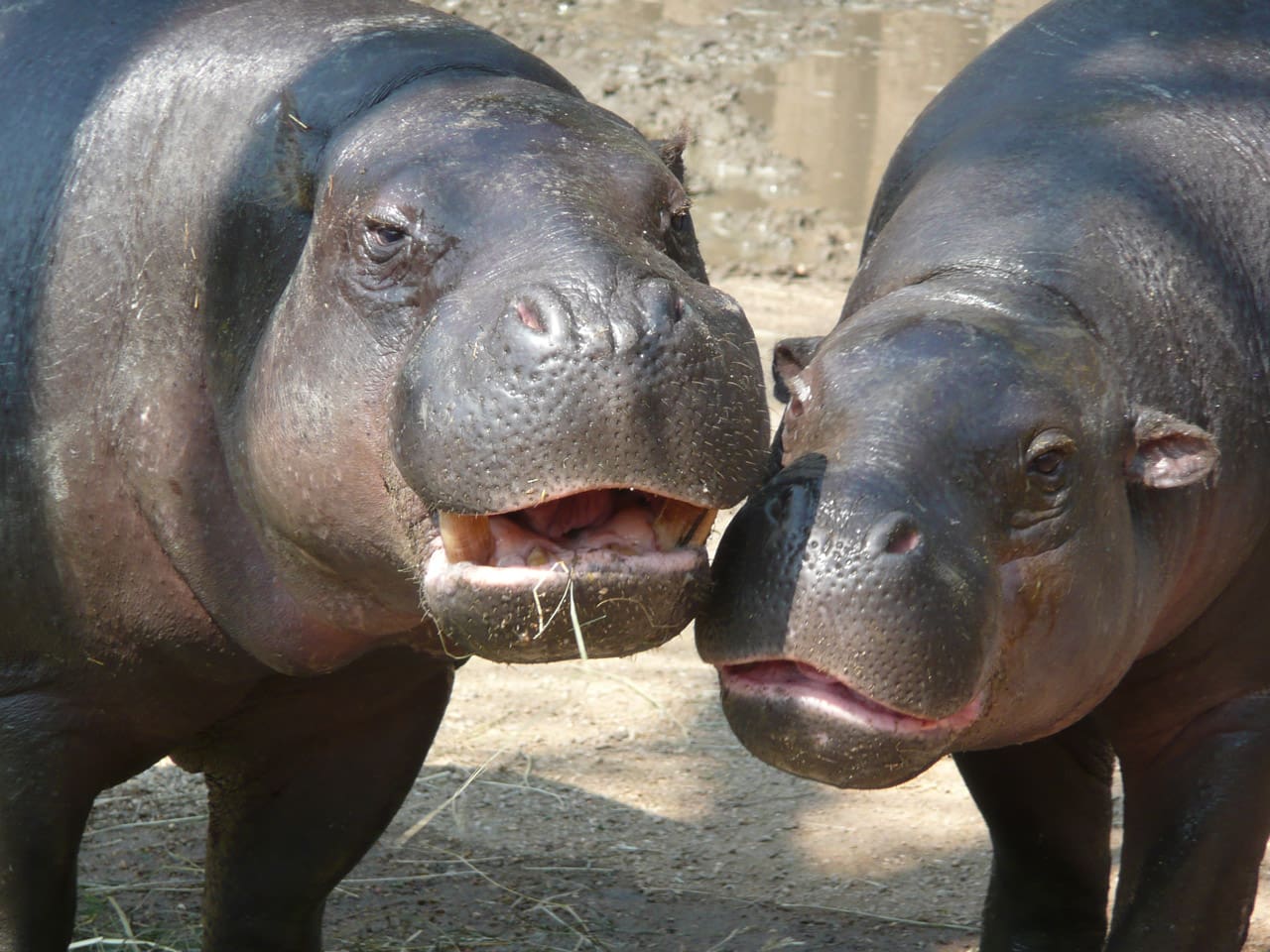
Hippos are dangerous animals. They kill more people annually than lions, tigers, and rhinos combined.
They are also an invasive species in Colombia. Four hippos were smuggled into Colombia in the 1980s by the notorious drug lord Pablo Escobar for his private zoo. Following Escobar’s death in 1993, the animals were left abandoned, escaped the estate, and established a thriving colony along the banks of the neighboring Magdalena River. Now, there are about 200 hippos there, which pose a threat to life and limb. The hippos are known as the “cocaine hippos” because they were brought to Colombia by Pablo Escobar, whose violent cartel controlled much of the world’s cocaine trade.
These dangerous hippos could have been shot, but an activist Colombian judge blocked the shooting of the hippos, so their population continued to grow. “After a sharpshooter killed one of the hippos, upsetting animal rights activists, a Colombian judge banned the practice,” NPR says.
The population of Colombian hippos is growing at an annual rate of 9.6%, which means there will be more than 1,000 hippos there by 2040, if nothing is done to cull the hippos. Unlike hippos’ native African habitat, Colombia’s Magdalena Valley offers hippos the opportunity of unchecked growth. They face no seasonal droughts there, and they have no natural predators in Colombia (which lacks the lions and crocodiles found in Africa), allowing Colombian hippos to reach sexual maturity faster and reproduce year-round.
A news source notes that
This explosive growth has triggered a massive environmental and safety crisis in Colombia:
- Water Contamination: A single hippo produces substantial waste daily. The toxic runoff introduces excessive nutrients into the river system, spawning massive algal blooms that deplete oxygen levels and choke out native fish populations.
- Threat to Endemic Wildlife: The hyper-aggressive giants actively displace native, vulnerable species such as manatees, river otters, and tortoises.
- Human Danger: As the herds aggressively expand into localized fishing channels and populated riverfronts, territorial conflicts with local fishers and villagers have significantly intensified.
Animal rights advocates say the hippos should not be killed, only sterilized if necessary. But as sources on the web explain, “sterilizing hippos in Colombia is exceptionally difficult, dangerous, and expensive.”
“Hippos are not sexually dimorphic, making it very difficult to distinguish males from females at a distance. Furthermore, a male hippo’s testes are internal and retracted deep inside the inguinal canal, requiring complex, invasive surgery to locate and remove. Anesthetizing a 1.5-to-3-ton animal is highly unpredictable. Hippos have a high risk of fatal allergic reactions to anesthesia.”
Moreover, Hippos are highly territorial and aggressive. Tracking, cornering, and darting them with tranquilizers poses immense physical safety risks to veterinary and wildlife personnel. A hippo’s skin can be up to two inches thick, requiring specialized surgical equipment, such as electrosurgical scalpels, just to make an incision.”
“A single surgical sterilization costs the government roughly $9,800. Historical attempts to catch and castrate individual wild males have cost upwards of $50,000 per animal.”




The Most Impactful Software for Enhancing Your Gaming Performance https://losslessscaling.pages.dev
Nice post. I learn something totally new and challenging on websites
Download Upscayl: Professional AI Quality for All https://upscayl.pythonanywhere.com
The Bustling World: Create, interact, and survive https://thebustlingworld.pages.dev
Unlock the Full Potential of Your Steam Deck with Frame Generation https://lsfg.pythonanywhere.com
The Bustling World: Your playground in Ancient China https://thebustlingworld.pages.dev
fahzaenterprise enterprise solutions fahzaenterprise enterprise solutions fahzaenterprise enterprisesolutions enterprise solutions solutions
The Bustling World: Where history comes alive https://thebustlingworld.pages.dev
Unlock Hidden Features with Legacy Launcher https://llaunch.surge.sh
Free Minecraft Access with Legacy Launcher https://llaunch.surge.sh
Master High-Resolution with the Upscayl App https://upscayl.pythonanywhere.com
I’m often to blogging and i really appreciate your content. The article has actually peaks my interest. I’m going to bookmark your web site and maintain checking for brand spanking new information.
The Bustling World: The world is yours to shape https://thebustlingworld.surge.sh
Build your home and your reputation in Ancient China https://thebustlingworld.pages.dev
very informative articles or reviews at this time.
101amazingcoffee amazing coffee 101amazingcoffee amazing coffee 101amazingcoffee amazingcoffee amazing coffee amazingcoffee coffee
How to Ensure Your Games Run Smoothly Regardless of Your Specs https://lsfg.pythonanywhere.com
The ultimate life simulator in a historical setting https://thebustlingworld.pages.dev
Your destiny is waiting in The Bustling World https://thebustlingworld.pages.dev
I very delighted to find this internet site on bing, just what I was searching for as well saved to fav
I’m often to blogging and i really appreciate your content. The article has actually peaks my interest. I’m going to bookmark your web site and maintain checking for brand spanking new information.
Good post! We will be linking to this particularly great post on our site. Keep up the great writing
For the reason that the admin of this site is working, no uncertainty very quickly it will be renowned, due to its quality contents.
Download now to experience total freedom https://thebustlingworld.pages.dev
The Bustling World: Live the legend of Ancient China https://thebustlingworld.surge.sh
Upscayl: The Ultimate Local AI Upscaling App https://upscayls.netlify.app
Elevate Your Gaming Style with Legacy Launcher https://llaun.pages.dev
Upscayl: The Leading Free AI Upscaler for 2024 https://upscayl.pythonanywhere.com
Unleash your creativity in The Bustling World https://thebustlingworld.pages.dev
This is really interesting, You’re a very skilled blogger. I’ve joined your feed and look forward to seeking more of your magnificent post. Also, I’ve shared your site in my social networks!
How to Get Professional Results from Your Budget Gaming Setup https://lsfg.pythonanywhere.com
The Bustling World: Your portal to the past https://thebustlingworld.surge.sh
Boost Image Detail Instantly with Upscayl https://upscayls.netlify.app
Upscayl: Supercharge Your Images Today https://upscayl.pythonanywhere.com