“In Australia, land managers used drones to clear an island of mice, and authorities are employing drone pilots to help warn beachgoers about great white sharks.”
Australian Geographic reports:
Scientists and land managers from WA Parks and Wildlife Service and Monash University spent three days surveying Browse Island, a 17ha island 450km north-east of Broome, using thermal scanners, 400 mouse traps and motion-sensor cameras to search for surviving mice.
And while it’s still too early to officially declare the island ‘mouse-free’, the results so far are encouraging…
Last October, conservationists scattered 700kg of bait across the island using drone technology developed by New Zealand company Envico Technologies.
When researchers visited the island in April, they found no sign of mice during the three-day survey.
The New York Times reports on how drones are helping prevent shark attacks:
Although shark attacks are rare in Australia, Sydney is on high alert after a period of increased activity. Last month, a suspected great white shark mauled a schoolteacher at the popular Coogee Beach, a few miles from Bondi. Then, there were back-to-back shark sightings along the coast, prompting the authorities to close Sydney’s beaches for several days.
In a bid to keep oceangoers safe, officials in New South Wales, where Sydney is, increased funding for the state’s aerial shark surveillance last month. The drone program, which is managed by Surf Life Saving New South Wales, will now run year-round at about 70 beaches. Previously, the program ran during the summer months and school vacation periods…
Once drone pilots spot a potentially dangerous shark, they will alert lifeguards, who can sound the shark siren and clear the water. In the first week of July, at the start of the expanded program, several beaches were closed after sharks were spotted.
James Bassam, chief remote pilot for Surf Life Saving New South Wales, said the service completed 100,000 drone flights in the past fiscal year and spotted 2,300 sharks. This year, they project 500,000 flights.
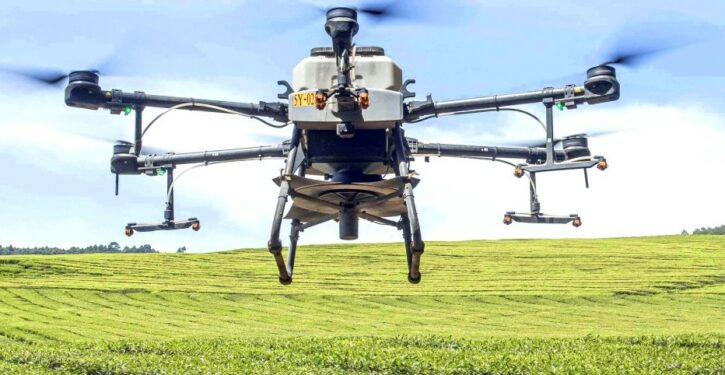
On some American farms, there are drones with artificial intelligence that spray fungicides to kill pests. As Bloomberg News notes, “These aerial acrobats use less than a tenth of the energy of ground tractors — and they don’t squash the crops, rut the earth or even touch the soil.”
Robots with artificial intelligence will reduce the need for weed-killer and pesticides by more precisely targeting weeds and pests. That will cut farmers’ costs, and radically reduce the size of the crop chemical industry, because robots will use up to 90% less spray to kill the same number of weeds and pests. Some robots using artificial intelligence can identify and kill 100,000 weeds per hour.