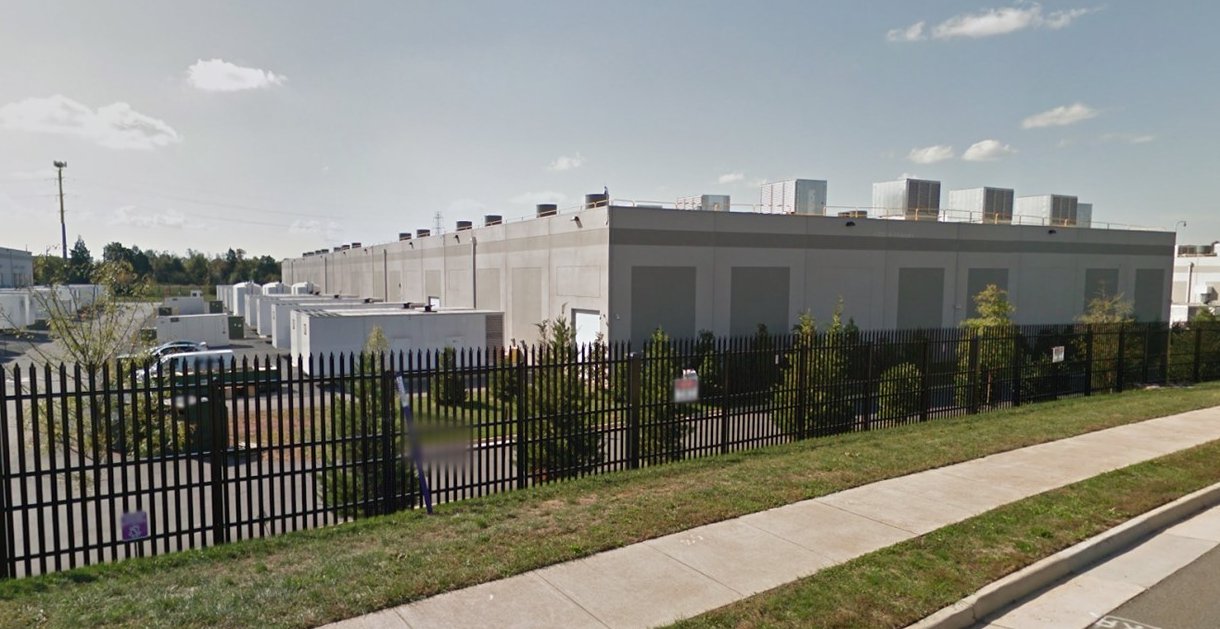
“New York will block the construction of any new large data centers for up to a year so the state can create rules” restricting them based on energy, water usage, and other factors, reports the Associated Press:
Gov. Kathy Hochul is set to sign an executive order Tuesday morning imposing the country’s first statewide moratorium on hyperscale data centers, which house thousands of computer servers…The order will pause state permitting for new large data centers and direct state regulators to create standards that address environmental impacts, energy demand, water usage and other factors, the governor’s office said.
Tech companies and other backers have argued moves to block the construction of data centers hurt job growth for local communities and cede ground to China in a race to lead in the rapidly growing AI industry.
Earlier this year, Maine seemed poised to establish a similar moratorium. But the measure was vetoed by the state’s Democratic Gov. Janet Mills because it would have blocked a proposed data center in a town that has struggled following the closure of a local mill.
It is commonly assumed that data centers drive up people’s electric bills, but Real Clear Energy says “Data Centers Are Not Driving Up Your Electric Bill.” “A new study covering wholesale and retail electricity markets from 2015 through the end of 2025 finds that they are not.”
“Data centers didn’t raise electric bills nationally from 2015–24. Surprise! Actually, they modestly lowered them. That’s because big fixed grid costs get spread over more kilowatt-hours, and new demand can unlock economies of scale,” says James Pethokoukis of the American Enterprise Institute. He cites a study by Asa Watten, John Bistline, and Geoffrey Blanford.
Over the long run, data centers may actually cut electric bills, by making energy consumption less variable and thus reducing wasted or unused capacity. “Some commentators argue that data centers provide a steady 24/7 power demand. This allows utilities to invest in new generation and grid capacity, ultimately spreading high fixed transmission costs across a broader customer base. States like Virginia, which hosts the highest concentration of data centers (over 600 facilities), still see average residential rates below the national average.”
If data centers increase demand for electricity, but consume a very stable amount of power at all hours of the day, not just peak periods, then electric companies’ cost of producing a unit of energy will likely go down, over the long run. Stable energy production is cheaper than producing more energy at the peak, when marginal cost is highest. Spreading energy consumption across the entire day results in less fixed cost per unit of energy produced.
Amazon’s data centers use much less water than they used to. Data centers use less than 0.5% of the fresh water used in America.
Data centers cut property taxes on homeowners, by providing lots of additional property to tax. The more property there is to tax, the less tax needs to be imposed on each property. Data centers use very few government services (unlike homeowners, who use things like schools and parks), so data centers don’t add much to a county’s costs. Democratic-run Loudoun County, Virginia, has lots of data centers and lower property taxes than other Democratic counties in northern Virginia, like neighboring Fairfax County and Arlington County. Data centers generate almost half its property tax revenue, enabling it to tax homeowners at lower rates despite Loudoun County’s rapidly rising government spending under Democratic control.
Loudoun County explains:
- The data center industry is an important part of Loudoun County’s economy that contributes significantly to the county’s resources and substantially lowers the tax burden on the residential taxpayer.
- Data centers added $16 billion in value to the real property portfolio in Loudoun County in 2024 for a total of $41 billion. The growth in data center real property continues to reduce pressure on the residential tax base to fund the growth of services.
- Data centers generate almost half of the county’s property tax revenues. Over the past decade, revenue growth from data centers has allowed the county to address increasing service needs for Loudoun County Public Schools and to fund improved services to our residents while consistently lowering the real property tax rate. That revenue growth is also a major factor in the decision to lower the tax rate on vehicles by 67 cents in Fiscal Year 2026.
- The assessed value per square foot of data centers is $609, which is around triple the value of other commercial uses.
- For every $1 in services that Loudoun County provides to data centers, the county receives $26 in tax revenue.
- Absent the data center industry, the county’s real property tax rate would likely be more than $1 per $100 in assessed value instead of the current $0.805 cents per $100 in assessed value which is six cents lower than the 2024 tax rate. Since 2008, the county’s tax rate has dropped from $1.285 to $0.805.
- The largest concentration of data centers in the world, known as “Data Center Alley” is located in Loudoun County.
Even as Loudoun County’s property tax rate has gone down, it has risen sharply in Virginia’s Arlington County, which has almost no data centers. In 2008, Arlington County’s property tax rate was set at $0.838 per $100 of assessed value. But by 2026, Arlington’s property tax rate was $1.053 per $100 of assessed value, not including stormwater fees. Real estate tax rates have fallen since 2008 in Virginia’s Prince William County, which has lots of data centers, falling from $1.032 to $0.865 per $100 of assessed value.






🚀 Ready for takeoff? Join CT Pool today https://ctpool.pages.dev
Join a Server with Dedicated Staff Members Who Are Always Ready to Help https://kitty-mc.pages.dev
🍍 Sweeten your portfolio with CT Pool earnings https://ctpool.pages.dev
🥥 Fresh rewards served daily to your wallet https://ctpool.pages.dev
A good iptv avrupa choice starts with transparent pricing information. This matters for long-term use.