Amazon data centers now use less water. They also spawn tax cuts for homeowners.

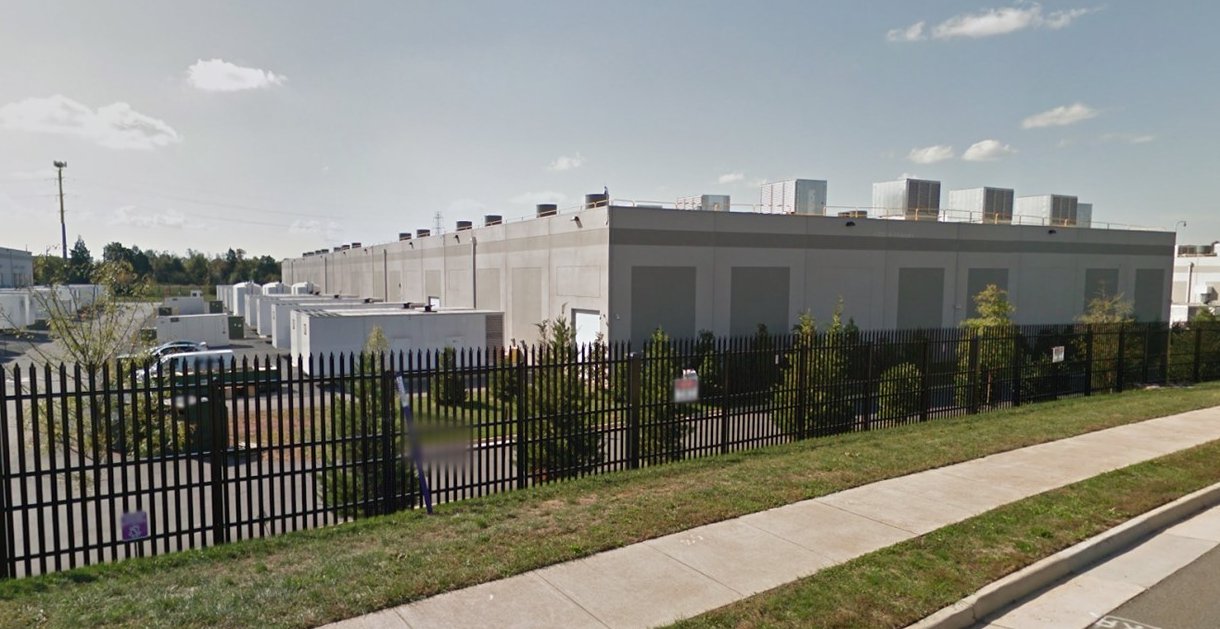
Amazon’s data centers are using water more efficiently than in the past. A company report shows that “Amazon’s data centers used just 0.12 liters of water per kilowatt-hour of compute in 2025, about one-seventh of the industry average and less than half of Amazon’s rate of 0.25 liters in 2021,” notes The Doomslayer.
Amazon News says that
When data centers use water for cooling, one of the most important metrics is how efficiently they use that water—meaning how little water they use for each unit of compute. Amazon announced that its global data center operations used just 0.12 liters of water per kilowatt-hour (L/kWh) in 2025, a rate that’s over 7x more efficient than the industry average of 0.84 L/kWh.
In other words, we use far less water per unit of compute than others in the global data center industry, which as a whole accounts for less than 0.5% of all industrial water use globally.
And we’re continuing to get even more efficient year over year. These efficiency gains are the result of years of investment in custom cooling technology, smarter systems, and a commitment to minimize water use wherever possible.
A think-tank says that “the total water use of all U.S. data centers constitutes less than 0.5% of American freshwater use and there is not a single instance of AI infrastructure raising water prices anywhere in America. AI data centers are a boon for the country, driving economic growth.” The largest U.S. data center consumed less water than three square miles of farmland did.
Data centers are accused of raising people’s electric bills, but that’s not true in most of the country. “Data centers didn’t raise electric bills nationally from 2015–24. Surprise! Actually, they modestly lowered them. That’s because big fixed grid costs get spread over more kilowatt-hours, and new demand can unlock economies of scale,” says James Pethokoukis of the American Enterprise Institute. He cites a study by Asa Watten, John Bistline, and Geoffrey Blanford.
There is not much correlation between how many data centers are in a state and how fast electricity prices rise in the state. Electricity bills rose 13% year over year in Virginia, which has “the highest concentration of data centers in the world.” That’s more than the national average increase of 6%. But other states with lots of data centers saw electricity prices rise slower than the national average. “Texas, for example, is second only to Virginia with more than 400 data centers.” But electricity “prices in the Lone Star state increased about 4% year over year in August, lower than the national average.” The state with “the third most data centers in the nation” had its electricity prices increase “about 1% in August 2024 over the prior year period, far below the average hike nationwide.”
Data centers cut property taxes on homeowners, by providing lots of additional property to tax. The more property there is to tax, the less tax needs to be imposed on each property. Data centers use very few government services (unlike homeowners, who use things like schools and parks), so data centers don’t add much to a county’s costs. Democratic-run Loudoun County, Virginia, has lots of data centers and lower property taxes than other Democratic counties in northern Virginia, like neighboring Fairfax County and Arlington County. Data centers generate almost half its property tax revenue, enabling it to tax homeowners at lower rates despite Loudoun County’s rapidly rising government spending under Democratic control.
Loudoun County explains:
- The data center industry is an important part of Loudoun County’s economy that contributes significantly to the county’s resources and substantially lowers the tax burden on the residential taxpayer.
- Data centers added $16 billion in value to the real property portfolio in Loudoun County in 2024 for a total of $41 billion. The growth in data center real property continues to reduce pressure on the residential tax base to fund the growth of services.
- Data centers generate almost half of the county’s property tax revenues. Over the past decade, revenue growth from data centers has allowed the county to address increasing service needs for Loudoun County Public Schools and to fund improved services to our residents while consistently lowering the real property tax rate. That revenue growth is also a major factor in the decision to lower the tax rate on vehicles by 67 cents in Fiscal Year 2026.
- The assessed value per square foot of data centers is $609, which is around triple the value of other commercial uses.
- For every $1 in services that Loudoun County provides to data centers, the county receives $26 in tax revenue.
- Absent the data center industry, the county’s real property tax rate would likely be more than $1 per $100 in assessed value instead of the current $0.805 cents per $100 in assessed value which is six cents lower than the 2024 tax rate. Since 2008, the county’s tax rate has dropped from $1.285 to $0.805.
- The largest concentration of data centers in the world, known as “Data Center Alley” is located in Loudoun County.
Even as Loudoun County’s property tax rate has gone down, it has risen sharply in Virginia’s Arlington County, which has almost no data centers. In 2008, Arlington County’s property tax rate was set at $0.838 per $100 of assessed value. But by 2026, Arlington’s property tax rate was $1.053 per $100 of assessed value, not including stormwater fees. Real estate tax rates have fallen since 2008 in Virginia’s Prince William County, which has lots of data centers, falling from $1.032 to $0.865 per $100 of assessed value.




Daha önce araştırıp pek Türkçe kaynak bulamadığım sorundu Elinize sağlık eminim arayan çok kişi vardır.
https://shorturl.fm/3oCtx
I’m often to blogging and i really appreciate your content. The article has actually peaks my interest. I’m going to bookmark your web site and maintain checking for brand spanking new information.
I appreciate you sharing this blog post. Thanks Again. Cool.
I’m often to blogging and i really appreciate your content. The article has actually peaks my interest. I’m going to bookmark your web site and maintain checking for brand spanking new information.
Awesome! Its genuinely remarkable post, I have got much clear idea regarding from this post