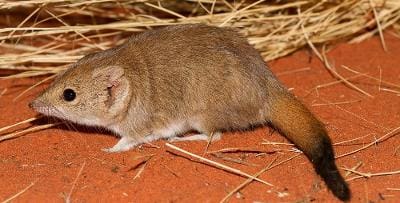
“The ampurta, a formerly endangered carnivorous marsupial found in Australia, has rebounded in recent years, expanding its range by an area the size of Denmark between 2015 and 2021. Researchers credit some of the resurgence to the 1995 release of rabbit hemorrhagic disease virus, which wiped out large numbers of invasive rabbits in Australia and thereby reduced the population of feral cats and foxes, major predators of the ampurta,” reports The Doomslayer.
Recoveries of threatened species are rare, often requiring intensive and costly species-specific conservation interventions. Yet in arid Australia with the worst mammal extinction record, the ampurta, a rat-sized marsupial micro-predator, has defied this trend. Once nationally Endangered, its conservation status rebounded to Vulnerable by 2013, and Least Concern by 2019. We used track plots to quantify the extent and rate of expansion from 2015‐–2021, and modelled potential environmental drivers and future climate scenarios. Despite unprecedented and prolonged drought during the study period, ampurtas increased their known range by >48,000 km2, an area larger than Denmark, even extending into areas where their status was ‘presumed extinct’. Rabbit biocontrol likely played a key role in reducing effects of invasive predators on ampurta.The significant dry period also likely provided adaptive advantages for ampurta with their flexible diet and physiological adaptions to low energy expenditure potentially conferring resilience in environmental extremes. Ampurta are a rare example of a species able to capitalize on drought conditions combined with threat reduction, providing opportunities through reduced competition and
Other species are making a comeback. Whales have become so numerous in parts of the Southern Ocean that groups of 100 or more whales can be often be sighted near the South Orkney islands.
White rhinos have returned to a national park after being absent since 1983.
Bobcats recently returned to New Jersey after being absent from the state for a half century.



https://shorturl.fm/F6Am2