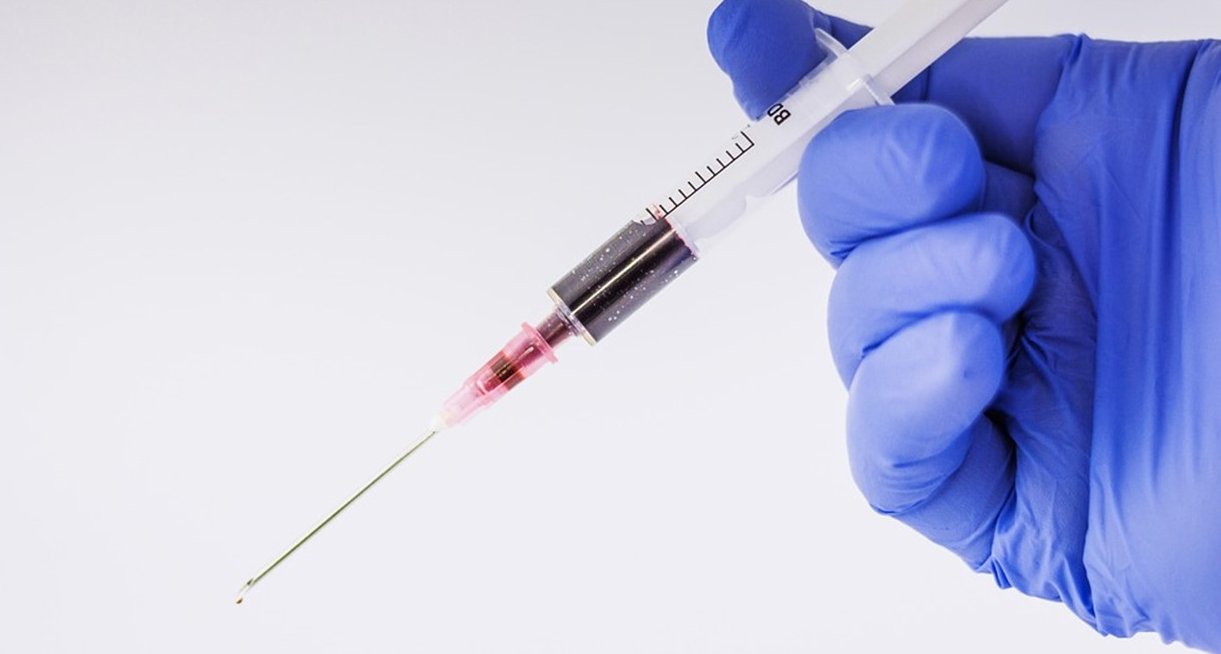
“Chris Buck stands barefoot in his kitchen holding a glass bottle of unfiltered Lithuanian farmhouse ale….Buck raises the mug and sips. ‘Cloudy beer. Delightful!’ He has just consumed what may be the world’s first vaccine delivered in a beer. It could be the first small sip toward making vaccines more palatable and accessible to people around the world….Or the idea may go nowhere”, reports Science News:
Buck’s unconventional approach illustrates the legal…challenges involved in developing potentially lifesaving vaccines.
Buck isn’t just a home brewer dabbling in drug-making. He is a virologist at the National Cancer Institute in Bethesda, Md., where he studies polyomaviruses, which have been linked to various cancers and to serious health problems for people with weakened immune systems. He discovered four of the 13 polyomaviruses known to infect humans.
The vaccine beer experiment grew out of research Buck and colleagues have been doing to develop a traditional vaccine against polyomavirus. But Buck’s experimental sips of vaccine beer are unsanctioned by his employer.
Beer vaccines won’t be available anytime soon (maybe not ever), due to regulatory hurdles. Many people die waiting for the FDA to approve life-saving drugs. For example, at least a hundred thousand people died waiting years for the FDA to approve beta blockers. One of the FDA officials involved in delaying their approval was John Nestor. Nestor was notorious for his habit of deliberately driving slowly in the fast lane on highways in order to slow down other motorists. The FDA can be very slow. It didn’t approve a home test for HIV until 24 years after it first received an application. According to an FDA advisory committee, the test held “the potential to prevent the transmission of more than 4,000 new HIV infections in its first year of use alone.” That means thousands of people got infected with AIDS as a result of the delay in approving it. As Roger Parloff noted, the FDA’s delay in approving the home HIV test was a “scandal.” It caused the deaths of thousands of people.
Some vaccines could be administered painlessly by eating tasty genetically-enhanced greens. But green activists oppose that. So that alternative to getting a shot won’t become a reality anytime soon. That’s too bad, because some people avoid getting certain vaccines, just because vaccination hurts. Even though they have no problem eating chewable medicine tablets, or drinking grape-flavored cold medicine.
At the National Review, ethicist Wesley Smith noted that “Scientists are conducting an experiment that, if successful, would permit us to receive some vaccines and other medicines by eating food rather than by jab.” Study Finds reported that “Vaccinations can be a controversial subject for many people, especially when it comes to injections. So what if you could replace your next shot with a salad instead? Researchers at the University of California-Riverside are working on a way to grow edible plants that carry the same medication as an mRNA vaccine.”
The researchers hope that by modifying the genes of edible plants, they can carry the vaccine in a way that lasts longer and is stored more easily. They plan to deliver DNA containing mRNA vaccines into plant cells, where they can replicate. “Ideally, a single plant would produce enough mRNA to vaccinate a single person,” said professor Juan Pablo Giraldo.
But as Smith notes, even after the plants are genetically engineered, they won’t soon become available to the public, because of “implacable opposition” by green activists. They will fight against allowing genetically-modified greens to be distributed, “regardless of the medicinal benefit.” That’s how they have responded to agricultural advances and food-technology improvements in the past, delaying them for years.
He gives as one example vitamin-enriched “Golden Rice,” which “has the great potential to prevent blindness in children who live in developing countries caused by Vitamin A deficiency.” Scientists engineered these rice plants to produce beta-carotene. But distribution of them “was thwarted for many years, even though growth and distribution will be via a non-profit.”
In 2003, environmental activists in the Philippines destroyed a field trial of Golden Rice being conducted by the World Bank-sponsored International Rice Research Institute. As food safety expert Gregory Conko noted, “Golden Rice is a humanitarian project—the grains engineered to produce beta carotene to provide a needed Vitamin supplement for poor rice-growing farmers in less developed countries. Activists even tried to convince Filipino farmers that walking through a field of genetically engineered corn could turn farmers gay.”
They did this “despite the considered opinion of dozens of scientific bodies from all around the world” that “genetically engineered crops now on the market are safe for consumers and the environment,” a conclusion reached by “the U.S. National Academies of Science, American Association for the Advancement of Science, the U.K.’s Royal Society, and the French Academy of Science.”
Left-wing activists have vandalized other projects to genetically improve crops. For example, Smith notes, “experimental wheat field intended to develop a plant that is resistant to fungal infection was trampled asunder by activists who apparently prefer human starvation to a benign modification of wheat so that it will be more resilient.”
Bureaucratic agencies delay for years the distribution of genetically-enhanced crops and foods. It took 20 years for genetically-enhanced salmon to be approved by the FDA. The FDA must find genetically-modified food products to be as safe as their non-modified counterparts before they come to market. But the FDA is very slow to approve even safe and effective products. For example, FDA regulation has “done more to slow the introduction of valuable drugs than to prevent the distribution of harmful and ineffective ones,” according to The Atlantic. By delaying the approval of life-saving drugs, the FDA has caused hundreds of thousands of preventable deaths.
Left-wing opposition to agricultural advances has not been not limited to genetic engineering. Some left-wing Luddites also denounced crossbreeding and selective breeding that improved crop yields, such as wheat that put most of its energy into edible kernels rather than long, inedible stems.
The agronomist Norman Borlaug, who pioneered the Green Revolution, saved perhaps a billion lives in the Third World by developing high-yield, disease-resistant crops through biotechnology. For this, he received the Nobel Peace Prize, the Presidential Medal of Freedom, and the Congressional Medal of Honor. Yet he was smeared in the left-wing magazine The Nation, which had an irrational phobia of biotechnology, as being “the biggest killer of all.”