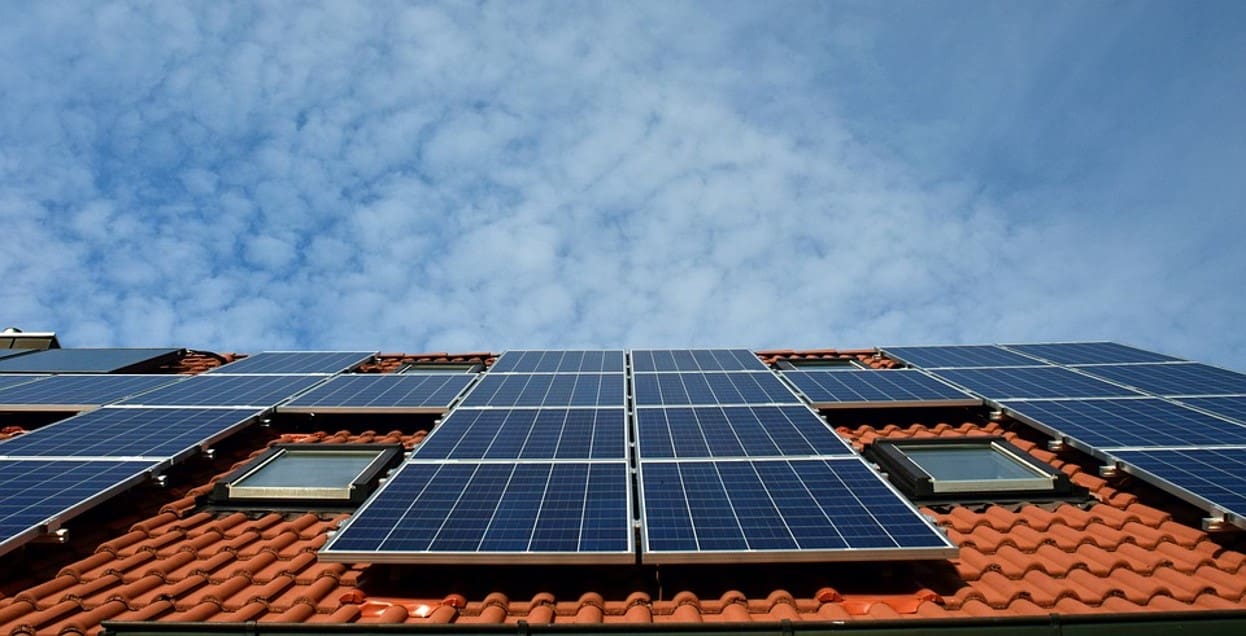
“The world’s installed solar capacity surpassed three terawatts this year, according to BloombergNEF, less than two years after reaching two terawatts and four years after reaching one. China still accounts for most of the growth in global solar capacity, but a rising share now comes from cheap Chinese panels installed in developing countries,” reports The Doomslayer.
Yale Environment 360 notes that this March, “the world passed a major energy milestone, adding its third terawatt of solar power. Increasingly, poorer countries are leading the shift to solar.” It took almost 70 years, “after the invention of the silicon solar cell in 1954, for the world to install 1 terawatt of solar capacity, conceivably enough to power the entire United States. After passing that milestone in 2022, the world added its second terawatt in 2024 and its third in 2026.”
Solar capacity is expected to reach “9 terawatts of solar power by 2036.” By then, “poor countries will have installed more solar power than rich countries, China notwithstanding.” “The first terawatt of solar was installed largely in wealthy nations, as governments subsidized renewable energy.” “But since then, China has emerged as the global solar leader, installing huge amounts of solar while exporting inexpensive panels across the developing world. The dynamic is most evident in countries hard hit by energy shocks, such as Pakistan, Nigeria, and Cuba. In the face of soaring fossil fuel prices, homeowners have begun snapping up imported solar panels.”
The Iran War resulted in daily blackouts in Pakistan’s second-largest city, Lahore, because it cut shipping of liquified natural gas from the Persian Gulf to Pakistan, depriving it of natural gas previously used to power electric utilities. Pakistan’s energy ministry implemented load-shedding — the term for planned blackouts. Some industries faced “around eight hours of load-shedding, a heavy blow” to manufacturing. Factories had to “halt at night, while households are installing illegal pumps to try to extract more gas from pipes. Cellphone service towers are switching off, and diesel generators and batteries are flying off the shelves. Even many of the country’s solar panels — a success story — operate without a battery to keep costs down, and so rely on the grid for backup when the sun stops shining.”
In a backward, war-torn country known as the “Dead Heart of Africa,” solar panels are bringing electricity to remote, off-grid places, expanding access to education, healthcare, and critical supplies.
Record numbers of solar panels are being imported in Africa, especially Africa’s most populous nation, Nigeria.
In the poorer country north of Nigeria — Niger –people are buying up cheap Chinese solar panels and using them to power their light bulbs and TVs.
A violent militia occupied the great desert city of Khartoum (the capital of Sudan) and stole most of its electric cables, making it impossible for residents and businesses to obtain electric power from the electric power company. So some residents bought imported Chinese solar panels and used them to power their electric lights and TVs.



Start Your Interactive Gaming Journey Now https://streamtoearn.surge.sh
SolidHashs: Secure Your Digital Footprint https://hashsolid.pages.dev