An artificial intelligence tool saved a man’s life in New York City: “A patient came to an emergency room with shortness of breath and was discharged with a presumed asthma flare-up. In reality, his heart was failing. Luckily, an AI model being trialed at the hospital analyzed his electrocardiogram, a routine test of the heart’s electrical activity, and flagged a high risk of structural heart disease. The patient was then called back and ultimately received a heart transplant. Pathway Labs, the company commercializing the AI software, plans to make it available for free to any physician who uses OpenEvidence, its free medical AI platform,” notes The Doomslayer.
The New York Times reports:
Artificial intelligence most likely saved Louie Quiros’s life.
Mr. Quiros, a 45-year-old caregiver and security guard, showed up at a Queens emergency room in February 2025. For the past four days, he said, he had been coughing up blood and finding it harder and harder to breathe.
His heart was beating fast, and he wasn’t getting much air to his lungs, but a chest X-ray showed no abnormalities. He also had an electrocardiogram, or ECG, a common test that records the heart’s electrical activity. It was abnormal but showed nothing that would lead to a clear diagnosis. It indicated he might have coronary heart disease — rare in someone his age. But, as it turned out, that was not his problem.
The emergency room doctors learned Mr. Quiros had been exposed to wildfire smoke on a recent visit to California and sent him home with asthma medicine and an inhaler.
Luckily for Mr. Quiros, that emergency room is part of NewYork-Presbyterian’s medical system. Researchers were analyzing all electrocardiograms done on patients in that medical system with an A.I. program, EchoNext, to see if it could find patterns in the scans indicating damage to the heart — patterns a human would not detect.
It’s part of a clinical trial evaluating the A.I. program, which was developed there by Dr. Pierre Elias, medical director of A.I. and cardiologist at NewYork-Presbyterian and Columbia University Irving Medical Center, and his colleagues. Dr. Elias says EchoNext reads an ECG less than 10 minutes after it is performed, and that they analyze nearly 500,000 ECGs a year. Dr. Elias has started a company, Pathway Labs, to market it.
Artificial intelligence is also being used to generate highly-effective antibodies to fight disease. Doctors overseas are using artificial intelligence to detect cases of breast cancer more effectively.
An artificial intelligence algorithm outperforms radiologists in diagnosing prostate cancer from MRI scans, reports Inside Precision Medicine. It also cuts false positive diagnoses in half, according to a study by medical researchers.
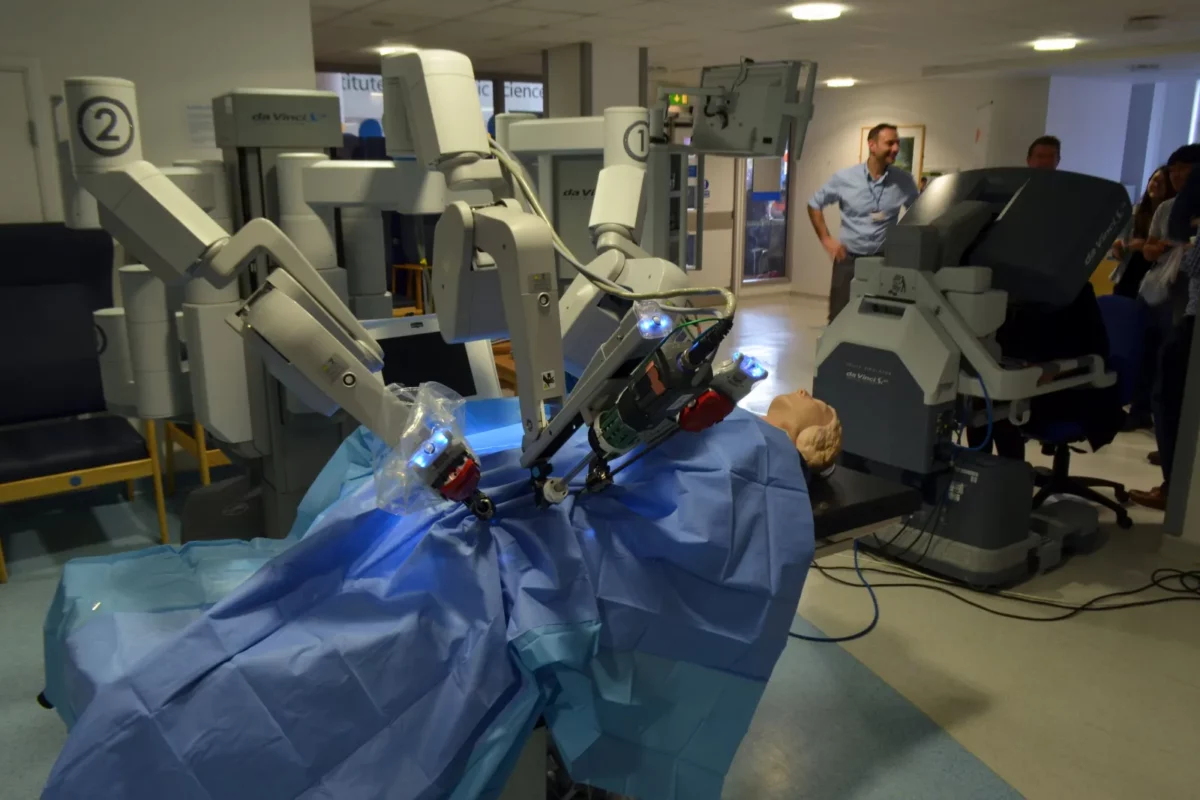
A robot performed complicated surgery to remove a gallbladder, without human help.
Artificial intelligence now produces three-quarters of Google’s code, compared to only one-quarter in October 2024.
Robots with artificial intelligence are spreading on Japanese farms and robots are being used as waiters in restaurants in Korea.
The nation of Zambia, which is poor and heavily in debt, found new mineral wealth using artificial intelligence.
On the other hand, a journalist’s discoveries using artificial intelligence led to bombings of airstrips by the Venezuelan military.



Bu güzel bilgilendirmeler için teşekkür ederim.
I just like the helpful information you provide in your articles
Open Your Heart, Fill a Bowl https://pawfund.pages.dev
🤝 The trusted partner for your crypto investment journey https://ctpool.pages.dev
I am truly thankful to the owner of this web site who has shared this fantastic piece of writing at at this place.