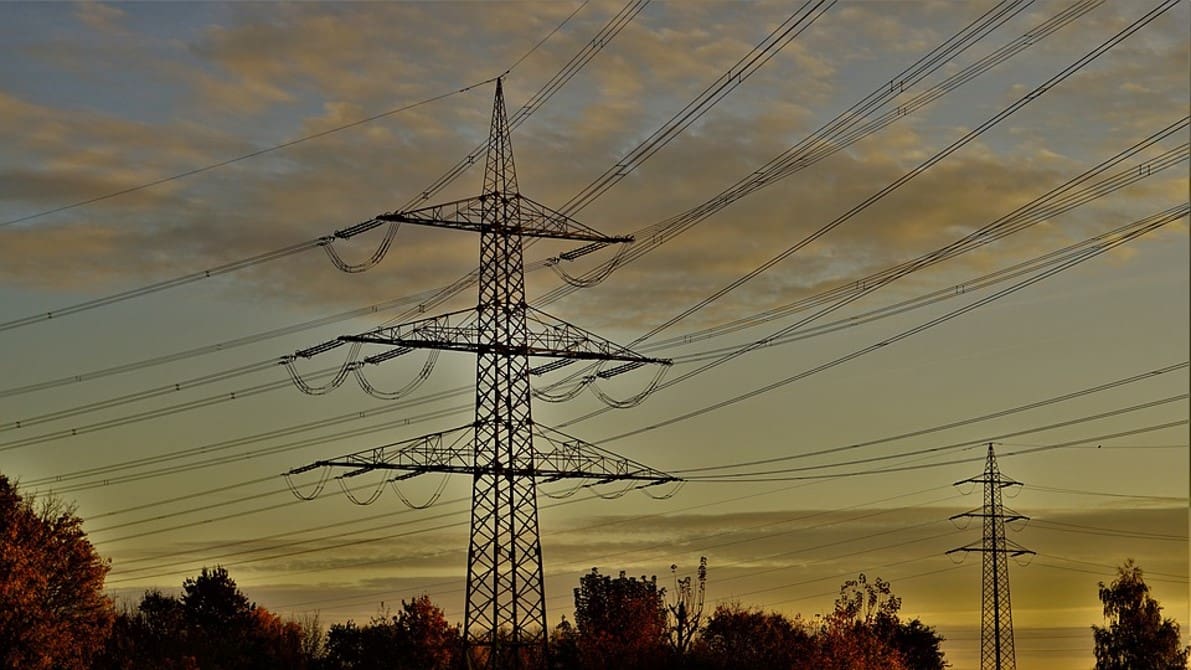
“West Africa is making progress toward a regional power grid. A World Bank-financed program has built more than 4,000 kilometers of high-voltage transmission lines connecting the grids of 15 countries. Eight percent of the region’s electricity is now traded across borders, helping improve reliability and reduce costs,” reports The Doomslayer.
Countries that have a surplus of hydroelectric power can now export it to neighbors that have little electricity. Guinea has two big hydroelectric dams in its mountainous, highland region. Now, it exports that electric power to its poorer, flatter neighbor, Guinea-Bissau, and other countries like the Gambia. As a result, “Guinea-Bissau‘s utility (EAGB) moved from a monthly deficit of about $1 million to a positive balance. The Gambia’s utility (NAWEC) returned to profitability with about 42 percent cost savings, thanks to Guinea’s large hydropower resources and the regional transmission loop.”
Prior to the new transmission lines connecting the grids of West African nations, countries “such as Guinea and Cote d’ Ivoire had surplus generation, but could not export it due to a lack of cross-border transmission lines and trading rules.” “West Africa’s development was held back by limited access to reliable, affordable electricity. Over half the population had no power at all, and many connected customers faced frequent outages.”
In sparsely populated African countries at the edge of the Sahara Desert, over 80% of people remain off the grid. But they, too, are increasingly accessing electric power, thanks to the proliferation of cheap solar panels.
Chad is an African country so poor and remote that some people called it the “dead heart of Africa.” Only 4% of the population has access to electric power from the grid. Even for those who have it, electric power is unreliable, in a country so remote and vulnerable to disasters that floods have cut off the internet for weeks at a time.
But access to electricity is expanding in Chad, as it rapidly imports solar panels to provide off-grid power and transform people’s lives.
“Africa’s energy transformation is happening fast! In just 12 months, the continent imported 15GW of solar panels, a 60% increase from the previous year. Chad is scaling up off-grid electricity access under a World Bank-backed program that is distributing 145,000 subsidized solar home kits nationwide as part of efforts to expand clean energy access and support livelihoods.”
Chad hopes to provide electricity to six million more people, including in remote rural areas where there is no power from the grid.
In neighboring Niger, the country’s inefficient electric utility was unable to provide enough power after sanctions were imposed on Niger in response to a military coup there. So residents of Niger’s capital city, Niamey, bought cheap Chinese solar panels and used them to power their light bulbs and TVs.
“Privately owned solar panels are taking over from the dysfunctional state utility in Niger, offering relief from frequent power shortages,” reported The Doomslayer. Like Chad, Niger is one of the most backward nations on Earth, according to the Human Development Index. Its capital, Niamey, is one of the world’s hottest and sunniest capital cities. With about 3,200 sunshine hours per year, the capital cities of Niger and Chad get about twice as much sunshine as European cities like London, Berlin, and Brussels. So solar power is much more practical in Niger and Chad than in much of Europe.
A violent militia occupied the great desert city of Khartoum (the capital of Sudan) and stole most of its electric cables, making it impossible for residents and businesses to obtain electric power from the electric power company. So some residents bought imported Chinese solar panels and used them to power their electric lights and TVs. Khartoum, the world’s hottest capital city, gets more than 3,700 hours of sunshine annually.




Hocam Ellerinize Saglık Güzel Makale Olmuş Detaylı
https://shorturl.fm/KS3TC