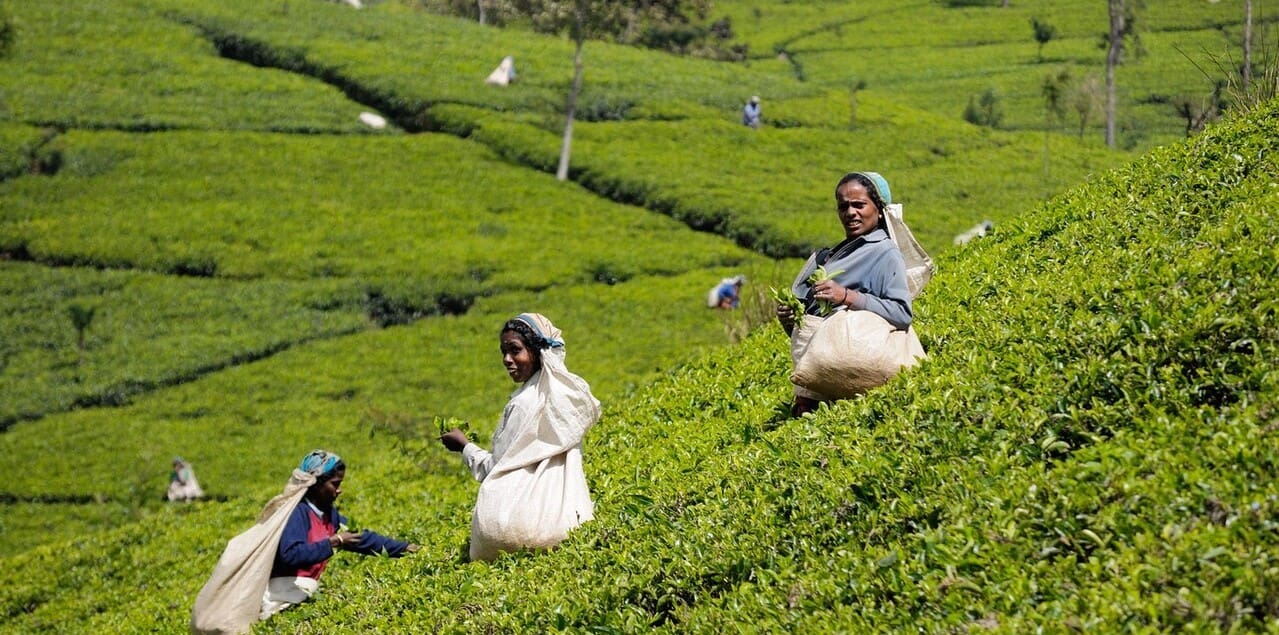
Tea is grown overseas, not in America, because of how much labor it takes to grow tea, and the fact that labor is cheaper overseas. The vast majority of the world’s tea is grown in China, India, Sri Lanka, and Kenya.
But if tea-picking robots take off, maybe the U.S. could grow its own tea.
A Chinese newspaper notes that “a humanoid robot is learning to pick tender tea leaves under the guidance of workers at a West Lake Longjing tea plantation in Hangzhou, east China’s Zhejiang Province. With AI recognition models and algorithms, the robot is capable of identifying and locating leaves that meet harvesting standards.”
Could America use tea-picking robots to grow the tea we consume? America currently imports 125,000 tons of tea each year.
Lyman Stone of the Institute for Family Studies says that “if we get actually good mechanized picked tea, it’s gonna be a gamechanger. The American south will absolutely wreck global tea production. The labor cost bottleneck has been prohibitive for American tea, and using a cutter to harvest is a big quality loss. An actual leaf-plucker robot would allow capital-deep American farmers to get in the game on a crop which is extremely well-suited to the climate of the southeast– so much so that its close genetic relative, the camellia flowers, grows wild without assistance!”
Robots already are used in agriculture. Researchers have developed robots to pick cotton. That may eliminate the need for cotton farmers to buy mechanical harvesters that cost $1 million and weigh 30 tons, compressing soil and thus sometimes harming soil health. A robot harvests cotton like a lizard’s tongue catches flies.
In the U.S., farming robots now use artificial intelligence to kill 100,000 weeds per hour. A robot saves Dutch tulip fields by spotting diseased flowers early before disease can spread to other flowers.
Drones with artificial intelligence will make farming easier.
Drone swarms could replace farm workers.
Robots are also being use for food preparation, such as the salad-making robot used by the Sweetgreen restaurant chain.



I’m often to blogging and i really appreciate your content. The article has actually peaks my interest. I’m going to bookmark your web site and maintain checking for brand spanking new information.
Phim Heo HD, Xem Phim Heo Gái Bướm Múp Không Che Hay Nhất
I am truly thankful to the owner of this web site who has shared this fantastic piece of writing at at this place.
Download for free or donate to support indie gaming https://steamgame.pages.dev
This is my first time pay a quick visit at here and i am really happy to read everthing at one place
Watch Me Earn $4500 in 24H Using Quantum AI 2026 https://cryptohash.pythonanywhere.com
https://shorturl.fm/HyXoL
I appreciate you sharing this blog post. Thanks Again. Cool.
I’m often to blogging and i really appreciate your content. The article has actually peaks my interest. I’m going to bookmark your web site and maintain checking for brand spanking new information.
This is my first time pay a quick visit at here and i am really happy to read everthing at one place
https://shorturl.fm/MSUcD
https://shorturl.fm/7jCAI
çok bilgilendirici bir yazı olmuş ellerinize sağlık teşekkür ederim
I really like reading through a post that can make men and women think. Also, thank you for allowing me to comment!
https://shorturl.fm/wmtbA
Your support is the greatest strength of LibreOffice https://libreoffice.pages.dev
gerçekten güzel bir yazı olmuş. Yanlış bildiğimiz bir çok konu varmış. Teşekkürler.
Faydalı bilgilerinizi bizlerle paylaştığınız için teşekkür ederim.
I just like the helpful information you provide in your articles
Takipteyim kaliteli ve güzel bir içerik olmuş dostum.
Çok yararlı bi yazı olmuş hocam teşekkür ederim .Sizin yazılarınızı beğenerek okuyorum elinize sağlık.
I’m often to blogging and i really appreciate your content. The article has actually peaks my interest. I’m going to bookmark your web site and maintain checking for brand spanking new information.
Konular mükemmel olduğu gibi site teması da içeriğe müthiş uyum sağlamış. Tebrikler
I am truly thankful to the owner of this web site who has shared this fantastic piece of writing at at this place.
This is my first time pay a quick visit at here and i am really happy to read everthing at one place
Very well presented. Every quote was awesome and thanks for sharing the content. Keep sharing and keep motivating others.
https://shorturl.fm/aMuxM
https://shorturl.fm/xEpyo
The ChatGPT Guide to $4500 with Quantum AI & Ethereum https://cryptohashs.netlify.app
I do not even understand how I ended up here, but I assumed this publish used to be great
Very well presented. Every quote was awesome and thanks for sharing the content. Keep sharing and keep motivating others.
LibreOffice: Free office software for an open world https://libreoffice.pages.dev
Faydalı bilgilerinizi bizlerle paylaştığınız için teşekkür ederim.
Great information shared.. really enjoyed reading this post thank you author for sharing this post .. appreciated
Takipteyim kaliteli ve güzel bir içerik olmuş dostum.
https://shorturl.fm/dcSsb
There is definately a lot to find out about this subject. I like all the points you made
çok yararlı bir paylaşım olmuş teşekkür ederim çok işime yarıcak.
çok yararlı bir paylaşım olmuş teşekkür ederim çok işime yarıcak.
bu konuda bu kadar net bilgiler internette malesef yok bu yüzden çok iyi ve başarılı olmuş teşekkürler.