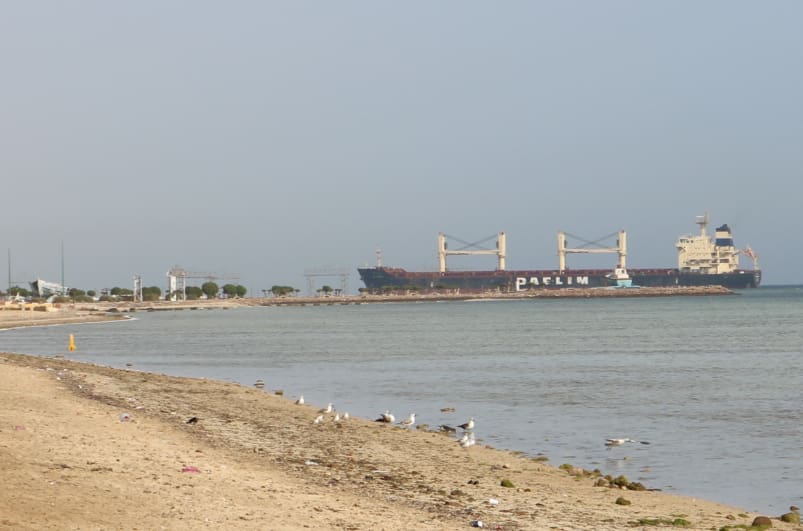
“A desalination plant in Saudi Arabia has set a new desalination efficiency record: a reverse-osmosis unit at the Yanbu complex used just 1.55 kilowatt-hours to produce a cubic meter of fresh water, below the previous 1.7 kWh/m³ benchmark set earlier in 2026 and the 2.34 kWh/m³ record reported in 2025,” reports The Doomslayer.
Two-thirds of Saudi Arabia’s drinking water comes from desalination plants. Saudi Arabia is the largest producer of desalinated water in the world, accounting for over 20% of global production.
Saudi Arabia’s Yanbu desalination plant uses very salty water as an input. It is on the Red Sea, the hottest and saltiest sea on Earth. The Red Sea’s high salt content is due to few rivers flowing into it, low rainfall, and constant evaporation.
Saudi Arabia’s population has grown more than 1000% since 1970, depleting its natural supply of water, which consisted of non-renewable groundwater, and meager supplies of surface water. Saudi Arabia, a desert country, does not have any permanent rivers. Instead, it has temporary, seasonal waterways known as wadis. These are dry valleys or riverbeds that only carry water during and immediately after heavy rainstorms.
Desalination is also helping western farmers and Californians. “Desalination in California is helping reduce pressure on the Colorado River. By adding new supply, notably from the Carlsbad Desalination Plant in San Diego, coastal utilities are freeing up river water for other states in exchange for desalination funding,” notes The Doomslayer.
Many counties with low rainfall are now turning seawater into drinking water using big desalination plants, such as Malta, Israel, and the United Arab Emirates. In addition, there are now floating desalination machines that use no electricity, which are “100% mechanically driven”: “Oneka’s floating desalination machines – buoys anchored to the seabed – use a membrane system that is solely powered by the movement of the waves. The buoys absorb energy from passing waves, and covert it into mechanical pumping forces that draw in seawater and push around a quarter of it through the desalination system. The fresh, drinking water is then pumped to land through pipelines, again only using the power provided by the waves.”
Drinking water could also be collected from thin air, especially in places like the island nation of Bahrain that are humid, yet seldom receive rain (Peru’s capital, Lima, also is humid, yet receives little rain). “The Earth’s atmosphere as a whole contains about six times as much water as the planet’s rivers.”
The Saudi Water Authority (SWA) announced on Monday that it has achieved the world’s lowest energy consumption rate for producing desalinated water, securing entry into the Guinness World Records.
A 200,000 cubic metres per day (m3/day) mobile reverse osmosis (RO) desalination plant, located within the Yanbu desalination complex on the Red Sea coast, recorded lowest energy use of 1.55 kilowatt-hours per cubic metre (kWh/m3), SWA said in a social media post.
The previous global benchmark was held by Saudi’s Shuaibah 5 desalination plant, a 664,000 m3/day facility on the Red Sea coast, which achieved 1.7 kWh/m3, according to an SWA statement issued in February 2026. That itself was a significant improvement from Shuaibah 5’s earlier record of 2.34 kWh/m3, first announced in May 2025.