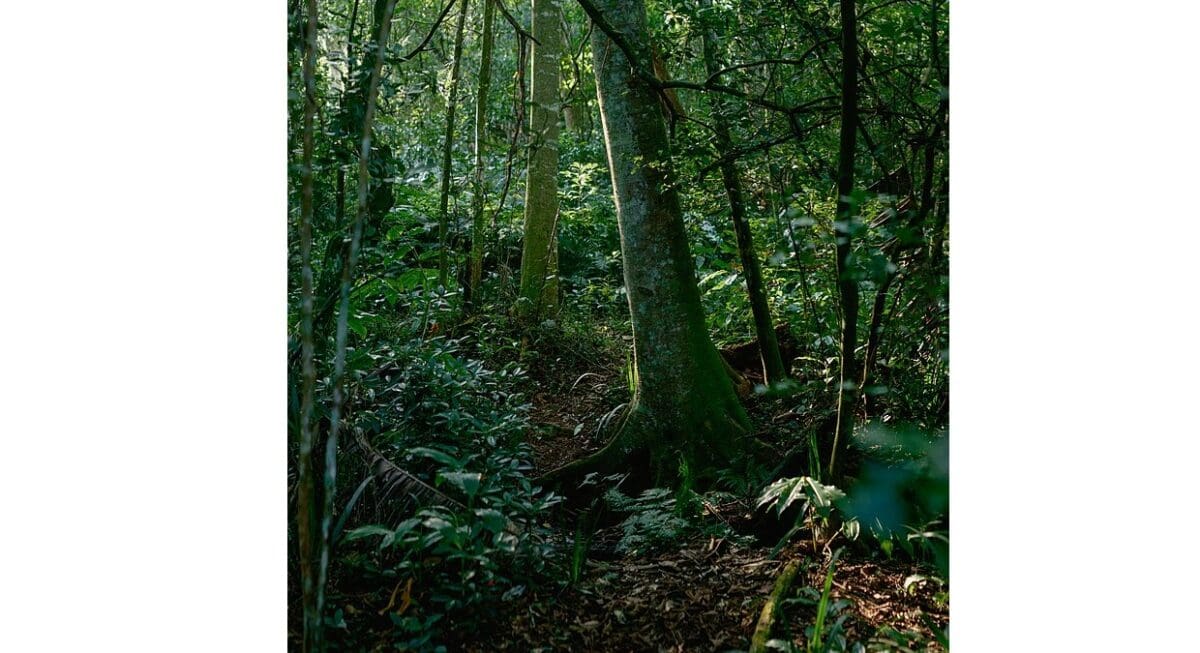
“European forests continue to recover from their preindustrial nadir….forests grew in 2023 in every EU country with data except Estonia,” reports The Doomslayer.
The Brussels Times reports:
Forest growth exceeded harvesting levels in 23 EU countries with available data in 2023.
A simple way to gauge whether wood production is sustainable is to compare the amount of wood harvested or otherwise removed in a year with the forest’s natural growth, known as the net annual increment, Eurostat reported on Friday.
In 2023, the largest surplus of growth over removals was recorded in Romania at 39.9 million cubic meters, followed by Sweden at 26.4 million and Poland at 26.3 million.
Estonia was the only country where removals were higher than growth, with 11.6 million cubic meters removed compared with a net annual increment of 9.1 million.
As The Grim Old Days explains, humans deforested much of Europe back in more primitive, preindustrial times:
By the 14th century, human action had reduced “central Europe’s wooded cover to a mere 10 per cent of land area.” To this day, many of Europe’s landscapes bear the imprint of medieval alterations….“the countrysides now visible in Tuscany, on the north German plain, or in Ireland were largely formed during the Middle Ages as a result of how people on the land . . . made use of their surroundings.”…
This transformation involved extraordinary effort. Even with the help of fire, medieval people had to tear the trees out one at a time by muscle power.
Trees were cut down to make way for farmland and to provide wood; over time, deforestation was increasingly driven by the latter motivation….
England, where most removal of forest area occurred long before industrialization, provides a case of rapid deforestation….”Clearances were well under way in Anglo-Saxon England long before the Norman conquest of 1066. King William’s Domesday survey conducted in 1086 found England only 15 per cent wooded, [which] indicates prior loss of a half to two-thirds of the country’s early medieval tree cover. . . . Continued clearance took England to barely 6 per cent wooded by 1348.
Most of the world’s forests are expanding. Reforestation is offsetting the effects of global warming in parts of the U.S.
The amount of vegetation on the Earth has increased for each of the last 30 years.