
By Rebekah Zeljko
President Donald Trump’s administration opted against renewing the United States, Mexico, Canada Agreement (USMCA) on Wednesday, leaving the fate of the signature $2 trillion trade deal open-ended.
The agreement was first put in place in July 2020, which replaced the North American Free Trade Agreement (NAFTA). Although the administration initially championed the deal for renegotiating trade policy in favor of American manufacturing and consumers, Trade Ambassador Jamieson Greer announced they would not renew the agreement in its “current form.” (RELATED: How US Leaders’ Attempts To Dominate The World Are Weakening One Of Our Greatest Advantages)
“In accordance with the Agreement, the United States, Mexico, and Canada met virtually today to discuss the operation of the USMCA,” Greer said in a statement. “The United States did not agree to renew the USMCA in its current form. As a result, the USMCA is not renewed.”
“The United States will continue to engage with Mexico and Canada to address the Agreement’s shortcomings and our trade deficits with these countries,” Greer added. “However, the Agreement remains in force pending resolution of these issues or until the Agreement’s termination.”
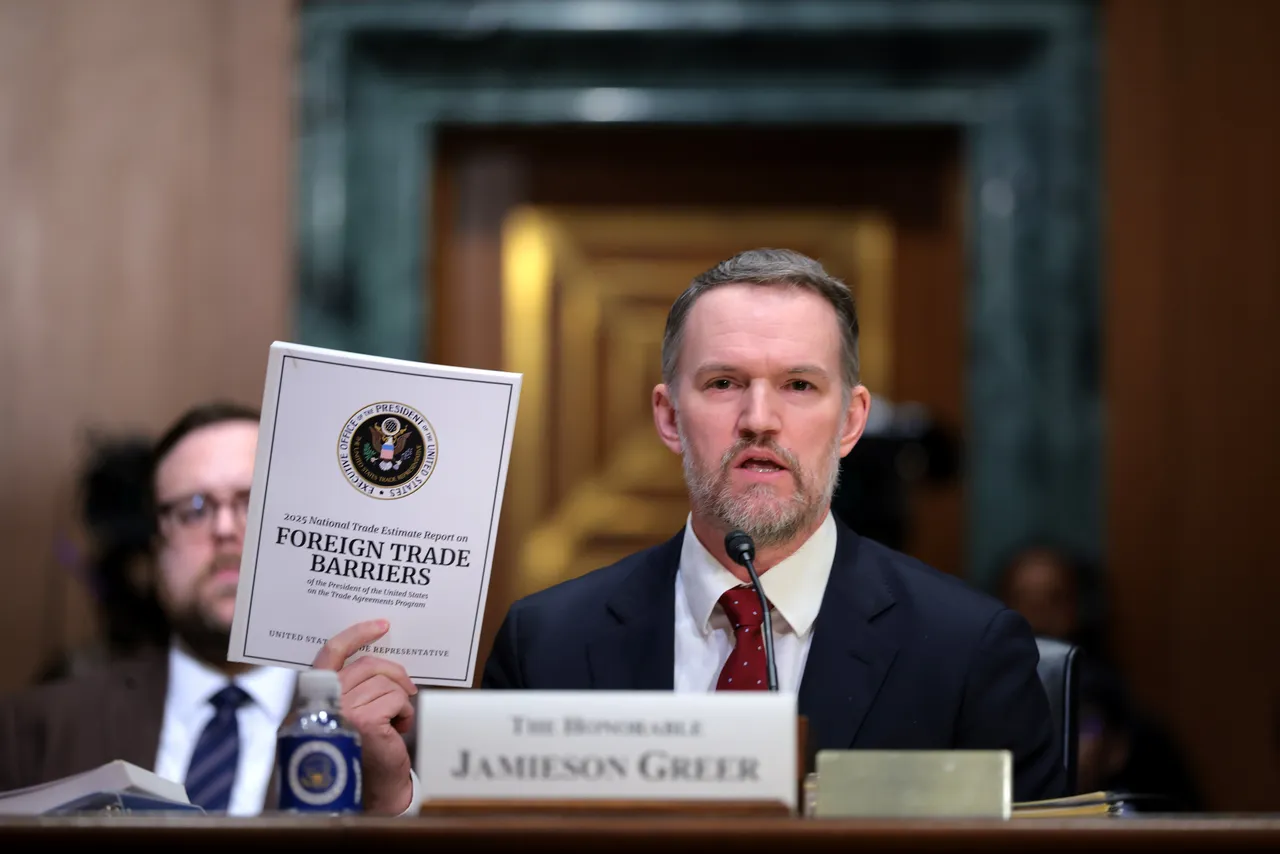
WASHINGTON, DC – APRIL 08: U.S. Trade Representative Jamieson Greer testifies before the Senate Finance Committee in the Dirksen Senate Office Building on April 8, 2025 in Washington, DC. Greer testified on President Trump’s 2025 trade policy agenda. (Photo by Kayla Bartkowski/Getty Images)
The USMCA requires the deal to be reviewed every six years, making July 1 the renewal deadline. Although the deadline to renew the agreement for an additional 10 years has lapsed, the deal will tentatively remain in place until July 2036. (RELATED: Paul Krugman Suddenly Admits Tariffs May Be ‘Necessary’ After Years Of Globalist Dogma)
The United States is set to meet with Mexico’s trade delegation the week of July 20 for their third round of bilateral negotiations.
The administration notably imposed 25 percent tariffs on both Canada and Mexico last year as Trump sought to further improve America’s position in the trade deal.
EDITOR’S NOTE:
Terminating the trade agreement with Canada and Mexico would be risky and costly. As a Bloomberg News article notes, freer trade with Canada and Mexico helped the U.S. economy. The existing trade agreement with Canada and Mexico
is particularly important for US manufacturers. The National Association of Manufacturers calculates that roughly 71% of US imports from Canada and 64% from Mexico are industrial inputs — components, materials and intermediates flowing into American factories producing “Made in the USA” stuff. Further deepening comes from cross-border transactions occurring within the same multinational enterprise. Recent research from the Census Bureau finds that more than half of foreign affiliates worldwide export to or import from their US parent, but this figure jumps to more than 75% in North America, with intrafirm trade particularly deep in the transportation sector.
These are finely calibrated production systems built on predictable rules and minimal frictions, with inputs repeatedly crossing US borders before going into USMCA-made finished goods. Thus, the Census study’s authors warn that “raising trade barriers can be extremely detrimental for US multinationals, particularly when they are applied on imports from Canada and Mexico” — a conclusion supported by other research showing how complex supply chains amplified the costs of US tariffs in 2018–19.
The USMCA’s benefits — and the harms of termination — extend beyond manufacturing. The North American energy market is tightly interconnected, with Canada and Mexico serving as major buyers of US oil & gas products and major sources of US energy imports. Since Nafta took effect, moreover, US fresh produce imports have almost doubled — growth led by Mexico and Canada — as American agriculture also flows the other direction, with both countries serving as top destinations. Services and digital trade have also blossomed under the Nafta/USMCA’s streamlined rules for the business travel, cross-border sales, data flows, and physical outposts of North American service providers.
Unwinding USMCA would thus inflict real damage across the US economy — damage that Trump clearly understands. Days after he slapped fentanyl-related “emergency tariffs” on all imports from China, Canada and Mexico, he backtracked with a blanket exemption for goods that qualify under USMCA — a carveout that now covers more than 87% of goods imported from those countries. After applying “national security” tariffs on imported automotive goods, he immediately offered exemptions for USMCA-compliant parts and finished vehicles (followed by an “import adjustment offset” for US-based automakers to recoup tariff costs). And facing voter pushback on “affordability” last fall, the president exempted from his global tariffs foods and fertilizers that disproportionately originate in Canada and Mexico.

