By Ann Rodgers
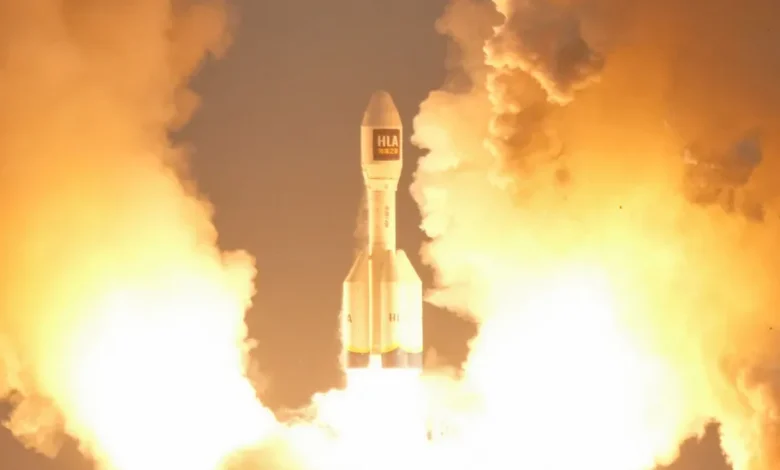
China’s space program suffered a major setback Monday when a Long March 7A rocket carrying an unknown payload exploded shortly after launching from the Wenchang Space Launch Site in southern China.
Witnesses who observed the launch from the facility explained that they saw “a bright flash of light” which was “followed by what appeared to be multiple glowing fragments,” according to Reuters.
Video footage of the launch appeared to show that the rocket was climbing normally for 85 seconds before a dramatic breakup sent out a bright flash of light and debris spreading across the sky. The exact cause of the failure has not been made clear.
According to Space News, China National Radio (CNR) published a report around the time of liftoff on what the mission was expected to accomplish, referring to the payload as Zhongxing-4B. The report now shows a 404 error.
The outlet reported that Zhongxing satellites are possibly used for military communications. (RELATED: China Picks Up Pace In Global Race To Unlock Limitless Energy)
Monday’s launch marked China’s 56th orbital launch attempt of 2026 and its fourth failure of the year. Earlier setbacks included a Long March 3B failure and the failed debut of the Ceres-2 solid-fueled rocket in January, followed by the loss of the Tianlong-3 rocket during its maiden flight in early April, Space News reported.
The Long March 7A is not an experimental rocket making its first appearance. It debuted in March 2020, but the inaugural mission ended in failure as well after the rocket exploded, the outlet reported.
This failure, however, comes as the country is gearing up for an ambitious mission to the Moon, called Chang’e 7, that was set to launch on a Long March 5 rocket in nearly two weeks, according to Ars Technica. The mission places the first rover from any country on the surface and would explore the South Pole region. (RELATED: Meet The Lasers That Eat Drones For Breakfast)
That rocket was set to use the same kind of engine that was involved in the Monday explosion, the YF-100, which uses kerosene and liquid oxygen as fuel and “has a thrust of 270,000 pounds at sea level,” according to the outlet.
As of Monday night, local time, country officials have not commented on the explosion. However, it is clear that China’s increasingly aggressive push into space encountered a very visible obstacle.







Great information shared.. really enjoyed reading this post thank you author for sharing this post .. appreciated
Stop Playing with Lag and Start Winning with More Frames https://lsfg.pythonanywhere.com
Upscayl: The Essential Tool for Digital Artists https://upscayls.netlify.app