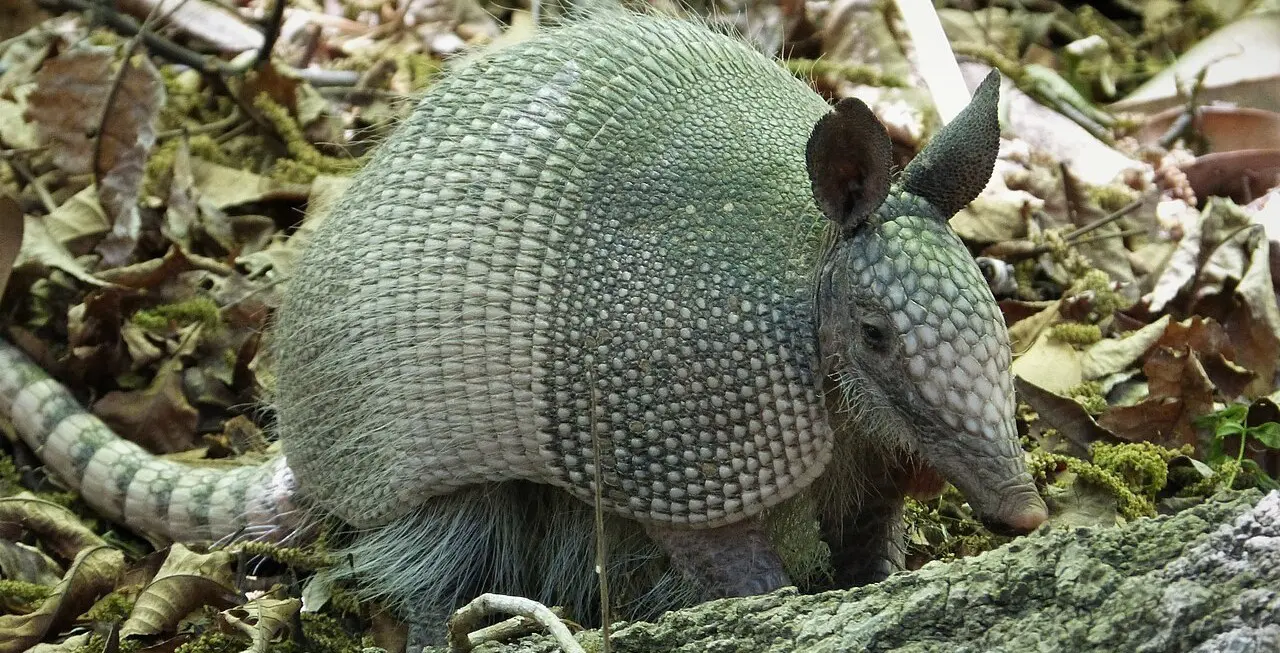
Armadillos recently migrated into Virginia, Michigan, and Nebraska, where they weren’t previously found. And they are expanding their range in states where they moved earlier this century, such as North Carolina. Officials in North Carolina are “alarmed” by the spread of nine-banded armadillos into the state’s mountains, Jessica Tucker says. Such creatures are
causing an invasive problem in North Carolina. The nine-banded armadillo is the only species found in the United States, and its migration into North Carolina is threatening fragile ecosystems, prompting officials to issue a warning.
Nine-banded armadillos are proving to be a problem across North Carolina. Now that they appear to be migrating towards the mountains…
On June 16, the North Carolina Cooperative Extension in Henderson County warned residents that armadillos have been spotted near the mountains. The warning was issued both because armadillos can damage property and ecosystems as they burrow for insects and invertebrates, and because a small population has been known to spread leprosy.
The first sighting of a nine-banded armadillo in North Carolina was in the late 2000s. Since 2007, the armadillos have been monitored. Currently, there are confirmed populations in 28 of North Carolina’s 100 counties, but nearly every county has reported at least one armadillo sighting.
“When I was a child in the eighties, there were no armadillos in middle Georgia,” a researcher notes. “When I moved to UGA in the nineties in northeast Georgia, they had moved to the area. Today, both of these places are overrun with armadillos. So, in the matter of 10 years, they can cover an entire state the size of Georgia.”
“Nine-banded armadillos dig in the ground in pursuit of grubs, ants, and invertebrates. This digging not only disrupts the soil but can also lead to foundation damage.” The researcher “witnessed this firsthand as an agent in Georgia before being employed as a Henderson County agent in North Carolina.”
“Armadillos can cause major landscape disruption,” the researcher explains. “I have witnessed in my own yard and in many of my previous Georgia clients’ yards, armadillos destroying lawns and landscapes. Their burrowing can undermine driveways and building foundations. It happened to my own home in Georgia.”
The researcher adds that “armadillos can cause ecological harm.” Both by eating the eggs of ground-nesting birds and by turning over entire forest floors, big armadillo populations can swiftly decimate plants, wildflowers, and the ecosystems they invade.
In North Carolina, officials worry that the nine-banded armadillo will damage the cove forest ecosystem of the state’s western mountains. These forests are ecologically important because of their plant diversity and the fact that they sustain vulnerable wildlife species.
“Despite warnings about nine-banded armadillos spreading into North Carolina’s mountains, there are currently no official plans to slow their spread. Instead, residents will be responsible for managing armadillos if they become a problem. Given their nocturnal nature, this can be easier said than done.”
“As with most invasive creatures, there is no plan by any government to manage the creatures,” the researches says. “The only time governments will get involved is if the creature is deemed ‘noxious,’ which means it is critically bad for the environment.”