
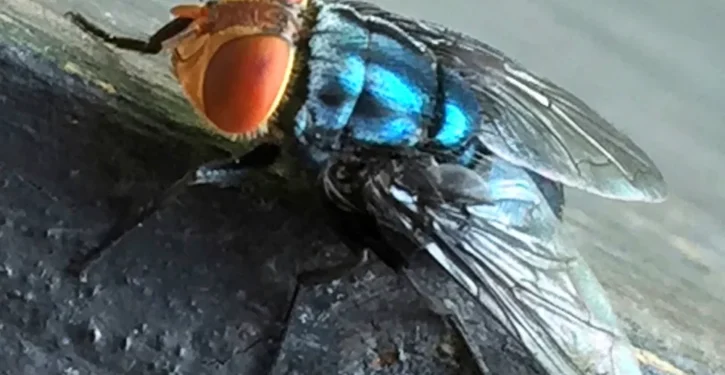
“A flesh-eating parasite that had been kept out of U.S. livestock for decades has been detected in Texas, threatening the nation’s cattle industry and food supply at a time when prices are already high,” reports NBC News.
New World screwworm was found in a 3-week-old calf in La Pryor, Texas, near the border with Mexico.
“The parasitic fly’s larvae feed exclusively on the living tissue of warm-blooded animals. While the fly is capable of infecting humans and pets, such cases are rare.”
“The parasite does not pose a food safety threat, but a wider outbreak could still cost the livestock industry billions of dollars and put additional pressure on beef prices that are already at record highs. The case is the first confirmed detection of New World screwworm in Texas since 1966, and is the only confirmed case identified in the country so far.”
“It follows months of warnings from U.S. and Texas agriculture officials and cattle industry leaders, as the pest steadily moved north through Mexico toward the American border.”
“For months, the screwworm has advanced rapidly through Mexico in spite of the USDA’s existing gameplan,” said Texas Agriculture Commissioner Sid Miller yesterday. He said that “instead of using every available tool, USDA moved too slowly and relied solely on a partial solution that takes years to fully implement.”
Miller asked Donald Trump to take direct control of the government’s response, and “throw every available federal resource at this threat before it becomes a full-blown agricultural disaster.”
Not all news about parasites is bad. A new vaccine fights hookworm, which makes millions of people around the world lethargic.
The African nation of Guinea recently eradicated sleeping sickness, a parasitic disease carried by the tsetse fly that causes irreversible brain damage, aggressiveness, psychosis, and then death, if left untreated.
Niger recently became the first nation in Africa to eliminate river blindness, a disease spread by flies that breed near rivers. Those flies carry long thin parasitic worms that burrow in a victim’s skin.
Parasites can take years for countries to eradicate. It took nearly 40 years for the world to largely eradicate Guinea worms, nasty parasites that caused tens of millions of people to scream with unbearable pain. But by 2023, Guinea worms had been eradicated in at least 17 countries, and “no guinea worm was reported” in 2024.
Guinea worms used to inflict burning pain on millions of people in Africa and South Asia every year. They would grow up to 3 feet long while living inside a person’s body, then burst out of their foot or other sensitive areas of their anatomy, such as their eyeball or their penis.
“With a guinea worm infection, you get a gross open wound from which the worm emerges over a period of weeks to months with extreme painfulness. There were millions of cases in the 80s, and now there are none. Incredible human progress.”
“It’s possible that the worm is evolutionarily adapted to cause prolonged pain and suffering. Since this will increase the chance that the host will put their foot in the water to soothe the pain, and that can help the worm get to the next stage in its life cycle,” notes a scientist.
Scientists have discovered drugs that can kill malaria parasites inside mosquitoes.
Australia has eliminated the leading infectious cause of blindness.