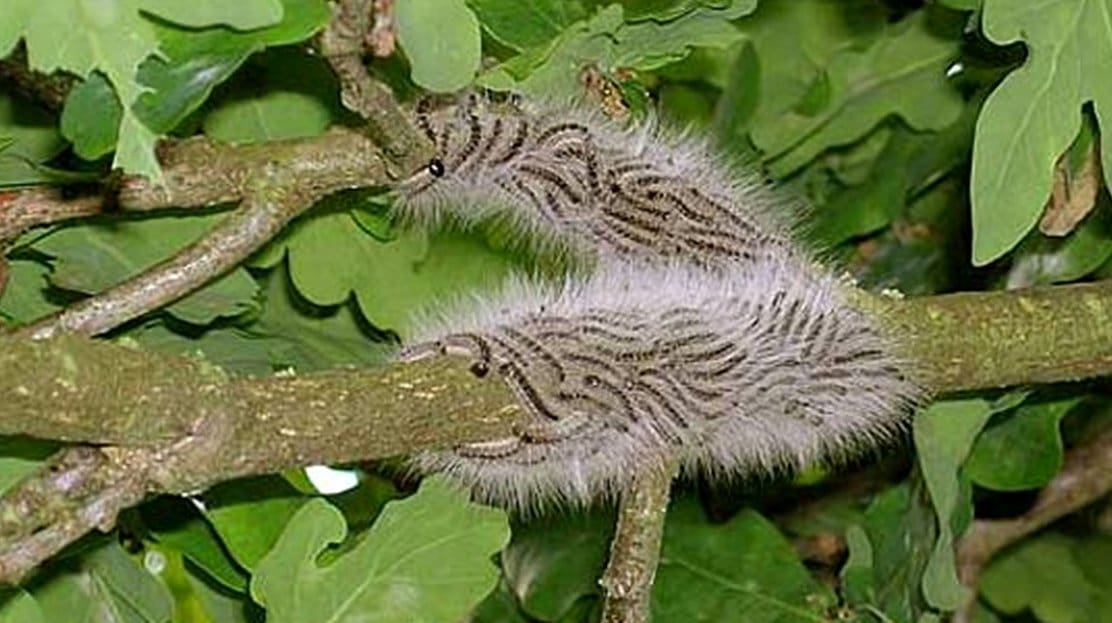
“Beans use an immune receptor to call in airstrikes on caterpillars,” reports Ars Technica. “When they’re being eaten, bean plants release chemicals that draw in parasitic wasps.”
To test how important those chemicals are to the survival of bean plants, scientists genetically engineered bean plants to eliminate that immune receptor, creating mutant bean plants. “When caterpillars fed on the mutant beans with inactive inceptin receptors” “they had a field day. Over a five-day feeding period, their growth rate was over 70 percent higher than on the plants with a functional receptor.” Such beans “were unable to summon predatory wasps.”
Researchers have also discovered that a plant virus could be used to save crops from root-eating pests.
Viruses can be useful. Scientists have engineered a virus to steal proteins from the HIV virus, as a way of fighting against AIDS.
Back in 2023, a virus started being used to cure deafness in gene therapy. This year, it was reported that “in a small trial in China, a single-injection gene therapy improved hearing in all ten congenitally deaf participants. One even gained near-normal hearing within just four months.”
ScienceDaily reports:
A new gene therapy is giving people born deaf the chance to hear, often within just weeks. In a small but groundbreaking study, researchers delivered a working copy of a key hearing gene directly into the inner ear using a single injection. All ten patients, ranging from young children to adults, experienced improved hearing, with some showing rapid gains in just one month….
Researchers at Karolinska Institutet, working with hospitals and universities in China, treated ten patients and saw hearing improve in every case….
The trial included ten patients between the ages of 1 and 24 who were treated at five hospitals in China. All had a genetic form of deafness linked to mutations in a gene called OTOF. These mutations prevent the body from producing enough of the protein otoferlin, which is essential for sending sound signals from the inner ear to the brain. To address this, researchers used a synthetic adeno-associated virus (AAV) to deliver a working version of the OTOF gene directly into the inner ear. The treatment was given as a single injection through a membrane at the base of the cochlea known as the round window.






I truly appreciate your technique of writing a blog. I added it to my bookmark site list and will
çok yararlı bir paylaşım olmuş teşekkür ederim çok işime yarıcak.
I really like reading through a post that can make men and women think. Also, thank you for allowing me to comment!
For the reason that the admin of this site is working, no uncertainty very quickly it will be renowned, due to its quality contents.
This is really interesting, You’re a very skilled blogger. I’ve joined your feed and look forward to seeking more of your magnificent post. Also, I’ve shared your site in my social networks!
https://shorturl.fm/okm12
Nice post. I learn something totally new and challenging on websites
I like the efforts you have put in this, regards for all the great content.
I truly appreciate your technique of writing a blog. I added it to my bookmark site list and will
You’re so awesome! I don’t believe I have read a single thing like that before. So great to find someone with some original thoughts on this topic. Really.. thank you for starting this up. This website is something that is needed on the internet, someone with a little originality!
This is my first time pay a quick visit at here and i am really happy to read everthing at one place
There is definately a lot to find out about this subject. I like all the points you made
I’m often to blogging and i really appreciate your content. The article has actually peaks my interest. I’m going to bookmark your web site and maintain checking for brand spanking new information.
I like the efforts you have put in this, regards for all the great content.
There is definately a lot to find out about this subject. I like all the points you made
Hi there to all, for the reason that I am genuinely keen of reading this website’s post to be updated on a regular basis. It carries pleasant stuff.
This is really interesting, You’re a very skilled blogger. I’ve joined your feed and look forward to seeking more of your magnificent post. Also, I’ve shared your site in my social networks!
I appreciate you sharing this blog post. Thanks Again. Cool.
You’re so awesome! I don’t believe I have read a single thing like that before. So great to find someone with some original thoughts on this topic. Really.. thank you for starting this up. This website is something that is needed on the internet, someone with a little originality!
This was beautiful Admin. Thank you for your reflections.
Great information shared.. really enjoyed reading this post thank you author for sharing this post .. appreciated
Hi there to all, for the reason that I am genuinely keen of reading this website’s post to be updated on a regular basis. It carries pleasant stuff.
Son zamanlarda okuduğum en net ve açıklayıcı makalelerden biriydi.
I very delighted to find this internet site on bing, just what I was searching for as well saved to fav
very informative articles or reviews at this time.
I’m often to blogging and i really appreciate your content. The article has actually peaks my interest. I’m going to bookmark your web site and maintain checking for brand spanking new information.
Great information shared.. really enjoyed reading this post thank you author for sharing this post .. appreciated
Mining Software Comparison: Windows vs Linux https://web3miners.netlify.app
This is my first time pay a quick visit at here and i am really happy to read everthing at one place
I appreciate you sharing this blog post. Thanks Again. Cool.
For the reason that the admin of this site is working, no uncertainty very quickly it will be renowned, due to its quality contents.
You’re so awesome! I don’t believe I have read a single thing like that before. So great to find someone with some original thoughts on this topic. Really.. thank you for starting this up. This website is something that is needed on the internet, someone with a little originality!
Pretty! This has been a really wonderful post. Many thanks for providing these details.
I like the efforts you have put in this, regards for all the great content.
I bookmarked this page because the insights are brilliant.
You’re so awesome! I don’t believe I have read a single thing like that before. So great to find someone with some original thoughts on this topic. Really.. thank you for starting this up. This website is something that is needed on the internet, someone with a little originality!
naturally like your web site however you need to take a look at the spelling on several of your posts. A number of them are rife with spelling problems and I find it very bothersome to tell the truth on the other hand I will surely come again again.
I really like reading through a post that can make men and women think. Also, thank you for allowing me to comment!
For the reason that the admin of this site is working, no uncertainty very quickly it will be renowned, due to its quality contents.
I bookmarked this page because the insights are brilliant.
I really like reading through a post that can make men and women think. Also, thank you for allowing me to comment!
Çok işime yaradı bende bunu nasıl yapacağımı araştırıyorum. Paylaşım için teşekkür ederim.
Very well presented. Every quote was awesome and thanks for sharing the content. Keep sharing and keep motivating others.
Güzel aydınlatıcı makale için teşekkürler daha iyisi samda kayısı umarım faydalı çalışmalarınızın devamı gelir.
I appreciate you sharing this blog post. Thanks Again. Cool.
very informative articles or reviews at this time.
Wow, this is a really deeply researched piece of content.
naturally like your web site however you need to take a look at the spelling on several of your posts. A number of them are rife with spelling problems and I find it very bothersome to tell the truth on the other hand I will surely come again again.
This is really interesting, You’re a very skilled blogger. I’ve joined your feed and look forward to seeking more of your magnificent post. Also, I’ve shared your site in my social networks!
very informative articles or reviews at this time.
very informative articles or reviews at this time.
https://shorturl.fm/1omRg
There is definately a lot to find out about this subject. I like all the points you made
I like the efforts you have put in this, regards for all the great content.
very informative articles or reviews at this time.
naturally like your web site however you need to take a look at the spelling on several of your posts. A number of them are rife with spelling problems and I find it very bothersome to tell the truth on the other hand I will surely come again again.
Çok yararlı bir makale olmuş. Severek takip ediyorum. Teşekkür ederim.
There is definately a lot to find out about this subject. I like all the points you made
Your Heart Can Heal a Rescue Dog https://pawfund.pages.dev
I am truly thankful to the owner of this web site who has shared this fantastic piece of writing at at this place.
Faydalı bilgilerinizi bizlerle paylaştığınız için teşekkür ederim.
I’m often to blogging and i really appreciate your content. The article has actually peaks my interest. I’m going to bookmark your web site and maintain checking for brand spanking new information.
Mining Safety Tips: Protect Your Hardware https://solana-gain.netlify.app
https://shorturl.fm/CuVZO
very informative articles or reviews at this time.
Konular mükemmel olduğu gibi site teması da içeriğe müthiş uyum sağlamış. Tebrikler
I appreciate you sharing this blog post. Thanks Again. Cool.
Nice post. I learn something totally new and challenging on websites
You’re so awesome! I don’t believe I have read a single thing like that before. So great to find someone with some original thoughts on this topic. Really.. thank you for starting this up. This website is something that is needed on the internet, someone with a little originality!
hocam gayet açıklayıcı bir yazı olmuş elinize emeğinize sağlık.
I just like the helpful information you provide in your articles
naturally like your web site however you need to take a look at the spelling on several of your posts. A number of them are rife with spelling problems and I find it very bothersome to tell the truth on the other hand I will surely come again again.
I do not even understand how I ended up here, but I assumed this publish used to be great
Great information shared.. really enjoyed reading this post thank you author for sharing this post .. appreciated
This is my first time pay a quick visit at here and i am really happy to read everthing at one place
I’m often to blogging and i really appreciate your content. The article has actually peaks my interest. I’m going to bookmark your web site and maintain checking for brand spanking new information.
I like the efforts you have put in this, regards for all the great content.
I appreciate you sharing this blog post. Thanks Again. Cool.
Hi there to all, for the reason that I am genuinely keen of reading this website’s post to be updated on a regular basis. It carries pleasant stuff.
Nice post. I learn something totally new and challenging on websites
Nice post. I learn something totally new and challenging on websites
You’re so awesome! I don’t believe I have read a single thing like that before. So great to find someone with some original thoughts on this topic. Really.. thank you for starting this up. This website is something that is needed on the internet, someone with a little originality!
You’re so awesome! I don’t believe I have read a single thing like that before. So great to find someone with some original thoughts on this topic. Really.. thank you for starting this up. This website is something that is needed on the internet, someone with a little originality!
I do not even understand how I ended up here, but I assumed this publish used to be great
I just like the helpful information you provide in your articles
Good post! We will be linking to this particularly great post on our site. Keep up the great writing
I like the efforts you have put in this, regards for all the great content.