“Japan Airlines is testing humanoid robots as baggage handlers at Tokyo’s Haneda Airport, starting with the hard physical work of moving luggage and cargo on the tarmac,” notes The Doomslayer.
Japan is experiencing labor shortages in sectors that require hard physical work, such as construction. Its working-age population declined from 87.3 million in 1995 to 73.7 million in 2024, a 16% drop, with further significant declines expected in the future. The number of people actually employed in Japan has not fallen, because record numbers of women and seniors have joined the workforce. But seniors and women are less likely than young men to go into jobs that require hard physical work.
Japan’s population is falling by about 0.52% per year, but its airports are handling increasing amounts of baggage, especially from travelers arriving from overseas. International arrivals rose over 15% in 2025 to 42.7 million passengers. Japan is a safe and pleasant tourist destination.
The BBC reports:
Japan Airlines (JAL) will start using humanoid robots in ground handling tasks at Tokyo’s Haneda airport from May, in a two-year trial it said is aimed at easing employees’ workload.
For a start, the Chinese-made robots will be deployed to load and unload cargo containers, JAL and GMO AI & Robotics, its partner in the project, said in a demonstration to the media on Monday.
Japan’s aviation industry is wrestling with a labour crunch brought on by an increase in inbound tourism and a declining working-age population, said JAL, which employs some 4,000 ground handling staff.
The carrier hopes that these robots can also be used to clean cabins and operate ground support equipment in future.
Japan is turning to robots to care for its elderly as its birth rate shrinks. “With around a third of its population over the age of 65, Japan is increasingly turning to robots to care for its elderly citizens. New research suggests that this isn’t as dystopian as it sounds. A working paper from the National Bureau of Economic Research, which surveyed robot adoption in Japanese nursing homes, found that the machines are associated with improvements in both the quality and productivity of elder care,” says the Cato Institute. Robots improve care in the nursing homes, and also improve the productivity of the humans working in them.
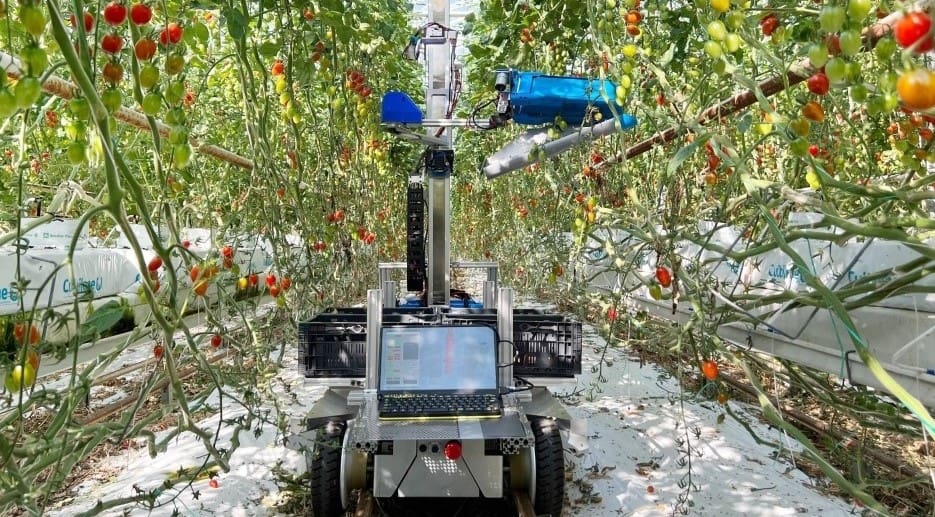
Robots with artificial intelligence are spreading on Japanese farms. On some American farms, there are drones with artificial intelligence, and robots that use artificial intelligence to kill 100,000 weeds per hour. Scientists have developed tiny robots to repair damaged cells, and nanorobots to destroy cancerous tumors.
Robots replaced some fast-food workers after California increased the minimum wage for fast-food workers to $20 per hour, which some franchises just couldn’t afford. Thousands of fast-food workers lost their jobs due to the minimum wage hike.
German robots hunted the North Sea for tens of thousands of unexploded World War II bombs.
Doctors used a surgical robot to carry out incredibly complicated spinal surgery.






https://shorturl.fm/piQFV