“The U.S. Department of Justice has moved to block Nebraska from offering in-state tuition and scholarship benefits to illegal immigrants, arguing the policy violates federal law and discriminates against American citizens,” reports Campus Reform. It has entered into a proposed consent decree with the State of Nebraska to permanently end the practice:
The Department of Justice announced that it filed a legal challenge to Nebraska’s tuition policy in a press release outlining its intent to enforce existing federal immigration law. The action seeks to stop the state from continuing to provide reduced tuition rates and financial aid to illegal immigrants attending public colleges and universities.
Under federal law, public institutions cannot provide in-state tuition benefits to those non-citizens taking advantage of this system unless those same benefits are made available to all US citizens. Federal officials argue Nebraska’s policy conflicts with that requirement by extending financial advantages to non-citizens that out-of-state students cannot access.
Nebraska officials agreed to the proposed settlement after federal authorities challenged the legality of the state’s tuition policies. If the ruling is approved, the agreement would permanently prevent the state from offering in-state tuition or scholarships to non-citizens.
The proposed change marks a significant shift in how Nebraska administers higher education residency requirements. Public colleges and universities across the state would need to revise tuition classification policies to ensure compliance with federal immigration law and avoid future legal issues.
Nebraska previously allowed certain students to qualify for in-state tuition under Legislative Bill 239, passed in 2006. That policy enabled some illegal immigrants to access reduced tuition rates, even as US citizens from other states remained ineligible.
Federal officials have pursued similar actions in other states that implemented tuition benefits for illegal immigrants, arguing that such policies undermine equal treatment for American students and conflict with federal requirements tied to public education funding. The Nebraska case represents part of a broader federal effort to ensure state compliance with immigration-related laws.
“Nebraska’s unconstitutional and un-American laws should never have been passed in the first place and are prohibited by federal law,” the DOJ Civil Division’s Assistant Attorney General Brett A. Shumate said. “The Department of Justice has won on this exact issue in Texas, Oklahoma, and Kentucky, and we will take this fight to any states that fail to put American citizens first.”
Nebraska Gov. Jim Pillen also spoke favorably of the move, calling the previous standards “outdated.” “Nebraskans expect that illegal aliens won’t get the benefit of in-state tuition and financial aid, and federal law forbids it,” Pillen stated.
In-state tuition for illegal aliens was passed, over the Republican Governor’s veto, in 2006. Nebraska, unlike most states, has a non-partisan state legislature with only one chamber — consisting of 49 senators — and no House of Representatives. That makes it easier to enact laws, because a law only has to pass one chamber, rather than two.
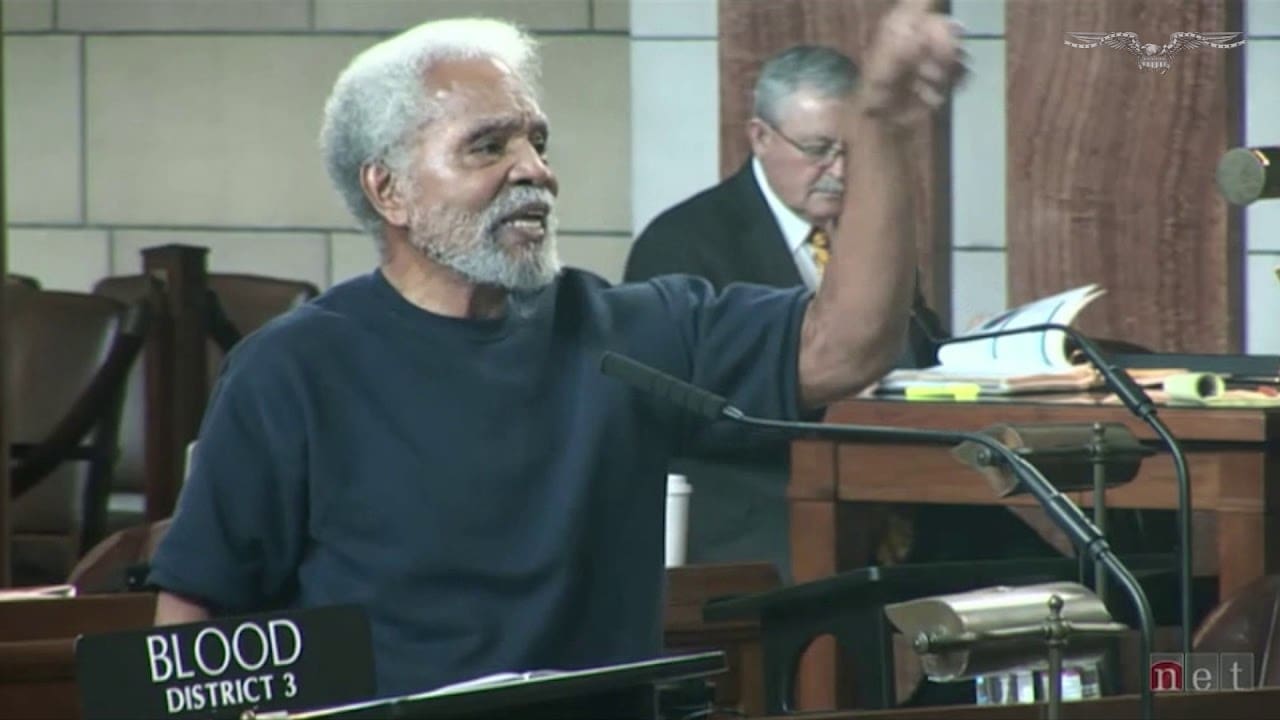
In Nebraska, the legislature does not officially recognize party caucuses, and leadership positions are elected by all senators through secret ballot. For many years, the head of the legislature’s education committee was the crackpot progressive legislator Ernie Chambers, famous for filing a lawsuit against God. In 2008, “Nebraska State Senator Ernie Chambers’ lawsuit against God” was “thrown out of court because God couldn’t be served papers informing him of Chambers’ suit. The court threw out the suit by Nebraska’s most famous liberal lawmaker because of his failure to serve God with a summons. But law professor Ilya Somin” said “a better reason for dismissing the suit would be that any lawsuit against God, who is Almighty, would be “unredressable” by earthly officials, who could not force God to do anything. (‘Redressability’ is one of the elements for showing standing to sue under the Supreme Court’s 1992 decision in Lujan v. Defenders of Wildlife).”
Chambers, an African-American, was also a staunch supporter of racial quotas and set-asides. He got the Nebraska legislature to tie one percent of the funding for the University of Nebraska to whether it achieved racial hiring quotas — something that violates the Constitution.



https://shorturl.fm/JJO9E
https://shorturl.fm/sUcrf
https://shorturl.fm/cnXi9
https://shorturl.fm/f69rf
https://shorturl.fm/sFmVi
https://shorturl.fm/xArIp
https://shorturl.fm/vuXEK
https://shorturl.fm/BRdMT