Artificial intelligence makes some people’s jobs easier and far more productive

“Among American AI users, 53 percent of those earning more than $150,000 per year say the technology makes them more productive, versus 30 percent of those earning under $25,000.” John Bailey of the American Enterprise Institute finds that “AI’s benefits are flowing not only to those with higher income, more education, and better workplace support but also to organizations that have smartly organized and matched tasks to the right AI tools.”
“AI use closely tracks income and education, as do AI’s reported gains. Fifty-two percent of individuals with bachelor’s degrees feel the technology makes them more productive, while 31 percent of those with only a high school diploma report the same.”
62 percent of men have used AI, compared with 53 percent of women, census data shows. There is also a confidence gap between men and women: 27 percent of male AI users feel prepared to use AI at work, versus just 17 percent of women. But training can largely eliminate the gap. Google research found that a single training session tripled daily AI usage among English women.
Typically, “AI doesn’t replace whole jobs but improves specific tasks in them. Consequently, organizations that break work into smaller operations and match those with the right AI tools are seeing the biggest gains” in productivity.
“New Census data shows 77 percent of adults in households earning $150K or more used AI in the last two months, versus just 42 percent earning under $25K. Educational attainment is also stark: 75 percent of bachelor’s degree holders versus 33 percent of those without a high school diploma.” A study of American and English “workers found more than 60 percent of high earners using AI daily, compared with 16 percent of lower earners…. workers in the most AI-exposed occupations earn 47 percent more on average than those in the least-exposed, and graduate degree holders make up 17 percent of the most-exposed group versus 4.5 percent of the unexposed.”
“‘AI adoption’ is the wrong frame,” and paying for AI services won’t magically close the productivity gap by itself. “The organizations pulling ahead aren’t buying more licenses; they’ve decomposed work into tasks and matched those tasks to the right tools and people. Without that redesign, adoption becomes a tax on workflows that aren’t ready for it: more tools, same bottlenecks, widening gap.”
Artificial intelligence now produces three-quarters of Google’s code, compared to only one-quarter in October 2024.
Robots with artificial intelligence are spreading on Japanese farms and robots are being used as waiters in restaurants in Korea.
The nation of Zambia, which is poor and heavily in debt, found new mineral wealth using artificial intelligence.
Artificial intelligence is also being used to generate highly-effective antibodies to fight disease. Doctors overseas are using artificial intelligence to detect cases of breast cancer more effectively.
An artificial intelligence algorithm outperforms radiologists in diagnosing prostate cancer from MRI scans, reports Inside Precision Medicine. It also cuts false positive diagnoses in half, according to a study by medical researchers.
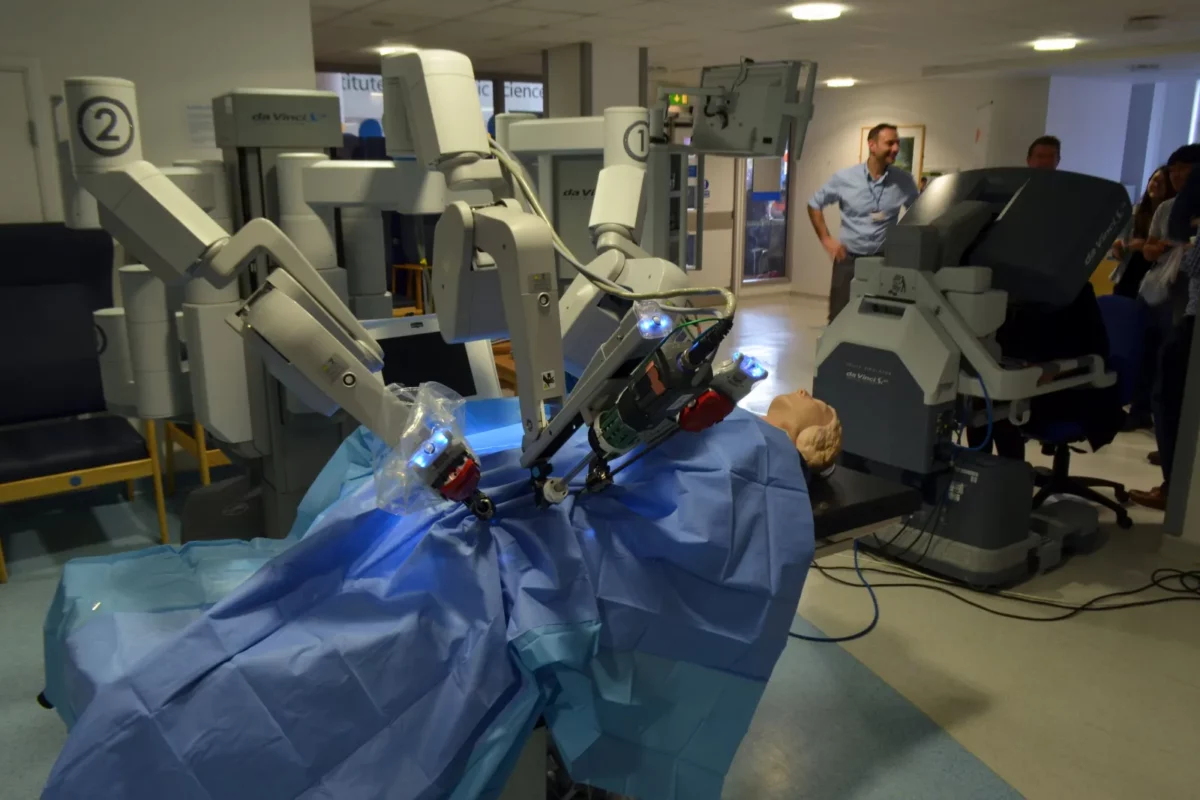
A robot performed complicated surgery to remove a gallbladder, without human help.



https://shorturl.fm/i56WT
https://shorturl.fm/4ercV