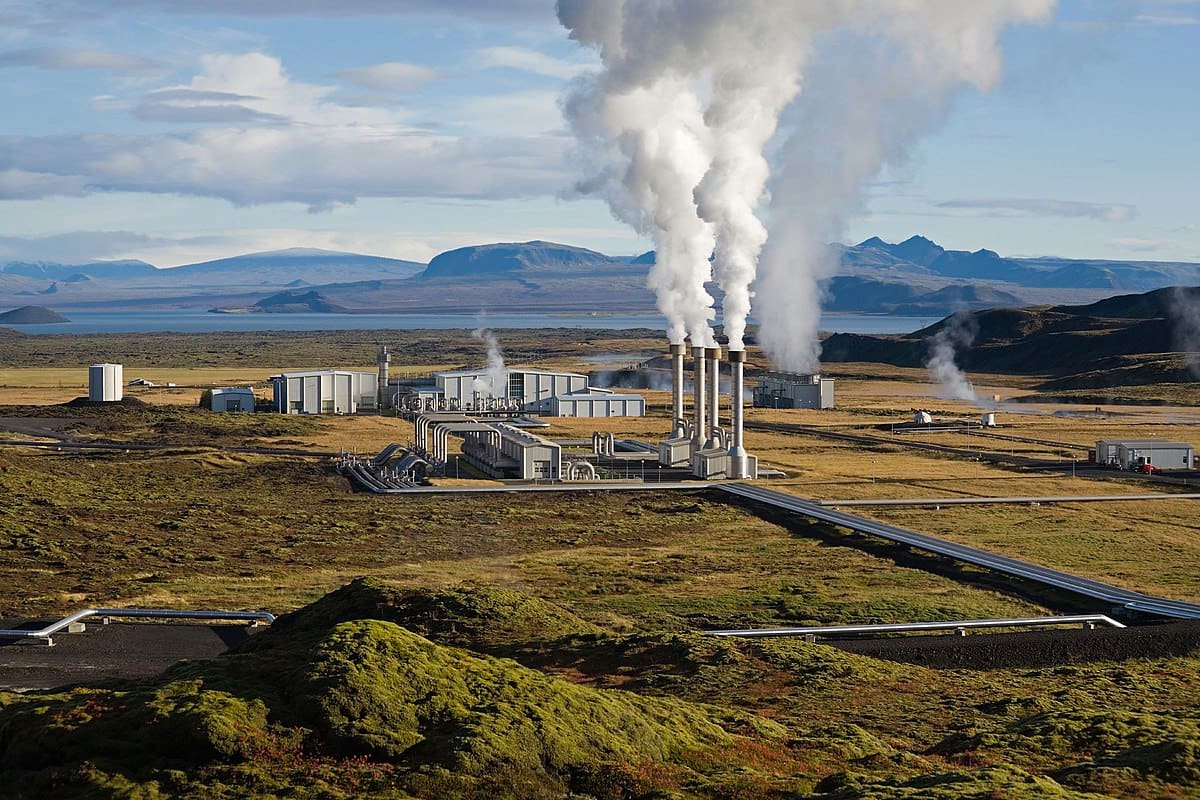
“Quaise Energy, a geothermal power company, has announced it is building a prototype “superhot” geothermal power plant in Oregon. Their key innovation is a novel drilling technique that uses microwaves to break rock instead of drill bits. This approach could let Quaise tap into deeper, hotter rocks, and thereby generate far more energy than shallower wells. Fervo Energy, another geothermal developer, appears to be scaling up. The company recently ordered turbines totaling 1.7 gigawatts of capacity, enough to support dozens of standardized power plants,” reports The Doomslayer.
Quaise Energy is “introducing Project Obsidian: the world’s first superhot geothermal power plant. Right now in Central Oregon, our team is pushing geothermal beyond its limits and into a whole new era. For the first time, we’re building a plant designed to generate electricity where Earth’s natural heat is most powerful: 300–500°C. At those temperatures, a single well can deliver 10–100x more power than all other forms of geothermal.”
Fervo Energy announced that it had agreed with a Mitsubishi subsidiary “to supply Organic Rankine cycle (ORC) units for up to 35 GeoBlocks totaling 1,750 MW of carbon-free, dispatchable power capacity. This agreement is expected to enable the optimal conversion of geothermal heat into baseload carbon‑free electricity…and provide geothermal energy developers with a more efficient path to meeting rising power demand.”
In other news, “Zanskar Geothermal and Minerals, a geothermal energy company, has discovered a commercially viable geothermal reservoir in Nevada using an AI model that predicts the location of geothermal activity. The site had been entirely overlooked: it showed no surface signs of heat and had no history of exploration.”
Geothermal energy may radically expand due to technological advances, just as oil and gas production in the U.S. rose to record levels after fracking techniques were perfected. Fracking could lead to lots of geothermal energy.
A 3-mile deep geothermal well was recently dug in Utah, reaching an area of intense heat.
The impoverished African nation of Zambia used artificial intelligence to find new mineral wealth.






https://shorturl.fm/ZOm7T
https://shorturl.fm/Jzw2p
https://shorturl.fm/bYNUy
https://shorturl.fm/cMH3I
The RTP data they mention is key; raw stats matter more than flashy UIs. For deeper analysis, check out bbjl com. Solid architecture is what separates the noise from the signal here.