
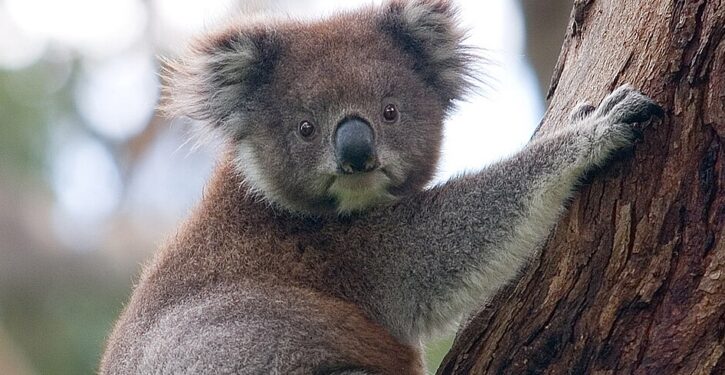
“Koalas in the Australian state of Victoria have long since bounced back from their near-extinction in the early 1900s, but many worried that inbreeding threatened their long-term prospects. Happily, a new genetic database suggests Victorian koala genetic diversity is also recovering,” reports The Doomslayer.
Smithsonian Magazine notes that
Koalas nearly vanished from southeastern Australia due to the fur trade. In the 1920s, as few as 500 individuals remained in the state of Victoria. Conservationists kicked off a concerted effort to rebuild their numbers, and by 2020, the local population had ballooned to nearly half a million animals.
While that’s good news, if a population gets severely reduced in a ‘genetic bottleneck,’ that usually causes descendants to have little genetic variation. This can increase their risk of inbreeding—which can lead to deformities and poor health—and leave them vulnerable to environmental pressures they can’t adapt to.
Surprisingly, DNA analyses reveal that Victorian koalas’ genetics are also quickly rebounding, probably because the population grew so fast…The findings provide hope to those working to save animals from the brink of extinction….
“A larger population means more individuals are reproducing, which in turn means more recombination events occur. Over time, natural selection spreads beneficial combinations and gets rid of harmful combinations.”
A vaccine to save koalas from chlamydia was recently approved. A “rampant chlamydia epidemic” had devastated the koala population, notes the BBC.
Scientists have developed a rabies vaccine for vampire bats that spreads through grooming: “The vaccine is delivered via a gel applied to one bat’s fur. When others groom it, they ingest the gel and gain immunity. Laboratory studies show this method could effectively protect entire colonies.”