
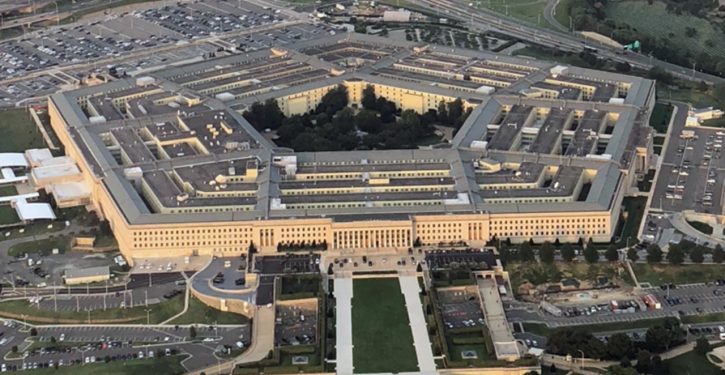
America’s federal budget deficit was a massive $1.809 trillion in 2025. That’s bigger than the budget deficit of any other country in the world. Yet the White House just proposed increasing Pentagon spending by $440 billion next year, which would push the deficit well over $2 trillion in future years. That would result in the national debt — which is already 24% bigger than our economy — growing steadily faster than the economy, year after year. That steady growth in the national debt would eventually bankrupt America. The $440 billion increase in military spending is part of a proposed federal budget that would increase government spending, and make only “paltry cuts to nondefense programs,” modest cuts that Congress may not even approve and won’t offset the proposed military spending increase.
Nations are supposed to run balanced budgets except during recessions — the opposite of what America is doing now, with its big budget deficits. Many economists say countries should run surpluses during periods of economic growth like today. Those surpluses are needed to offset the deficits countries run up during bad times. “Keynesian economics theory suggests that entities should run a surplus during times of prosperity and a deficit during a downcycle or depression. This allows the company or government to save money when it is well off and to spend money on economic stimulus when the economy is less well off.”
Yet, Trump wants to radically increase America’s defense spending, which is already much bigger than the defense spending of any other nation on Earth. America spends more on defense than China and Russia combined — more than twice as much as they do together:
President Trump’s FY2027 budget requests $1.8 trillion in discretionary budget authority, a nearly $100 billion increase over enacted FY2026 discretionary levels. On top of this, the administration requests $350 billion in new mandatory spending via reconciliation, bringing total requested new budgetary resources for FY2027 to $2.2 trillion.
Most of that new spending is driven by a $1.5 trillion defense spending request, a more than $440 billion increase over the combined FY2026 enacted level ($903 billion) and the $155 billion in additional defense spending from the One Big Beautiful Bill Act (OBBBA). A $1.5 trillion defense budget is fiscally reckless and militarily unnecessary.
This defense surge is partially offset by cuts to nondefense programs. Year over year, the administration requests a $73 billion, or 10 percent, reduction in base nondefense discretionary resources. That is far less aggressive than last year’s FY2026 presidential request, which proposed a 23 percent cut. The FY2027 request retreats from last year’s modest spending restraint on the nondefense side.
To be fair, the budget includes a number of worthwhile program cuts and eliminations. For example, the budget proposes eliminating Community Development Block Grants (CDBG), a federal subsidy program plagued by waste and pork-barrel politics. It also takes a step towards privatizing the TSA and returning disaster responsibility to the states. Cuts like these are worth pursuing and long overdue, even if they are swamped by the scale of the defense increase.
The Pentagon already wastes enormous amounts of money. The Pentagon loses track of many valuable assets, and has failed audit after audit: it failed to track $2.1 trillion in assets in 2022 — 61% of military assets!
The Pentagon can make do with less: the Cato Institute identified $17-20 billion in readily-achievable savings to the 2013 military budget.
As Fareed Zakaria noted in 2011 in the Washington Post, a huge amount of wasteful spending could be cut from the defense budget, but hasn’t:
The Bowles-Simpson commission’s plan proposed $750 billion in defense cuts over 10 years. Lawrence Korb, who worked at the Pentagon for Ronald Reagan, believes that a $1 trillion cut over 10 to 12 years is feasible without compromising national security.
Serious conservatives should examine the defense budget … [which includes] a cradle-to-grave system of housing, subsidies, cost-plus procurement, early retirement and lifetime pension and health-care guarantees. There is so much overlap among the military services, so much duplication and so much waste that no one bothers to defend it anymore. Today, the U.S. defense establishment is the world’s largest socialist economy.
Zakaria quoted former defense secretary Robert Gates observing that there were “more members of military marching bands than make up the entire U.S. foreign service.”