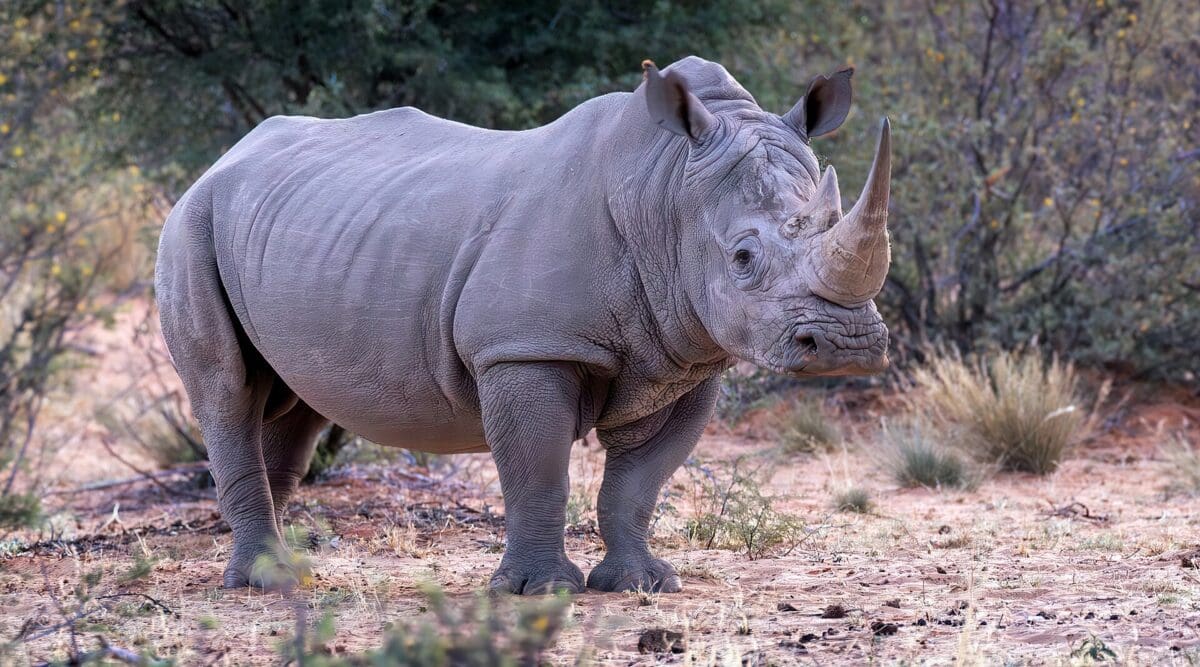
“Southern white rhinos are back in Uganda’s Kidepo Valley National Park for the first time since 1983, when they were extirpated by poachers,” notes The Doomslayer.
The Associated Press reports:
Ugandan wildlife authorities have reintroduced rhinos into a remote protected area where they were once poached into extinction, an event seen by conservationists as a milestone in efforts to support the recovery of a species threatened by poaching.
On Tuesday, two southern white rhinos from a private ranch in the East African country were reintroduced into Kidepo Valley National Park in the country’s northeast. Two more rhinos in metallic crates arrived there on Thursday.
There have been no rhinos in Kidepo Valley National Park since 1983, the result of poaching. But a private ranch in central Uganda — the Ziwa Rhino Sanctuary — has been breeding the large mammals since 2005. That program has succeeded over the years….
Rhinos are targeted by poachers who kill them because of the high demand for rhino horn products for medicinal and other uses in parts of Asia. Studies indicate that rhino horn products sold through illegal markets sometimes fetch higher prices than gold.
Rhinos communicate by leaving dung piles as messages. Rhinos can identify the sex, age, and mating status of other rhinos by smelling their feces.
Rhinos are very nearsighted and may charge at trees or rocks, but they possess an advanced sense of smell to compensate.
Rhinos are frequently seen with tick birds on their backs. The birds feed on parasites in rhinos’ skin and alert rhinos to danger with loud cries.
Rhino horns are made of keratin—the protein that makes up human hair and fingernails.
Snow leopard populations have doubled in nations such as Uzbekistan and Kazakhstan and in parts of India.
Amur leopards are making a comeback in Russia’s Far East, multiplying five-fold.
Bobcats recently returned to New Jersey after being absent from the state for a half century.