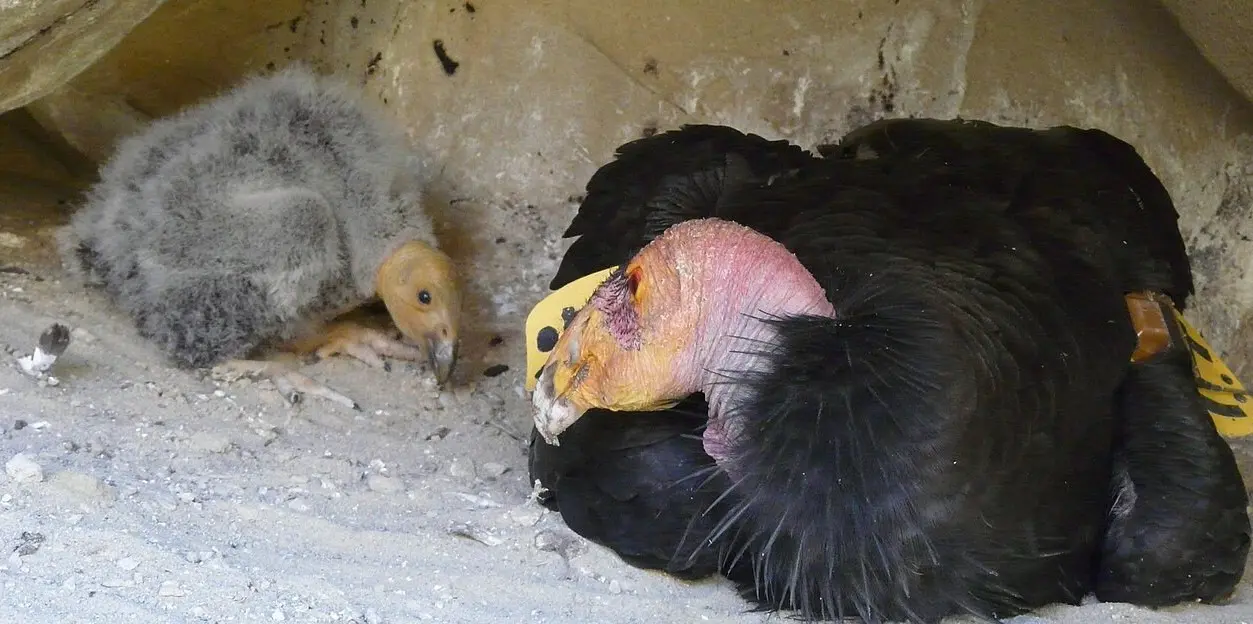
Wild California condors have laid an egg in Northern California for the first time in more than a 100 years. “After decades of conservation work, the endangered species has rebounded from near-extinction to more than 600 birds,” notes The Doomslayer.
Smithsonian Magazine reports that “a pair of California condors” is tending to northern California’s
first wild egg in more than a century….The behavior of the bird couple suggests they’re taking turns with incubation duties…
Threatened by habitat loss, poaching and lead poisoning from ingesting bullet fragments, the population plummeted to just 22 wild individuals in 1982. Scientists carefully captured all the surviving birds in a last-ditch effort to save the species.
Over the last four decades, the species has slowly started to rebound, thanks to captive breeding and wild release programs across the country. In 2019, wildlife officials celebrated the 1,000th California condor chick hatching since recovery efforts began. And as of December 2025, the total population stands at 607 birds, according to the U.S. Fish and Wildlife Service. That number includes 392 individuals flying freely in the wild, while the other 215 live in captivity….
California condors are the largest land birds in North America, with wingspans up to about 10 feet. They’ve successfully nested and raised chicks in the wild in other parts of California since conservation efforts began in the 1980s. But this nest is likely the first in modern history in the far northern part of the state, where scientists only recently started releasing captive-bred birds into the wild.
Bearded vultures have returned to the Alps, a century after being hunted to extinction there.
The wood stork is no longer endangered in the United States, with its numbers growing to at least 10,000 pairs.
Brazil’s rarest parrots have made a comeback, avoiding extinction.
Red-necked ostriches are replacing similar birds that went extinct in Arabia.
“The Kākāpō, a critically endangered, flightless, owl-faced parrot from New Zealand, is expected to have a very fruitful mating season this year,” reports The Doomslayer.




Join our affiliate community and maximize your profits!