“Christopher Buck is fermenting a vaccine in his kitchen. You can too,” reports Reason Magazine. “And he’s publishing the process so you can do it too”:
Buck brews and quaffs a hazy beer that induces immunity against the BK virus, also known as human polyomavirus. Buck argues that you have the right to home-brew vaccines as a way to get around the Food and Drug Administration’s (FDA) years-long vaccine approval process.
Buck joins the pantheon of pioneering vaccine self-experimenters. Among them are French physician and Nobel Prize winner Charles Jules Henri Nicolle, who used crushed lice to inoculate himself against typhus; Jonas Salk, who injected himself with his own polio vaccine; and Albert Sabin, who ingested his oral polio vaccine….
Buck’s day job is as a researcher at the National Cancer Institute, where he works to prevent organ transplant rejection associated with polyomavirus infections. He is credited with discovering four of the 13 polyomaviruses known to infect humans….In people with organ transplants whose immune systems have been suppressed to prevent rejection, the virus often reactivates and causes inflammation that leads to organ failure….Buck’s vaccine functions as a model for possibly developing future edible vaccines.
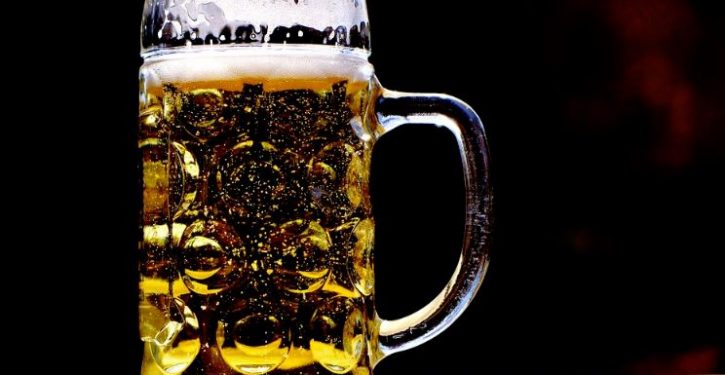
Buck engineered brewer’s yeast to manufacture the protein that encapsulates the virus. The body’s immune system detects the foreign protein and creates antibodies against it. He mixed his yeast with a Flash Hefeweizen (wheat beer) kit in a fermenter along with hop tea made by steeping Saphir hop pellets.
Buck tested out the beer vaccine by drinking one to two pints of the beer for four days, then drinking the beer again months later as a booster. Blood tests showed that the Buck’s immune system produced antibodies against several strains of the BK polyomavirus, and that his drinking the homemade beer did not have any negative effects. He adds that “It was one of the best homebrews I ever made.”
Buck says that the results of this experiment “open the door to the production and rapid testing of inexpensive vaccines that can immediately be delivered in the form of ordinary commercial food products.”
But to avoid a lengthy and complex FDA regulatory approval process, such vaccines would have to be marketed as food or beverages, not as vaccines, and could not make any medical claims or claims about preventing infection. If Buck’s beer is not marketed as a vaccine, it would apparently not be subject to the FDA regulation for vaccines. That’s because the ingredients in his beer are already in the food supply, and are ingredients deemed “generally regarded as safe” for human consumption under existing FDA regulations.