American forests are absorbing higher amounts of carbon dioxide than they did in the 20th century

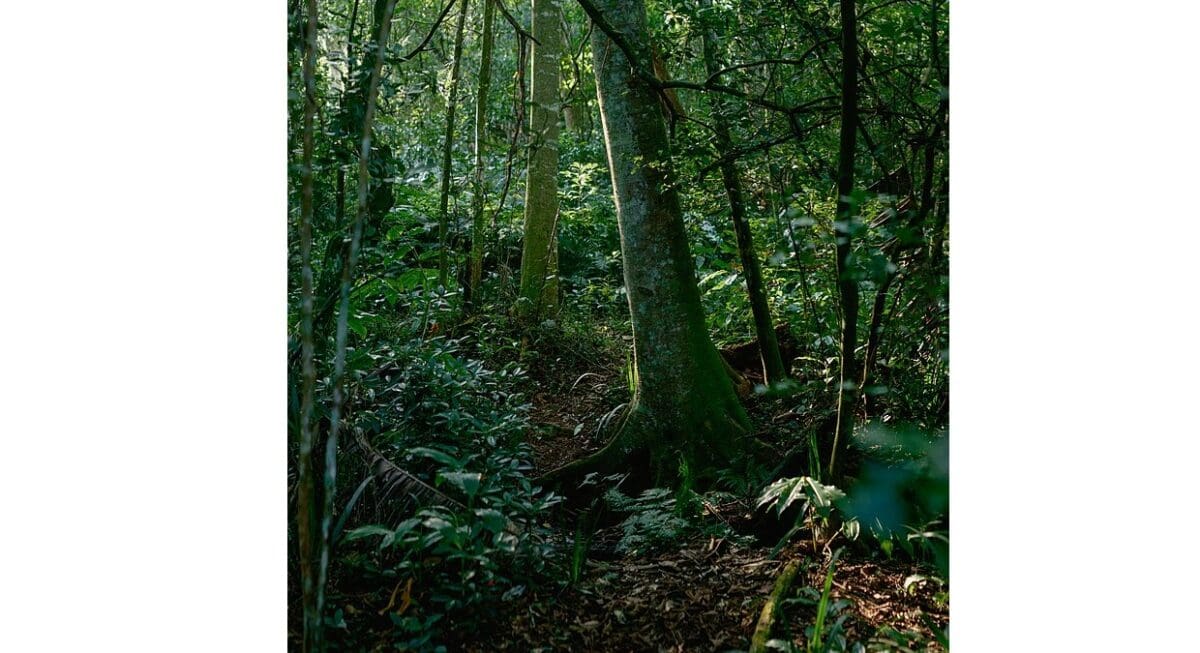
“U.S. forests are absorbing historically high amounts of carbon. According to a recently published study, thanks to higher CO₂ levels, warmer temperatures, shifting rainfall, expanding forests, and maturing trees, US forests have stored more carbon over the past two decades than during any comparable period in the last century,” reports The Doomslayer.
Ohio State News explains:
U.S. forests have stored more carbon in the past two decades than at any time in the last century, an increase attributable to a mix of natural factors and human activity, finds a new study…
The study looked at six drivers – temperature, precipitation, carbon dioxide, management, age composition and area – and the team was surprised by exactly how much natural factors influenced the total amount of carbon stored by U.S. forests. For instance, changes in temperature and precipitation from 2005 to 2022 led to an increase of 66 million metric tons of carbon sequestration per year.
During the same period, human intervention had both negative and positive effects, as human-caused deforestation reduced stored forest carbon by about 31 million tons per year, while activities like tree-planting and reforestation added about 23 million tons per year. Yet it was forest age — mostly structural changes in the peak growth stages of local trees — that helped lock in the most carbon, by 89 million metric tons per year.
Reforestation has largely offset the effects of global warming in America’s southeast. In America’s southeast, except for most of Florida and Virginia, “temperatures have flatlined, or even cooled,” due to reforestation, even as most of the world has grown warmer, reported The Guardian. A study finds that that the relatively cool temperatures are due to “the vast reforestation of much of the eastern US following the initial loss of large numbers of trees in the wake of European settlement in America. Such large expanses have been reforested in the past century – with enough trees sprouting back to cover an area larger than England – that it has helped stall the affect of global heating.”
The reforested areas cool the eastern U.S. by about 2 to 4 degrees Fahrenheit. The cooling effect is strongest in the peak of summer, when trees lower temperatures by 4 to 9 degrees.
The world’s forests are recovering elsewhere, too, helping slow the Earth’s warming — at least in temperate and polar areas. This isn’t the first time this happened. In the 16th and 17th Century, forests expanded in the Americas, as European diseases wiped out much of the Native American population, resulting in their land reverting to forest. 215,000 square miles of new woodlands grew, enough to consume 27 billion tons of carbon dioxide.
But in this century, the expansion of forest is due to happier causes, such as more efficient agriculture, and the replacement of horses with automobiles. The automobile restored New England’s forests, which had mostly disappeared by 1910, but now cover much of the region. Today, Vermont is 78% forested, but in 1910, it was mostly un-forested.
England has slightly more forest now than it did during the Black Death around 1350, even though England today has a dozen times as many people as it did back then. Scotland has many times more forest than it did in 1350. The United Kingdom as a whole has three times as much forest as it did at the start of the 20th century.
China’s forests have grown by about 234,000 square miles over the last 30 years, an area the size of Ukraine. The European Union has added an area the size of Cambodia to its woodlands. Many tropical forests are still shrinking, but temperate forests are expanding slightly faster than tropical forests are shrinking, meaning that trees are still removing at least as much carbon dioxide from the atmosphere as they used to.