By Thomas English
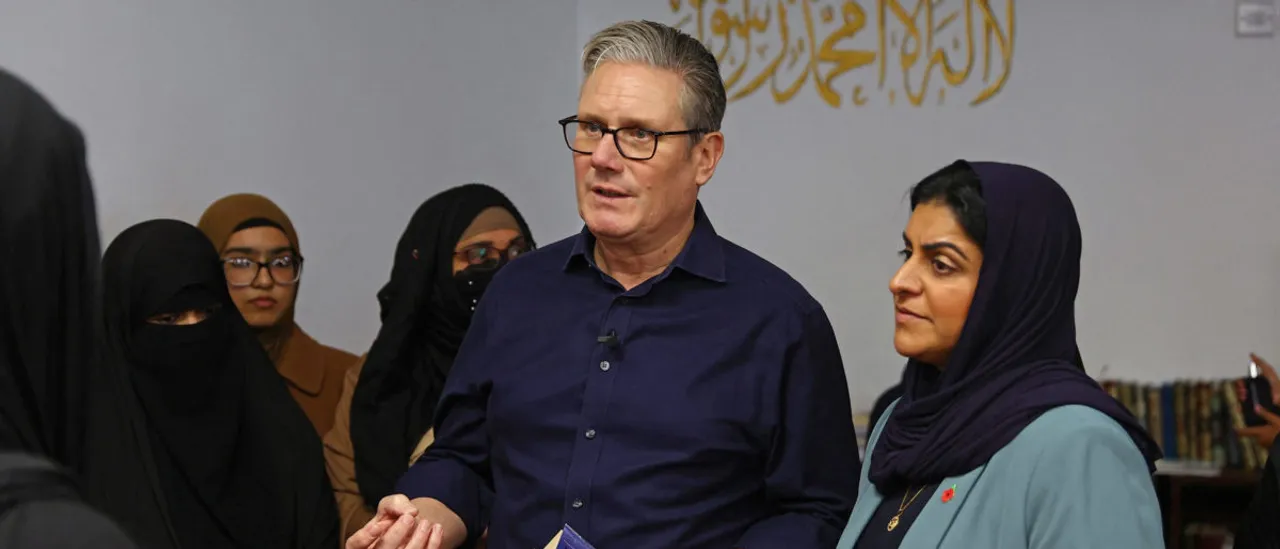
British Prime Minister Keir Starmer is fighting for his political life, and speculation about his replacement has centered on an unlikely figure: Home Secretary Shabana Mahmood, who would become Britain’s first Muslim prime minister if elevated to the role.
Starmer’s troubles stem from his December 2024 decision to appoint Peter Mandelson, a veteran Labour grandee, as Britain’s ambassador to Washington — despite allegedly knowing about Mandelson’s friendship with Jeffrey Epstein. Newly released Epstein documents revealed Mandelson maintained contact with the convicted sex offender after his 2008 guilty plea, allegedly shared sensitive government information with him, and received $75,000 in payments, according to the Financial Times. (RELATED: British PM’s Grip On Power Collapsing In Real Time As Epstein Scandal Engulfs Admin)
Mandelson has resigned from the House of Lords and faces a police investigation for misconduct in public office, the BBC reported.
Starmer’s chief of staff resigned Sunday, taking responsibility for advising the appointment. His communications director followed Monday morning. Then Scottish Labour leader Anas Sarwar — facing a catastrophic May election — became the most senior party leader to publicly demand Starmer quit, calling for “the distraction to end” in a statement to The Times. Sarwar had been a Starmer ally.
Yet Starmer hasn’t resigned. Downing Street insists he’s “concentrating on the job,” PBS reported. More than half the cabinet rushed out statements of support, according to Reuters, a move that historically signals how precarious a leader’s position has become. Starmer will address Labour MPs on Monday evening, essentially making his case to survive.
International headlines have crowned Shabana Mahmood as Starmer’s likely successor, but betting markets disagree. The 45-year-old Home Secretary sits fifth in Polymarket’s odds, behind former Deputy Prime Minister Angela Rayner, Health Secretary Wes Streeting, Manchester Mayor Andy Burnham, and former Labour leader Ed Miliband.
Her name keeps surfacing for two reasons. First, she holds one of the great offices of state, running the department responsible for immigration and security — high-visibility work that projects “prime ministerial” in ways that, for example, overseeing energy policy does not. Second, she represents an unusual political paradox.
Mahmood, born in Birmingham to Pakistani-Kashmiri parents, identifies openly as a “Blue Labour” social conservative and an immigration hardliner. She’s introduced what she calls “the most substantial reform to the UK’s asylum system in a generation,” including a 20-year pathway to permanent residency for asylum seekers, proposals to restrict European Convention on Human Rights protections, and visa sanctions on countries that won’t accept deportees.
Former Conservative minister Michael Gove called her the government’s “standout figure.” Nigel Farage suggested she sounded like she was “auditioning for Reform.”
There’s obvious irony in a Muslim politician implementing stricter immigration enforcement than her Tory predecessors achieved. Critics on Labour’s left call it “dystopian.” Some analysts see her as a “reputational shield” — a dynamic the Conservatives employed with Home Secretaries Priti Patel and Suella Braverman. Mahmood herself frames it as practicality: “I just don’t know why we’ve got ourselves in a tangle talking about migration controls on the left of politics,” she told The Spectator in May.
Starmer’s fate likely hinges on two upcoming events: the release of vetting documents he claims will prove Mandelson lied to him, and a Feb. 26 by-election in Greater Manchester. Another humiliation could be fatal.
For context: the British don’t vote for their prime minister directly. They vote for Members of Parliament, and whichever party commands a majority in the House of Commons forms the government. The prime minister is simply the leader of that party. If Starmer resigns, there’s no snap election — Labour holds an internal leadership contest. Candidates need support from at least 81 MPs, then face a vote of party members. The winner walks into 10 Downing Street without the public casting a ballot. Britain cycled through three Conservative prime ministers between 2019 and 2024 using exactly this mechanism.
If Starmer goes, the leadership race probably comes down to Rayner versus Streeting — both more established figures with clearer factional bases. Mahmood lacks the internal party support and faces skepticism from Labour’s progressive wing. But British politics moves fast. Liz Truss was prime minister for 49 days; now she hosts a podcast with 21,000 YouTube subscribers.
Whoever emerges will inherit a party trailing Nigel Farage’s Reform UK in the polls — a problem Mahmood’s immigration crackdown was arguably designed to solve.