By Katelynn Richardson
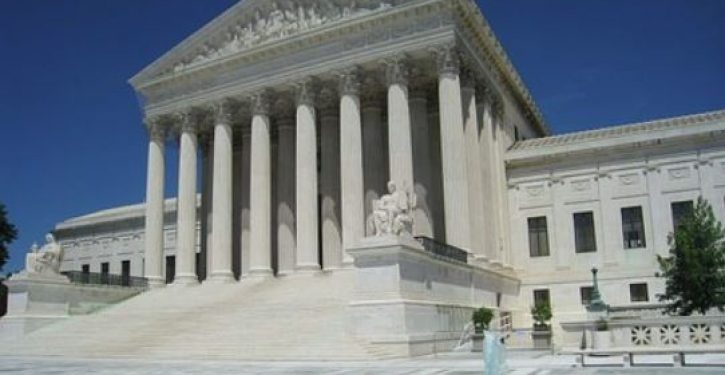
A majority of the Supreme Court seemed inclined on Tuesday to back state efforts to protect women’s sports.
The justices considered challenges to Idaho and West Virginia laws that prohibit boys from playing in girls’ sports during oral arguments that lasted over three hours.
Both cases question whether the laws violate the equal protection clause of the 14th Amendment, while West Virginia’s case also weighs whether the state’s law violates Title IX.
Justice Samuel Alito asked whether having separate sports divisions requires an understanding of what it means to be a man or woman.
“How can a court determine whether there is discrimination on the basis of sex without knowing what sex means for equal protection purposes?” he asked.
Justice Brett Kavanaugh, who is known for coaching his daughters’ basketball teams, asked Kathleen Marnett, attorney representing one of the transgender athletes, to look at the “big picture.”
“One of the great successes in America over the past 50 years has been the growth of women and girls’ sports. It’s inspiring,” Kavanaugh said. “Some states and the federal government, the NCAA and the Olympic committee, think that allowing trans women and girls to participate will undermine or reverse that amazing success and will create unfairness.”
“For the individual girl who does not make the team, or doesn’t get on the stand for the metal, or doesn’t make all-league, there’s a harm there,” he said. (RELATED: Trump Admin Bars Visas From Men Competing In Women’s Sports)
“How we approach the situation of looking at it not as boys versus girls, but whether or not there should be an exception with respect to the definition of girls…. That would, if we adopted that, that would have to apply across the board, and not simply to the area of athletics,” Chief Justice John Roberts said.
Roberts suggested that the landmark 2020 Bostock v. Clayton County ruling expanding sex discrimination to include gender identity and sexual orientation in the context of employment may not apply to the women’s sports cases.
Justice Neil Gorsuch, author of the Bostock ruling, raised some of the most critical questions of the conservative justices.
He questioned at one point whether transgender status should be viewed as its own class, given the “history” of discrimination against these individuals.
Some justices also questioned how any “scientific uncertainty” about athletic advantages of transgender athletes factors into the case.
“Is treating someone who is transgender, but who does not have, because of the medical interventions and the things that have been done…the same threat to physical competition and safety and all the reasons the state puts forward – that’s actually a different class, says this individual,” Justice Ketanji Brown Jackson asked Idaho Solicitor General Alan Hurst. “So you’re not treating the class the same. And how do you respond to that?”