“Since 1949, China’s forest cover has grown from 10 percent of its land area to 25 percent, partly thanks to government efforts to halt desertification. The reforestation has been so extensive that it has altered the country’s water cycle,” reports The Doomslayer.
Last month, China completed the Great Green Wall, a 46-year project to encircle its largest desert with trees. China did this to prevent desertification and curb the sandstorms that plague parts of China in springtime. The Great Green Wall is an 1800-mile “green belt” around the Taklamakan desert in China’s vast northwestern region of Xinjiang. The final 300 feet of trees in the green belt were recently planted on the desert’s southern edge.
Sandstorms can be a problem in China. In 2023, a severe sandstorm affected more than 400 million people in China, sending dust over 800,000 square miles, and leaving some people with eye or lung infections.
Reuters notes that China’s “efforts to enclose the desert with trees began in 1978.” “More than 30 million hectares (116,000 square miles) of trees have been planted. Tree planting in the arid northwest has helped bring China’s total forest coverage above 25% by the end of last year, up from around 10% in 1949. Forest coverage in Xinjiang alone has risen from 1% to 5% in the last 40 years.”
The reforestation has not prevented sandstorms from routinely reaching China’s capital, Beijing. China has said it will continue planting shrubs and trees along the edge of the desert to present desertification. In spite of all of China’s tree planting, 26.8% of China remains classified as “desertified”, down only modestly from 27.2% a decade ago.
Live Science notes that “China Planted So Many Trees It’s Changed the Water Distribution”: “regreening has dramatically changed China’s water cycle, boosting both evapotranspiration and precipitation.” “Collectively, China’s ecosystem restoration initiatives account for 25% of the global net increase in leaf area between 2000 and 2017.”
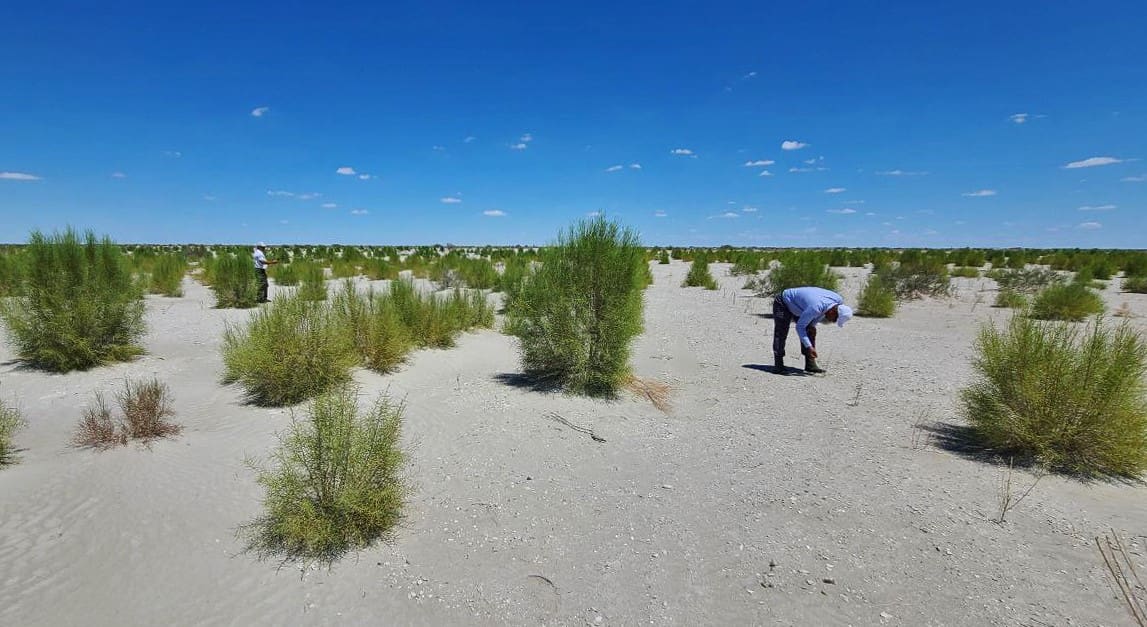
Another Asian country, Uzbekistan, is planting a salt-resistant forest in a desert to prevent toxic salt storms and reclaim the land from its barren state. That desert used to be the Aral Sea, a massive salt lake. But it dried out when the Soviet Union’s communist government diverted waters flowing into it, to irrigate endless cotton fields. The Soviets chose to grow only cotton in much of the region, rather than less thirsty crops that consume less water. An ecological catastrophe resulted.
Forests are expanding in much of the world. The European Union has added an area the size of Cambodia to its woodlands. Costa Rica has 150% more forest than it did in 1987.
The replacement of horses with automobiles saved New England’s forests, which had mostly disappeared by 1910, but now cover much of the region. Today, Vermont is 78% forested, but in 1910, it was mostly un-forested.




Heard some whispers about r7bet1. Decent selection of games, from what I saw. Nothing blew my mind, but it’s okay. Take a peek at r7bet1.