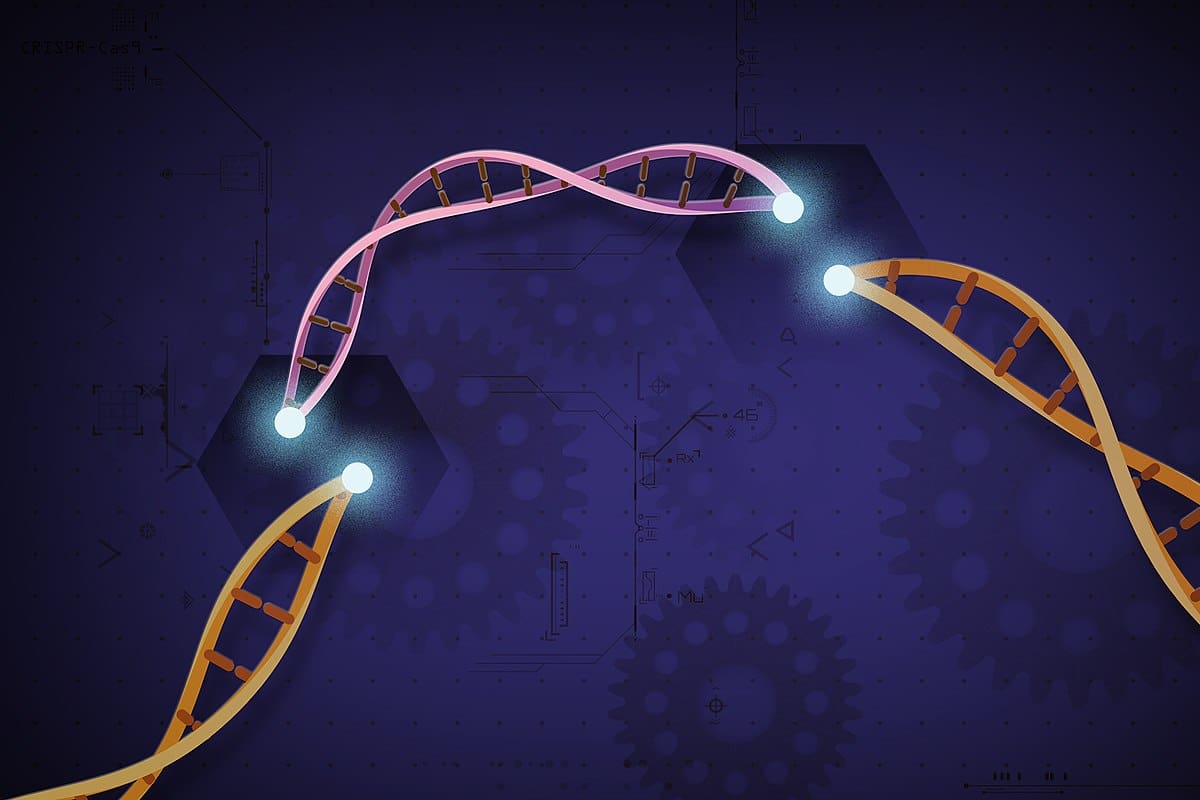
“An experimental gene therapy has delivered promising results in a three-year-old boy with Hunter syndrome, a rare genetic disorder that can cause physical disability, cognitive decline, and early death. Doctors harvested his stem cells, inserted a working copy of the missing gene, and infused the corrected cells back into his body. Nine months later, the boy no longer needs enzyme infusions—the standard therapy for Hunter syndrome—and is showing improved speech, movement, and cognitive development,” notes The Doomslayer.
The BBC reports:
A three-year-old boy has astounded doctors with his progress after becoming the first person in the world with his devastating disease to receive a ground-breaking gene therapy.
Oliver Chu has a rare, inherited condition called Hunter syndrome – or MPSII – which causes progressive damage to the body and brain.
In the most severe cases, patients with the disease usually die before the age of 20. The effects are sometimes described as a type of childhood dementia.
Due to a faulty gene, before the treatment Oliver was unable to produce an enzyme crucial for keeping cells healthy.
In a world first, medical staff in Manchester have tried to halt the disease by altering Oliver’s cells using gene therapy….
Children with the disease look healthy at birth, but around age two they begin showing symptoms of the disease. “These vary and can include changes to physical features, stiffness of the limbs and short stature. It can cause damage throughout the body, including to the heart, liver, bones and joints and in the most serious cases can lead to severe mental impairment and progressive neurological decline.” Almost all children with Hunter syndrome are boys.
“This spring, a group of doctors used a personalized gene therapy to save an infant with a deadly genetic disorder,” severe CPS1 deficiency. The Guardian reported that “Doctors in the U.S. have become the first to treat a baby with a customised gene-editing therapy after diagnosing the child with a severe genetic disorder that kills about half of those affected in early infancy.” A deregulatory measure made this saved life possible, by reducing duplicative clinical-trial requirements.
Gene therapy is restoring vision to some people with inherited blindness. Another gene therapy blocks the painful hereditary condition angiodema.
Overregulation at the FDA delays the approval of lifesaving drugs, and thus kills many people. Many people die waiting for the FDA to approve life-saving drugs and tests. For example, at least a hundred thousand people died waiting years for the FDA to approve beta blockers. One of the FDA officials involved in delaying their approval was John Nestor. Nestor was notorious for following rules in ways designed to deliberately delay other people, such as his habit of deliberately driving slowly in the fast lane on highways in order to slow down other motorists.
The FDA didn’t approve a home test for HIV until 24 years after it first received an application. According to an FDA advisory committee, the test held “the potential to prevent the transmission of more than 4,000 new HIV infections in its first year of use alone.” That means thousands of people likely got infected with AIDS as a result of the delay in approving it. As Roger Parloff noted in Fortune, the FDA’s delay in approving the home HIV test was a “scandal.” It caused the deaths of thousands of people.