
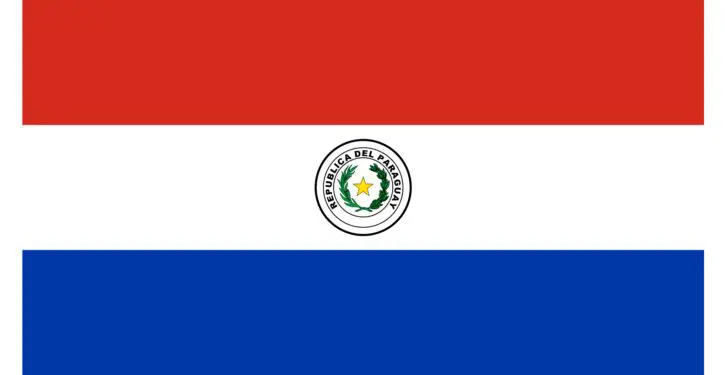
“Paraguay’s economy has grown by an average of 4 percent annually for two decades—a record of stability that helped earn it investment-grade credit ratings and is now drawing in foreign investors,” reports The Doomslayer.
Wedged between South American heavyweights Argentina and Brazil, Paraguay has long been ignored by the international community. Small, landlocked and poor, it was often seen as just a fly-over country.
So it’s a little surprising — to both those in the capital and in the region — that the country of 6.1 million people is suddenly having a moment…
Though roughly the size of California, Paraguay’s $47 billion economy is about 1% of the Golden State’s. But rapid growth and economic reforms in recent years helped the country win investment-grade credit status from Moody’s Ratings in 2024 and from S&P Global last year…
Last century, it was run as a dictatorship for 35 years — one of the longest in the region, whose fall in 1989 was followed by a tumultuous transition to democracy. But Paraguay’s embrace of sound fiscal and monetary policies after its 2003 financial crisis is now paying off, with single-digit inflation and annual growth averaging around 4% over the past two decades.
Back in 1970, Paraguay was one of the poorest countries in Latin America, almost as poor as Haiti, Bolivia, and Honduras. But today, the World Bank classifies Paraguay as an upper-middle-income country, and it is at least five times as rich as Haiti and roughly twice as well off as Bolivia and Honduras.
Latin America as a whole has experienced slow economic growth of only about 1% annually over the last decade. Many Latin American countries have unnecessarily complicated tax codes, and confusing and complicated government regulations. They don’t do a good job of protecting property rights, which discourages investment.
Venezuela was once South America’s richest country. Now, it is the poorest country in South America, due to years of socialist policies. Meanwhile, Chile became the richest major country in Latin America due to its free-market policies.
Before the communists took over Cuba, Cubans lived longer than people in virtually all other Latin American nations. But that changed under the communist regime that took over in 1959. Back in 1960, Chileans had a life span seven years shorter than Cubans, and Costa Ricans lived more than two years less than Cubans on average. But Cuba lost that advantage in life expectancy by 2012, according to the World Almanac. By 2017, Costa Ricans lived five years longer than Cubans, and Chileans lived three years longer than Cubans. In 1960, Mexicans lived seven years shorter than Cubans; by 2017, the gap had virtually disappeared, shrinking to just four months.