
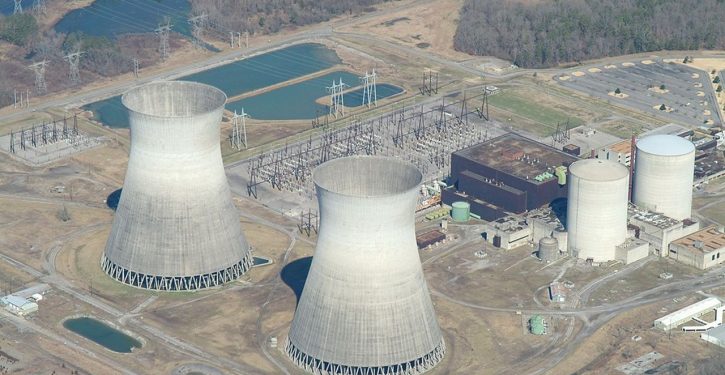
“The nuclear power company TerraPower has received a permit from the US Nuclear Regulatory Commission to build a sodium-cooled reactor in Wyoming, the first approval for a non-water-cooled commercial reactor in decades. Sodium cooling allows reactors to operate at higher temperatures and lower pressures than conventional water-cooled plants, which can improve efficiency. The design will also include thermal storage, allowing the reactor to store energy as heat during periods of low demand,” reports The Doomslayer.
TechCrunch notes that this is the first permit
issued by the NRC in nearly a decade. The startup — founded by Bill Gates in 2015 and backed by Nvidia — has been designing its Natrium reactor with GE Vernova Hitachi. The final power plant will generate 345 megawatts, which is two-thirds smaller than modern full-size reactors, but multiple times larger than many small modular reactor designs favored by other startups.
Natrium differs from other reactors not just in scale, but also in the details of its design. Where most nuclear reactors built in the last 50 years have been cooled by water, Natrium is cooled by molten sodium, which TerraPower says should be safer. This is the first time a commercial reactor not cooled by regular water has been approved by the NRC in more than 40 years.
The reactor will operate with an excess of molten sodium, which will be stored in large, insulated tanks. This allows atoms to keep splitting when demand is low, with the hot sodium saving that energy, which can be used to fill in any lulls in wind and solar output. Since nuclear power plants operate best near full capacity, storing excess energy as heat should help lower generating costs.
The approval process for nuclear plants is very slow and expensive. The Energy Department recently relaxed its rules for nuclear plants, but that only applies to nuclear plants on land owned by the Energy Department, not private property, which is subject to more cumbersome rules imposed by the Nuclear Regulatory Commission.
TerraPower is one of five nuclear startups backed by big tech firms or their founders, in response to rising electricity demand from data centers. At least $2 billion has been invested in nuclear startups over the last few months.
A nuclear plant in Florida is helping crocodiles thrive. Russia signed an agreement with Ethiopia to build a nuclear power plant.
A nuclear plant that closed after an earthquake and tsunami will reopen in Japan, which should cut electricity bills and save lives.
A company achieved a self-sustaining nuclear reaction in December.
Right now, nuclear energy produces about 19% of the electricity generated in America. Nuclear energy produces no greenhouse gas emissions or air pollution. Nuclear plants generate most electric power in countries like France and Slovakia, but in the U.S., it has been much more difficult and costly to construct a nuclear power plant. The Nuclear Regulatory Commission makes it very expensive to construct a nuclear plant — even the application process is incredibly expensive and usually takes years of unnecessary delay. Even when nuclear plants are already operating safely and providing badly needed power, anti-nuclear activists sometimes get government officials to shut them down.