
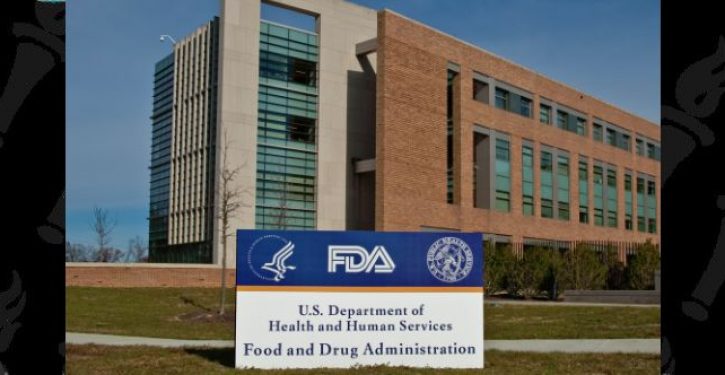
The FDA is blocking the approval of some drugs for lethal, rare diseases, because the FDA has put “the persnickety Vinay Prasad” in charge of the FDA’s biologics unit, and he imposes unreasonable barriers to the approval of these life-saving drugs, notes The Washington Post:
Marty Makary appeared for Thursday an interview on CNBC to tout efforts under his leadership at the Food and Drug Administration to speed up approvals for treatments of rare diseases. Instead, he wound up tanking the stock of a biotech company struggling to advance a leading-edge gene therapy drug through the agency’s bureaucracy.
The episode is a perfect illustration of what’s wrong with the FDA. The agency’s leaders might say the right things about liberating drug development from red tape. Yet their actions are making it much harder for innovative companies to take advantage of brilliant new biotechnology — even as China invests heavily to surpass America in the field.
Makary was responding to criticism that the FDA’s biologics unit, led by the persnickety Vinay Prasad, has in recent months stymied multiple gene therapy drugs. That included UniQure’s experimental therapy for Huntington’s disease, the first-ever treatment for the debilitating genetic illness.
That drug generated enormous excitement last September when a small trial found it slowed the progression of Huntington’s by 75 percent, compared to historical data on the disease. The agency had agreed to that study design in late 2024 as part of its accelerated approval pathway. But it backtracked in November, claiming that the historical data was not adequate as a control group, leaving the application in limbo.
Makary, in the CNBC interview, defended the decision. Though he didn’t refer to UniQure by name, he described its study in detail, concluding, “At the end of the randomization period, it found no benefit, and yet, this is one of the drugs that we were pressured to approve.” Unsurprisingly, the company’s market value immediately dropped more than 30 percent.
It’s highly unusual for an FDA commissioner to discuss drugs with pending applications in the media. It also demonstrates how the agency is raising the bar for firms seeking accelerated approval. These are typically drugs for rare diseases that are extremely difficult to study, both logistically (since there are few patients to participate) and ethically (since it would be wrong to withhold potentially lifesaving medication from people).
Yet Prasad and Makary are insisting that these experimental drugs demonstrate their clinical benefit even when that’s not what the FDA agreed to at the outset of these studies. The same thing happened to a gene therapy for a rare disease known as Hunter syndrome, which the agency rejected in early February. Ditto for a rare blood cancer treatment, rejected in January.
Makary dismissed concerns that shifting goalposts will undermine innovation, claiming that some in the media have proclaimed a “fatwa” on Prasad. But that will do little to assure biotech companies that new therapies for rare diseases are good investments.
A single obstructionist FDA official like Vinay Prasad can cause the deaths of thousands of people by denying them access to a life-saving drug.
At least a hundred thousand people died waiting years for the FDA to approve beta blockers in the 20th Century. One of the FDA officials involved in delaying their approval was John Nestor. Nestor was notorious for following rules in ways designed to deliberately delay drug approvals and other people, such as his habit of deliberately driving slowly in the fast lane on highways in order to slow down other motorists.
Many people die waiting for the FDA to approve medical tests and life-saving drugs. The FDA can be rather slow. The FDA didn’t approve a home test for HIV until 24 years after it first received an application. According to an FDA advisory committee, the test held “the potential to prevent the transmission of more than 4,000 new HIV infections in its first year of use alone.” That means thousands of people likely got infected with AIDS as a result of the delay in approving it. As Roger Parloff noted in Fortune, the FDA’s delay in approving the home HIV test was a “scandal.” It caused the deaths of thousands of people.