
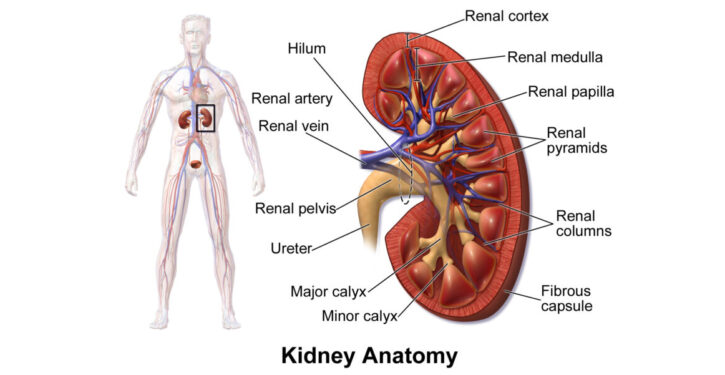
“The number of organ transplants in the US has increased nearly every year since 2013 (2020 was the exception), reaching a record 49,064 in 2025,” reports The Doomslayer.
“In 2025, the U.S. achieved a record for organ transplants for the fifth consecutive year….Last year, 49,064 organ transplants were performed nationwide. With the exception of 2020, transplants have increased each year since 2013. Living donation also continued to grow in 2025, with 7,237 people becoming living organ donors, a 3% increase over the previous year, according to new data from the Organ Procurement and Transplantation Network.”
The United Network for Organ Sharing adds:
Kidney transplants declined slightly in 2025, with 27,573 transplants performed: 21,052 from deceased donors and 6,521 from living donors. This represents 102 fewer transplants than in 2024. More than 90,000 Americans are still waiting for a lifesaving kidney transplant….
Last year marked a record for liver transplants, with 12,344 performed, nearly 8% more than in 2024. Of those, 709 transplants were made possible by living donors, a 17% increase over the previous year….
For the first time in more than a decade, deceased donations dipped, decreasing by 2.5% with 16,550 deceased donors giving the ultimate gift of life.
Kidney failure shouldn’t be a death sentence. But for thousands of people, it is, thanks to federal laws banning organ sales. Those laws radically shrink the supply of kidneys and other organs that people desperately need to stay alive. As law professor Ilya Somin noted in 2019,
Many Americans die every year because they need kidney transplants, in large part due to federal laws banning organ sales. … [A]n average of over 30,000 Americans have died each year, because the ban prevented them from getting transplants in time.
Somin cited a 2018 study in the Journal of the American Society of Nephrology, titled “The Terrible Toll of the Kidney Shortage.” It concluded that the “106,000” people “who do not receive a transplant” due to the current kidney shortage “are fated to live an average of 5 years on dialysis therapy before dying prematurely.”
Somin and others say the ban on organ sales should be repealed to save lives. Back in 2011, kidney donor Alexander Berger explained why kidney sales should be legal in The New York Times. Berger was a researcher for GiveWell, a nonprofit that helps charitable donors decide where to give. Berger predicted that allowing kidney donors to be compensated would save countless lives by giving people an incentive to donate their kidneys, resulting in a vast increase in kidney donations.
Right now, people have to be unusually altruistic to donate a kidney, since you have to spend several days in the hospital to donate one, take off a lot of time from work, and run a tiny risk of death. Few people are that selfless. Allowing kidney sales would also help the poor, who currently often are unable to obtain kidneys: as Berger noted, people unable to get kidney transplants now are “disproportionately African-American and poor.”
If kidney sales were legal, the taxpayers would save money, too. The government would be able to simply pay for kidney transplants for poor and elderly people who need them (including the cost of buying the kidney needed for the transplant), rather than paying for years and years of costly dialysis treatment through Medicare and Medicaid. The purchase price of a kidney would be much less than the ongoing cost of dialysis.
As Berger noted, if the government paid for kidneys, that would actually “save the government money; taxpayers already foot the bill for dialysis for many patients through Medicare, and research has shown that transplants save more than $100,000 per patient, relative to dialysis.” (By legalizing organ sales, one nation, Iran, was able to eliminate waiting lists for transplants, and avoid the staggering costs of widespread dialysis.)
The case for organ sales is even stronger than for allowing professional football, which has greater risks associated with it.
As Berger observed, people who receive compensation for their kidneys will not be “exploited.” While there is some risk associated with donating a kidney—the whole reason compensation is needed—“the risk of death during surgery is about 1 in 3,000,” smaller than many risks that everyone is already allowed to take in exchange for money or just for the heck of it. Moreover, a kidney donor’s “remaining kidney will grow to take up the slack of the one that has been removed.” So donating a kidney does not interfere with leading a normal life.
Professor Somin says the exploitation argument against organ sales is logically inconsistent. Most of the people who “oppose legalizing organ markets because they believe it would lead to exploitation” have “no objection to letting poor people perform much more dangerous work, such as becoming lumberjacks or NFL players.”
This makes no sense, because, unlike the ban on organ sales, which kills thousands of people, a ban on professional football would not kill anyone. So, the case for organ sales is even stronger than for allowing professional football, which has greater risks associated with it, such as widespread traumatic brain injury and degenerative brain disease.
As one commenter notes, “The risk of dying during kidney donation (0.03 percent) is equivalent to going sky diving twice or driving 20,000 miles. Donating a kidney has the same risk as commuting 40 miles to work for one year,” a risk people commonly assume just to get to work.
Moreover, as Somin noted,
In addition to offering payment to living donors, we can pay potential donors in advance for the ‘option’ of harvesting organs after they pass away, a strategy that eliminates any negative health effects on donors, since, by definition, the option can only be exercised after they have died, and have no further use for the organ themselves.
Such an option eliminates any risk of “exploitation.”
As Berger notes, the ban on kidney sales is most harmful to minorities and low-income people:
The victims of the current ban are disproportionately African-American and poor. When wealthy white people find their way onto the kidney waiting list, they are much more likely to get off it early by finding a donor among their friends and family (or, as Steve Jobs did for a liver transplant in 2009, by traveling to a region with a shorter list). Worst of all, the ban encourages an international black market, where desperate people do end up selling their organs, without protection, fair compensation or proper medical care.
Many kinds of body tissue can be purchased, so why not organs like kidneys, livers, and hearts? In 2011, the Ninth Circuit Court of Appeals ruled that it is legal to compensate bone marrow donors. Similarly, as Berger points out:
[W]e already allow paid plasma, sperm and egg donation, as well as payment for surrogate mothers. Contrary to early fears that paid surrogacy would exploit young, poor minority women, most surrogate mothers are married, middle class and white; the evidence suggests that, far from trying to ‘cash in,’ they take pride in performing a service that brings others great happiness.
And we regularly pay people to take socially beneficial but physically dangerous jobs — soldiers, police officers and firefighters all earn a living serving society while risking their lives — without worrying that they are taken advantage of. Compensated kidney donors should be no different.
People in need of other organs, like hearts, would also benefit from legalizing organ sales. As Emily Largent observed at the Harvard Law School website, there is also a large “unmet need for hearts, lungs, livers, and other vital organs” that might be filled, if organ donations were compensated.
In the past, critics argued that organ markets should be banned because it is inherently wrong to profit from or “commodify” the human body. Yet, as Professor Somin observes, most of them don’t object to letting a wide range of people profit from organ transplants, including doctors, insurance companies, hospital administrators, and medical equipment suppliers. All of these people get paid (often quite well) for doing so.
Strangely, the only participant in the transplant process who is forbidden to profit from the organ is the one who provided it in the first place. As Professor Somin notes,
If you believe that people should be forbidden to sell kidneys because earning a profit from organs is immoral ‘commodification’ of the body, you must either oppose paying all the other people who currently earn money from organ transplants, or explain why they, unlike the original owner of the kidney, are not also engaged in commodification.
As Somin observes,
The same goes for people who argue that kidney markets should be banned because earning money from transactions involving body parts will somehow corrupt our morals. If the morals of doctors, nurses, and others are not corrupted as a result of repeatedly earning a large part of their livelihood from organ transplants, it is not clear why the morality of donors will be corrupted by earning money from selling a body part on just one or a few occasions.