
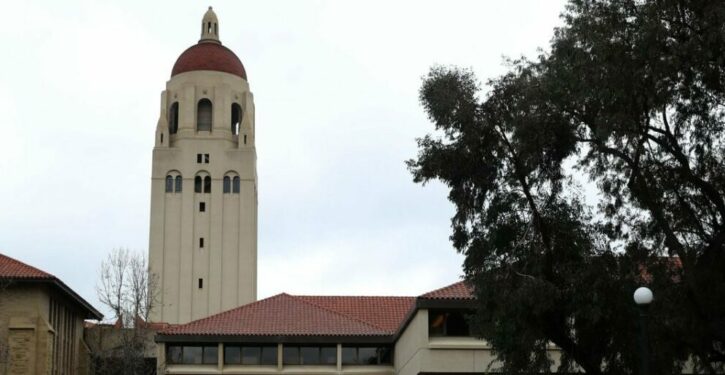
A federal judge in San Jose, California recently rejected a motion to dismiss a lawsuit that the Foundation for Individual Rights and Expression filed against the Trump administration for violating international students’ right to free speech at Stanford University.
“We’re pleased with the court’s ruling. Deporting lawfully present noncitizens because of their opinions violates the First Amendment and betrays America’s commitment to freedom of speech,” said Conor Fitzpatrick, an attorney for FIRE.
The lawsuit, filed on behalf of The Stanford Daily and two noncitizens, notes that the First Amendment protects foreign students’ right to free speech while they are in the U.S. legally.
FIRE says students with visas who write for Stanford’s student newspaper “are declining assignments related to the conflict in the Middle East, worried that even reporting on the war will endanger their immigration status.”
After FIRE filed the lawsuit last year, the Trump administration asked a federal judge to dismiss the lawsuit, claiming the plaintiffs lack standing to challenge the statutes.
But Judge Noël Wise rejected the government’s motion to dismiss on Monday, letting the lawsuit continue.
“We feel confident that the First Amendment will prevail and lawfully present noncitizens should not have to fear deportation for expressing an opinion the government doesn’t like,” Fitzpatrick says.
The lawsuit challenges two immigration statutes that Secretary of State Marco Rubio and the Department of State are using to target noncitizens for deportation based on their speech.
One gives the Secretary of State the power to initiate deportation proceedings against any noncitizen for protected speech if the secretary personally determines that the speech “compromises a compelling foreign policy interest.”
The other statute being challenged lets the Secretary of State revoke noncitizens’ visas “at any time” for any reason, according to the FIRE’s court complaint.
The complaint explains how the enforcement of these statutes is having a chilling effect on the speech of foreign students at Stanford.
The two individual plaintiffs, Jane Doe and John Doe, are “legal noncitizens with no criminal record,” but they are afraid of being deported for “engaging in pro-Palestinian speech” on campus, FIRE says.
“We are asking the courts to declare that the two statutes Secretary Rubio is relying upon to target noncitizens” such as “Rümeysa Öztürk violate the First Amendment to the extent they allow visa revocation or deportation based on protected speech,” Fitzpatrick said.
Öztürk, a foreign student at Tufts University, is not a plaintiff in this lawsuit, but the court complaint cites her arrest and detention as an example of the Trump administration “aggressively targeting lawfully present noncitizens for protected speech, particularly at universities.” She was involved in pro-Palestinian activism on her college campus.
This month, an immigration judge terminated removal proceedings against Tufts University student Rümeysa Öztürk, who was detained for over a month last year as part of the Trump administration’s effort to target and deport international students and activists involved in pro-Palestinian advocacy. All she did was write an op-ed in her college newspaper, a classic example of free speech.
ICE arrested and detained Öztürk, a PhD student, “not because the government claims she committed a crime or other deportable offense, but for the seemingly sole reason that her expression — an op-ed in a student newspaper” — was viewed by the Secretary of State as being at odds with U.S. foreign policy. (Her op-ed criticized Tuft’s administration for dismissing student government resolutions about supposed violations of international law in Palestine). For ICE to detain a student who is in the country legally on a student visa, because of an op-ed, is an affront to the First Amendment, and the fact that “Freedom of speech and of the press is accorded aliens residing in this country.” (See Bridges v. Wixon (1945)).
Last fall, another federal judge ruled that the Trump administration had unconstitutionally targeted pro-Palestinian students. The ruling followed a ten-day bench trial in which “green card-holding professors at U.S. universities testified that the high-profile arrests of outspoken students, like former Columbia University pro-Palestinian activist Mahmoud Khalil and Tufts student Rümeysa Öztürk, made them fearful and stifled their speech.”
Fitzpatrick says FIRE’s goal in bringing the current lawsuit is to prevent the government from deporting lawfully present noncitizens because of their speech.
A law professor at Washington University in St. Louis says the foreign students’ First Amendment lawsuit should prevail even if foreign students have limited free speech rights due to their immigration status, because the First Amendment also protects American listeners’ First Amendment right to receive information from foreigners. The Supreme Court ruled that Americans have a right to receive information even from foreign sources, in its decision in Lamont v. Postmaster General (1965). Professor Gregory Magarian says that “even if non-citizens did not have a valid direct claim of First Amendment rights (which, again, I believe they do), their expressive freedom should still be protected for the sake of citizens’ interest in hearing what they have to say.”