
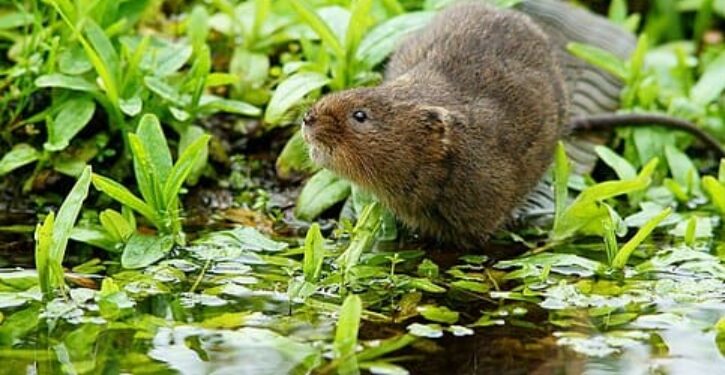
“The much-diminished European water vole population is rebounding in the East of England after a program to cull the American Mink, one of the vole’s predators,” reports The Doomslayer.
Bird Guides explains:
European Water Vole numbers have risen sharply across the East of England following a long-term program to control American Mink…The River Colne in Essex, once badly affected by mink predation, has seen particularly strong results….European Water Vole was once widespread across Britain but has suffered a dramatic decline in recent decades. Nationally, numbers are thought to have fallen by about 97% since the 1950s, largely due to habitat loss and predation by invasive mink.
“Conservationists are using AI to help them detect and eradicate the last remaining invasive stoats on the Orkney Islands, which have devastated local bird populations,” reports The Doomslayer.
22 seabird species have returned to Mexico’s Pacific Islands, mainly due to efforts to remove invasive species that killed them or destroyed their habitat. Conservationists “removed 60 populations of invasive mammals from 39 islands: rats, cats, mice, dogs, donkeys, goats, and rabbits. With invasive mammals gone, the stage was set for seabirds to return. Even after the mammal invaders are removed it’s not always easy to convince seabirds to recolonize an island.”
“Seabirds, crabs, geckos, and native flora are flourishing on Bikar Atoll and Jemo Islet—two small islands in the Marshalls—after conservationists successfully eradicated invasive rats,” reported The Doomslayer.
Artificial intelligence is being used to save whales and detect wildfires before they spread.