“The United States has terminated its partnership with the World Health Organization,” reports NBC News. “The move follows an executive order Trump issued on the first day of his second term last January saying the U.S. would withdraw from the WHO within a year. In recent days the Trump administration has also withdrawn the U.S. from dozens of other international organizations, including global climate talks.”
“This action responds to the WHO’s failures during the Covid-19 pandemic and seeks to rectify the harm from those failures inflicted on the American people,” said Secretary of State Marco Rubio and HHS Secretary Robert F. Kennedy Jr.
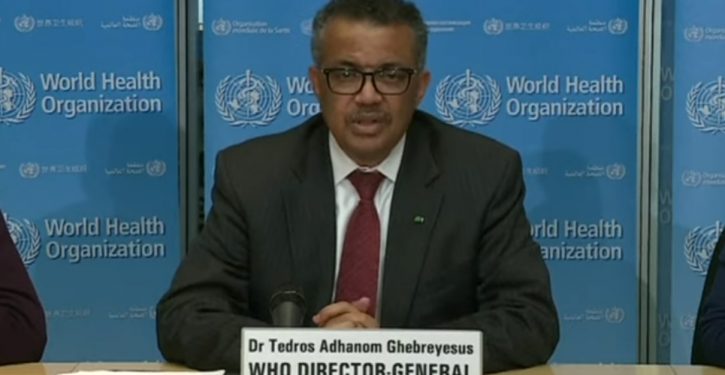
WHO Director General Tedros Ghebreyesus predicted last week that if the U.S. withdrew from the WHO, that would leave the world less protected against epidemics.
Rubio and Kennedy said the U.S. would continue to work with other nations and “trusted health institutions” using a more transparent model that “delivers real outcomes rather than the bloated and inefficient bureaucracy of the WHO.”
NBC News says that in informing reporters about the termination, “HHS officials provided no details about whether those institutions have the laboratory credentials necessary for surveillance of emerging diseases.” But an HHS official says, “We’ve done an analysis. We have plans in place.”
Some infectious disease researchers said “the exit from WHO is likely to leave dangerous blind spots in disease surveillance and preparedness — particularly when it comes to…the flu.”
Even relatively minor diseases can cost many lives if they spread across the world. “Measles vaccination has saved 94 million lives globally since 1974. Of those, 92 million were children”, says Our World in Data. Unvaccinated children died last year of measles in places like Los Angeles and Texas. Measles is not a particularly lethal disease, but some children still die of it. In children, one to three cases out of every 1,000 die in the United States (0.1–0.3%). But in populations with high levels of malnutrition and a lack of adequate healthcare, mortality can be as high as 10%. So the measles vaccine has saved millions of lives in the Third World, and at least 200,000 lives in Europe and North America, since 1974.