By Harold Hutchison
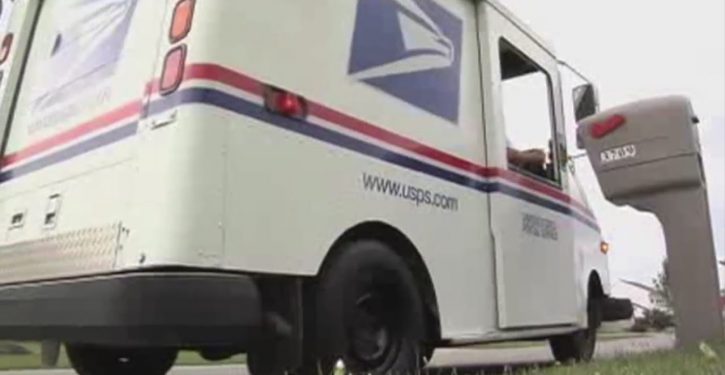
The United States Postal Service (USPS) admitted it has 285 buildings across the country that are partially or completely unused, but said that legislative solutions were required to address the inventory, according to a Thursday letter.
Republican Sen. Joni Ernst demanded that the United States Postal Service (USPS) account for its building usage in a letter sent Dec. 19, citing a Nov. 24 report by the agency’s inspector general. In the letter, the USPS director of government liaison, Michael J. Gordon, explained why the agency struggled to address the extra buildings. (RELATED: EXCLUSIVE: Joni Ernst Delivers Demand For USPS To Explain Why They Can’t Account For Space In 21,000 Buildings)
“I understand your concerns about unnecessary government properties and would note that federal law makes closing or consolidating inefficient or unneeded facilities very difficult,” Gordon wrote. “Additionally, we routinely receive inordinate congressional pressure—including from some of your colleagues in Iowa’s delegation—opposing even minor changes that would increase efficiency (such as shifting limited mail processing operations from one facility to another, even when the first facility would remain open and operational).”
“Similarly, we recently heard very loud congressional opposition to terminating contracts with third-party facilities (such as grocery and convenience stores) that provide postal services, a move that would save us money and have no real effect on service,” Gordon continued. “Congressional insistence to maintain the status quo, even when doing so is expensive, inefficient, and outdated, makes modest modernization and financial sustainability efforts extraordinarily difficult and sometimes impossible.”
The USPS has lost more than $18 billion over the last two fiscal years, according to a Nov. 14 release by the agency. Ernst told the Daily Caller News Foundation that the inventory of excess buildings helped explain the USPS’ poor financial state.
“If you’re wondering why USPS loses billions of dollars, look no further than the fact it is paying for nearly 300 buildings it does not need,” said Ernst. “No business could operate like this, but unfortunately this problem is far too common throughout our government. Which is exactly why Congress needs to pass my DISPOSAL Act to streamline the sale of underutilized and unnecessary buildings to save taxpayers billions of dollars. The American people deserve better.”
The USPS owns or leases over 34,000 buildings across the country, of which more than 95% have not been reviewed at all or since 2020, according to the IG report released in November.
“The Postal Service did not effectively manage excess and underutilized space as it does not have reliable data, does not know the amount of this space throughout its network, and does not have a comprehensive strategy for reducing this space. The Postal Service also did not comply with a key [Federal Property Management Reform Act (FPMRA)] reporting requirement on excess and underutilized space,” the report stated. (RELATED: EXCLUSIVE: GOP Senator Sounds Alarm About Uncle Sam Making Rent On Massive Gov’t Building Portfolio During Shutdown)
Ernst introduced S. 3901, the Disposing of Inactive Structures and Properties by Offering for Sale And Lease (DISPOSAL) Act, on Oct. 30, which seeks to sell off six major federal government-owned buildings in Washington, D.C., while also streamlining the process to sell other buildings.
In a 60-page report released on Dec. 5, 2024, that covered findings from her investigations into telework issues, Ernst noted that largely vacant office buildings resulting from the liberal remote work policies established during the COVID-19 pandemic had detrimental effects on the environmental quality in the workplaces.