
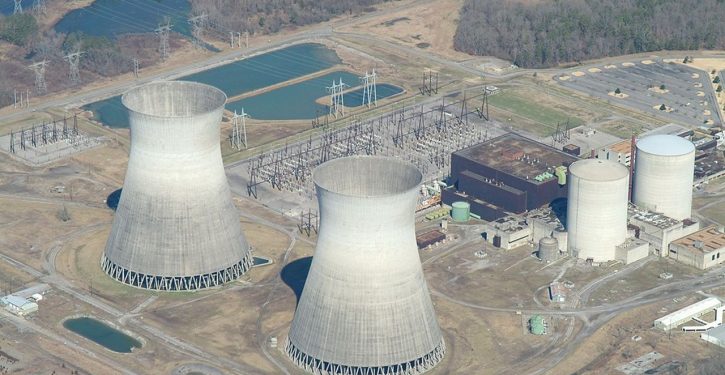
“Local authorities in Japan’s Niigata prefecture have approved a plan to restart the nuclear power plant at Kashiwazaki-Kariwa, the world’s largest nuclear facility that was unwisely shut down after the Fukushima disaster in 2011,” reports The Doomslayer.
Wikipedia notes that
On 11 March 2011, a major nuclear accident started at the Fukushima Daiichi Nuclear Power Plant in Ōkuma, Fukushima, Japan. The direct cause was the Tōhoku earthquake and tsunami, which resulted in electrical grid failure and damaged nearly all of the power plant’s backup energy sources. The subsequent inability to sufficiently cool reactors after shutdown compromised containment and resulted in the release of radioactive contaminants into the surrounding environment. The accident was rated seven (the maximum severity) on the International Nuclear Event Scale by Nuclear and Industrial Safety Agency…It is regarded as the worst nuclear incident since the Chernobyl disaster in 1986, which is the only other incident rated seven on the International Nuclear Event Scale.
According to the United Nations Scientific Committee on the Effects of Atomic Radiation, “no adverse health effects among Fukushima residents have been documented that are directly attributable to radiation exposure from the Fukushima Daiichi nuclear plant accident.”
Japan’s foolish decision to shut down nuclear power plants after that accident resulted in lost lives and higher electricity prices. So reopening this nuclear plant will likely save lives. A study found that
in the four-year period following the Fukushima accident, there were 1,280 cold-related deaths due to the government’s decision to completely end nuclear power production in Japan.
In the wake of that decision, Japanese citizens experienced immediate electricity price hikes as the country went from 30 percent nuclear power production to zero percent in just 14 months. Japan had to increase reliance on fossil fuels to offset that shortfall, which resulted in the rapid increase in electricity prices and corresponding increased fatalities from cold weather-related problems….the study covers just four years, from 2011 to 2014. The authors say that fatalities due to higher electricity prices likely grew in the years beyond that because the effects of the nuclear ban continued to be felt—and those effects continue right up to present time.
The authors also note that there were likely significant health impacts associated with replacing nuclear power with fossil fuels due to the deterioration of local air quality.
Enerdata reports that the “Niigata local government approved the restart of the No. 6 and No. 7 reactors at Kashiwazaki-Kariwa.” “The Kashiwazaki-Kariwa plant consists of seven reactors with a combined capacity of approximately 8 GW, of which Units 6 and 7 have passed the stricter post-Fukushima safety inspections. Units 6 and 7 at Kashiwazaki-Kariwa have been offline since March 2012 and August 2011, respectively.”
“The Japanese utility Tokyo Electric Power (Tepco)” also “plans to reactivate its 1.3 GW No. 6 reactor at the Kashiwazaki-Kariwa nuclear power plant in January 2026…. the planned reactor startup date [is] January 20, 2026, to confirm the integrity of the plant with actual steam, and the planned commencement date for the operation of the nuclear reactor facility [is] February 26, 2026.“